
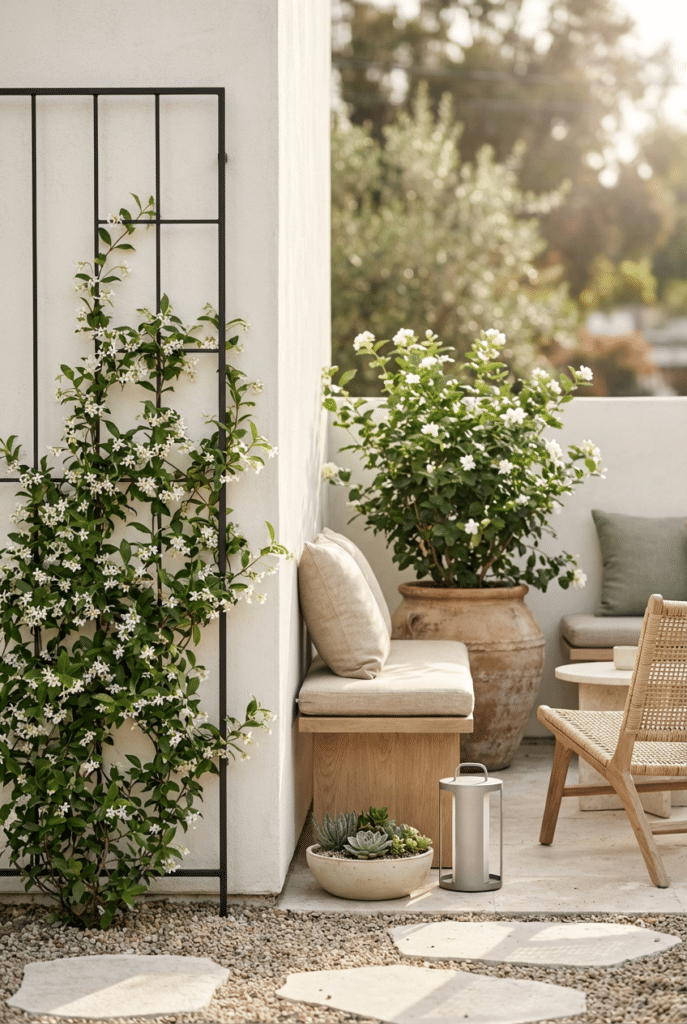
Picture a sun-drenched outdoor terrace where soft white blooms cascade over a timber pergola, filling the warm evening air with something so intoxicating it makes you want to linger long after dinner. That is exactly the kind of atmosphere the best jasmine types to grow outdoors can create — effortlessly romantic, deeply layered, and entirely composed. This guide is not about gardening in the traditional sense. It is about using jasmine as a design material, a living architectural element that transforms an ordinary outdoor space into something editorial and breathtaking. Whether you are working with a compact courtyard, a generous garden terrace, or a sun-facing fence that needs a statement, these two best jasmine types to grow outdoors will give you the aesthetic payoff you have been after. Let us get into it.
The Best Jasmine Types to Grow Outdoors: Common Jasmine (Jasminum officinale)
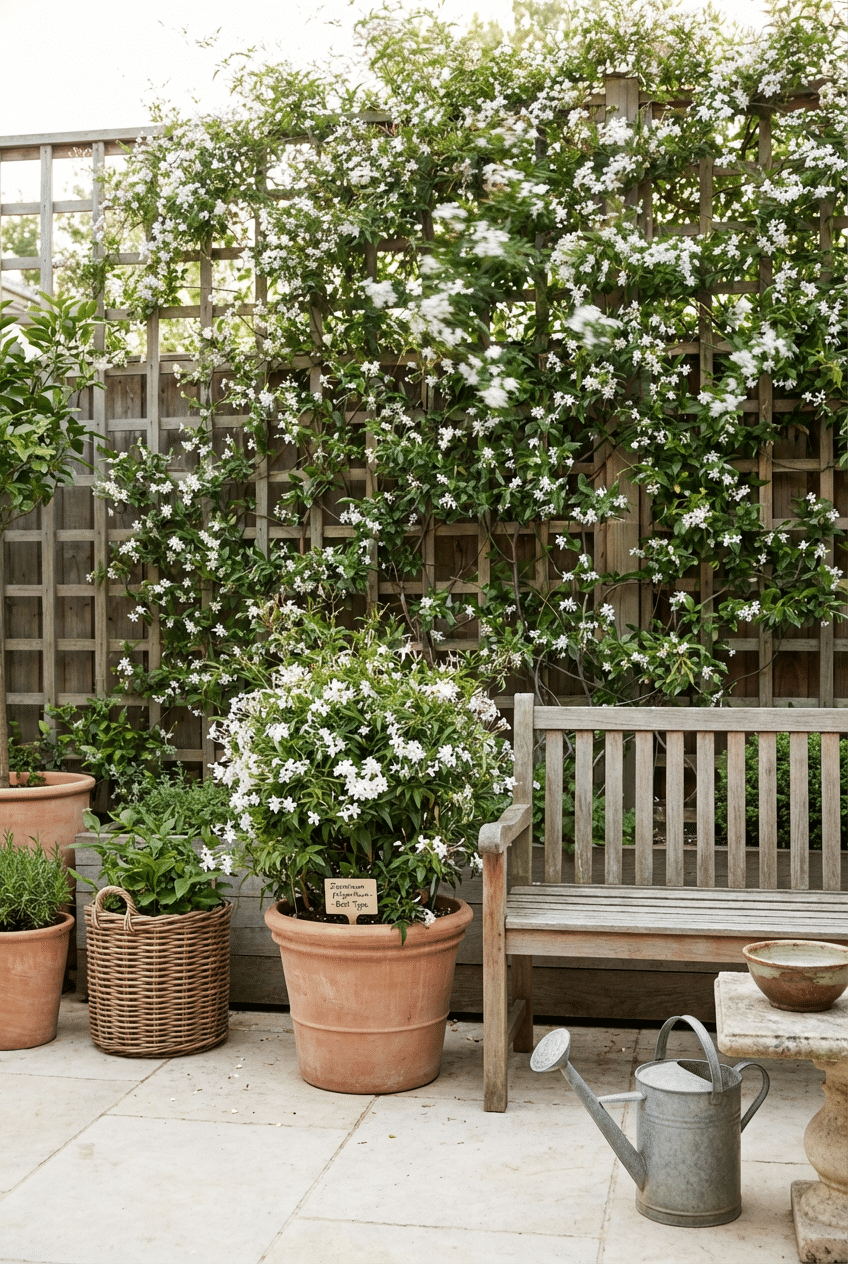
Common Jasmine, known botanically as Jasminum officinale, is the original when it comes to outdoor beauty and atmosphere. Its delicate clusters of white star-shaped flowers and soft, arching vines have been adorning European gardens and Mediterranean courtyards for centuries — and the aesthetic has never once gone out of style. From a pure design perspective, this is the jasmine you reach for when you want something that feels organic, romantic, and a little wild in the most intentional way possible.
Styling note: The secret to making Common Jasmine look intentional rather than overgrown is choosing one strong architectural anchor — a pergola post, a stone arch, or a tall trellis panel — and training the vine to it with purpose.
The vine’s naturally loose, flowing growth pattern makes it one of the best jasmine types to grow outdoors when you are chasing a cottage-luxe or Mediterranean-inspired aesthetic. Draped over a whitewashed wall or winding through wrought iron railings, it creates instant visual depth and a softness that no hard landscaping material can replicate. The foliage is a rich, deep green that contrasts beautifully with the white blooms, giving you that high-contrast editorial quality that photographs stunningly and looks even better in person. Pair it with aged terracotta pots, linen cushions in warm neutrals, and an oversized outdoor lantern for a fully composed scene.
The Best Jasmine Types to Grow Outdoors: Star Jasmine (Trachelospermum jasminoides)
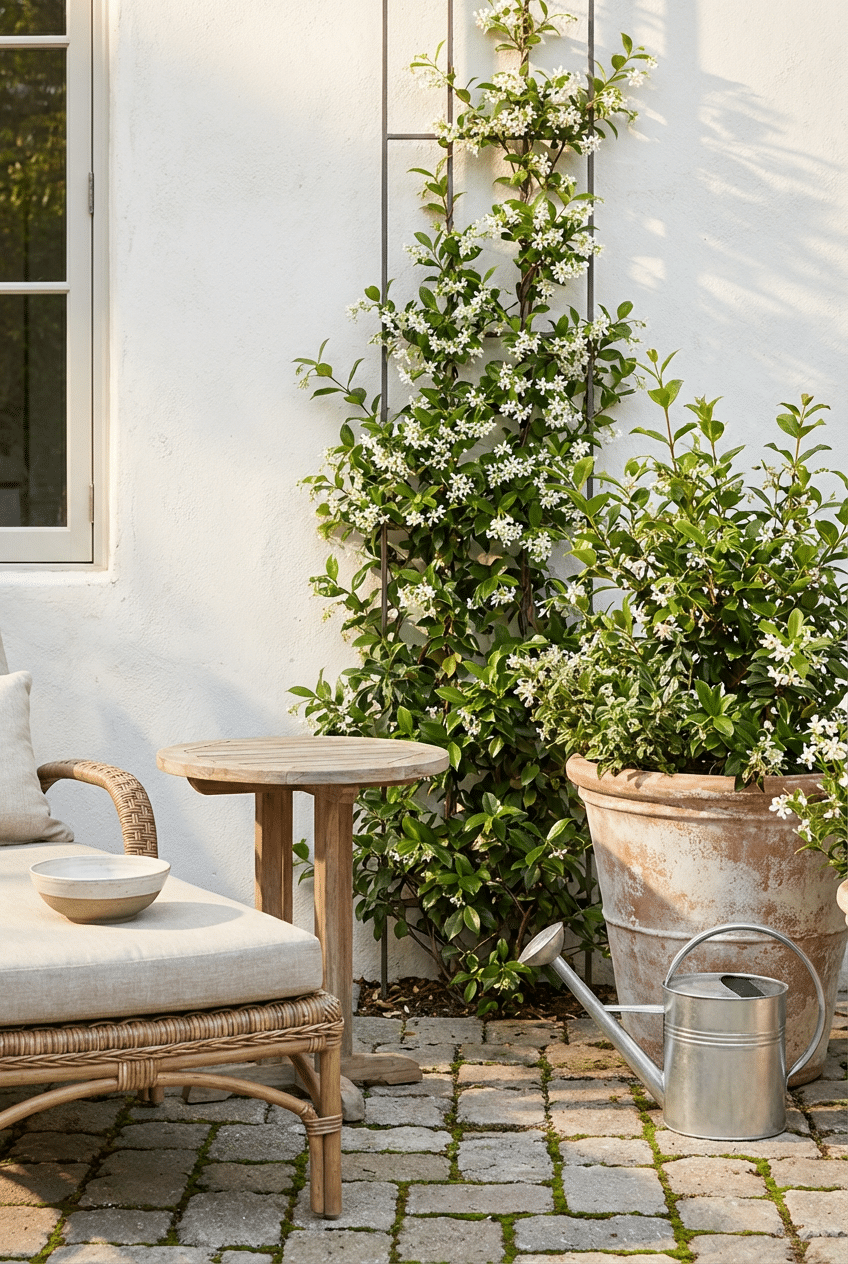
Star Jasmine is the overachiever of the outdoor jasmine world, and if you have been scrolling through aspirational outdoor spaces wondering how designers achieve that lush, dense, almost tropical wall of green punctuated by tiny white flowers — this is how. Trachelospermum jasminoides, commonly known as Star Jasmine, is one of the most visually versatile of all the best jasmine types to grow outdoors, with a tighter, more controlled growth habit than Common Jasmine that makes it ideal for structured styling.
Styling note: Star Jasmine trained across a horizontal cable wire system creates a living wall effect that is dramatically more sophisticated than any painted mural or panel fence you could install instead.
The glossy, deep green leaves of Star Jasmine hold their colour across the seasons, giving you a backdrop that works as a design element year-round, not just when the flowers are in bloom. When those clouds of small, pinwheel-shaped white flowers do appear, the scent is extraordinary — sweet, heady, and undeniably luxurious. Use Star Jasmine to frame a contemporary outdoor kitchen, line a narrow side passage, or create a living privacy screen behind a built-in bench seat. It responds beautifully to clean, architectural structures and looks particularly stunning against dark steel or black powder-coated frames. This is the jasmine for the modern aesthetic — precise, polished, and deeply atmospheric at the same time.
How to Style Jasmine as a Climbing Feature on Walls and Fences
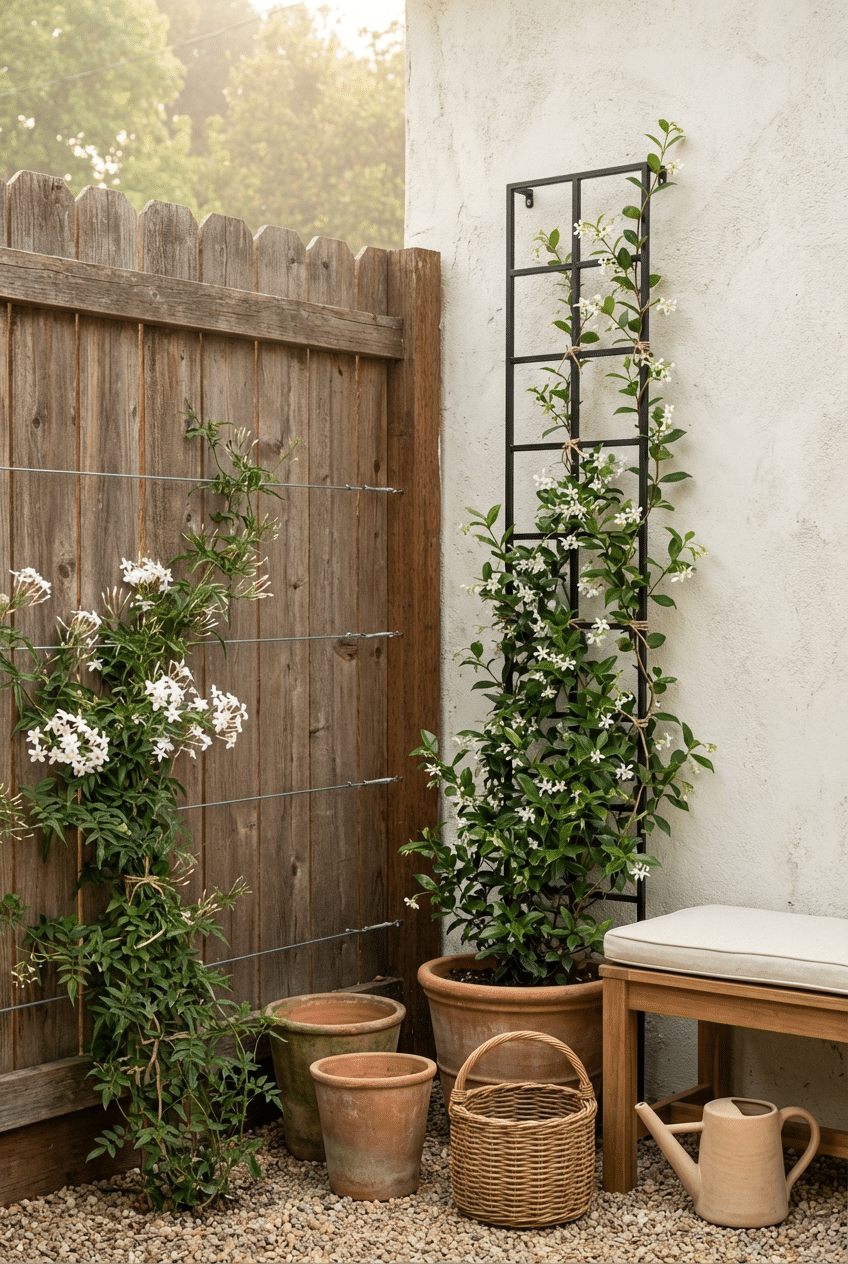
One of the most transformative things you can do to an outdoor space is treat a plain wall or fence not as a boundary but as a canvas. Jasmine — both of the best jasmine types to grow outdoors covered in this guide — are extraordinary at this. The key is in the structure you give them. A bare fence strung with evenly spaced horizontal wires gives jasmine a grid to climb and creates a formal, intentional aesthetic. A more rustic arrangement of branch-style stakes pushed into raised planter beds at the base of a wall creates a looser, more romantic effect.
The wall or fence surface matters aesthetically more than most people realise. Pale limestone render, aged brick, dark hardwood, and raw concrete all work as backdrops to jasmine in slightly different ways. Against pale surfaces, the deep green foliage becomes the hero and the flowers read as bright punctuation marks. Against dark surfaces, the entire vine glows and the effect becomes almost theatrical.
Styling note: Lighting transforms a jasmine-covered wall after dark — a simple uplighting strip at the base turns the entire feature into something that belongs in an architectural magazine.
When you combine the structural elegance of well-trained jasmine with thoughtful lighting, decorative pots at the base, and outdoor furniture positioned to face the feature, you create a focal point that anchors the entire space. These best jasmine types to grow outdoors are not just plants — they are the design infrastructure your outdoor room has been waiting for.
Creating an Outdoor Dining Space Framed by Jasmine
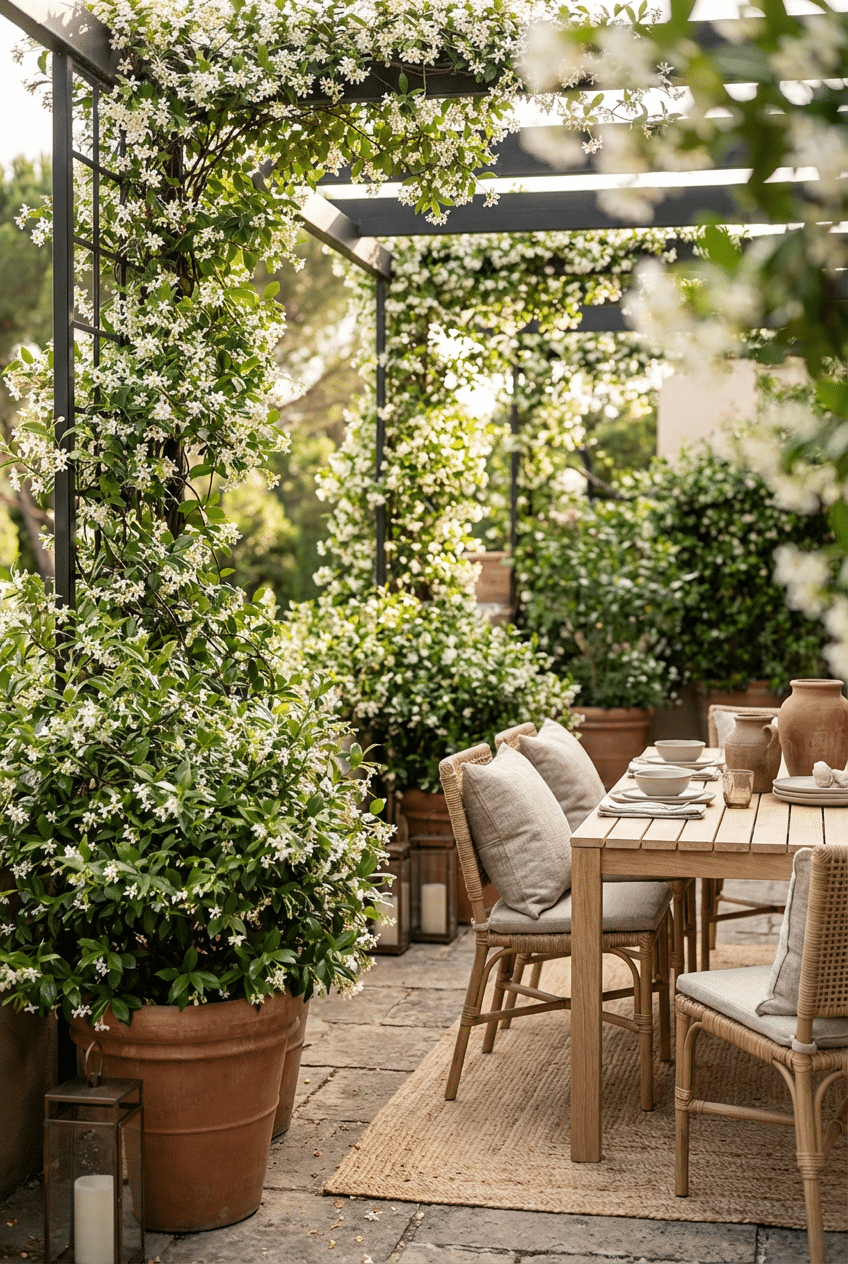
There is something deeply civilised about dining outside beneath a canopy of jasmine. The scent alone elevates the experience, but visually, the effect of jasmine framing an outdoor dining space is nothing short of spectacular. Whether you are working with a pergola overhead, a trellis backdrop, or jasmine climbing the columns of a covered terrace, the result is a room-like sense of enclosure that makes outdoor dining feel intimate and intentional rather than open and exposed.
The best approach is to treat the jasmine as the wallpaper and ceiling of your outdoor dining room. Choose your furniture first — a large dining table in natural timber, rattan, or powder-coated steel, with chairs that have some visual weight — and then position the jasmine framing to draw the eye toward and around that anchor piece. An overhead beam draped with Common Jasmine creates a soft canopy effect. A side trellis panel covered in Star Jasmine becomes the equivalent of a feature wall.
Styling note: The dining table styling should echo the jasmine aesthetic — think simple white ceramics, glass votives, and a single stem arrangement rather than elaborate centrepieces that compete with the natural beauty surrounding them.
These best jasmine types to grow outdoors reward a slow, considered approach to styling. The more deliberately you place each furniture and decor element in relation to the jasmine, the more cohesive and editorial the final result becomes. This is outdoor design at its most atmospheric.
Using Jasmine to Define Zones in an Open Garden Layout
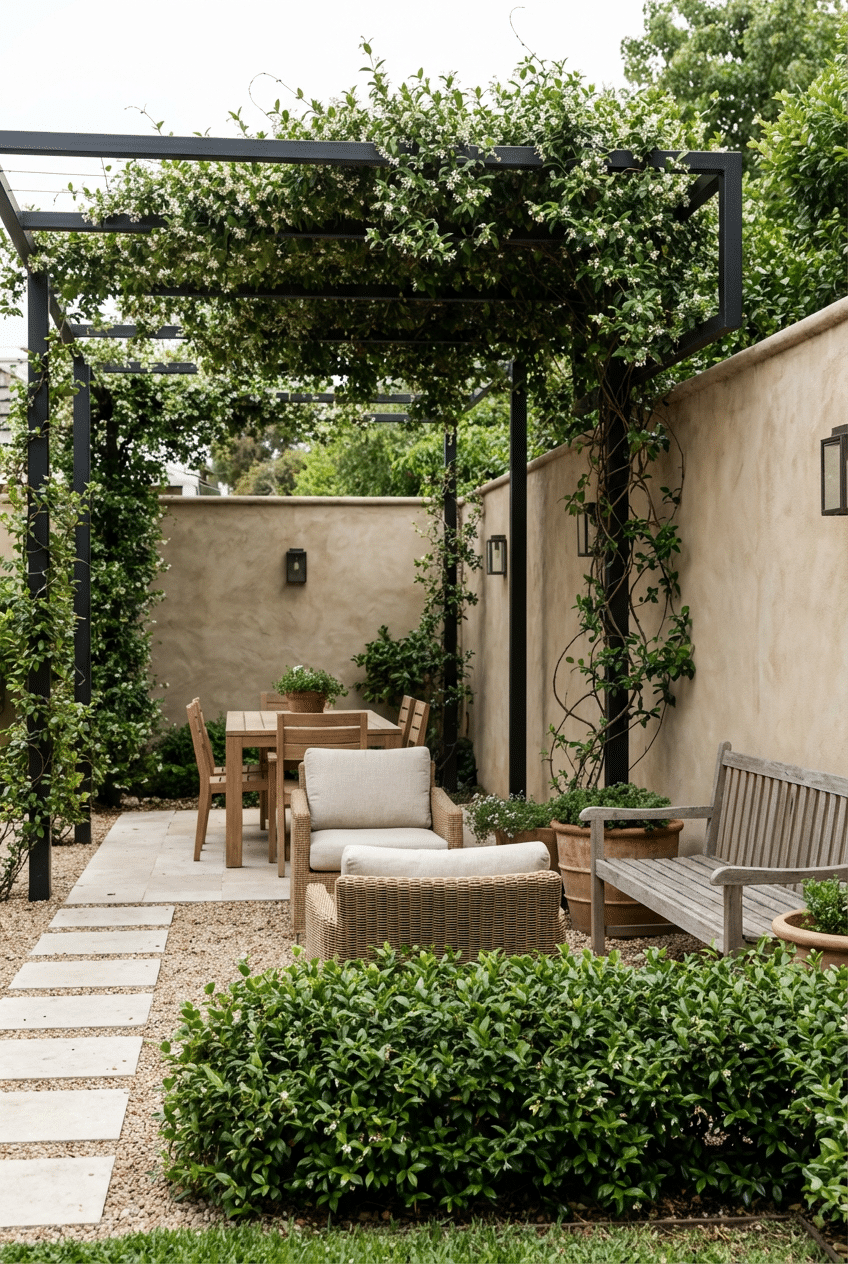
Open garden spaces without clear boundaries can feel formless and difficult to style effectively — but jasmine solves this problem in the most beautiful way possible. By training jasmine over open structures like arched dividers, low trellises, or freestanding pergola frames, you create spatial definition without walls, adding softness and scent in place of hard architectural edges.
Think of jasmine as a living room divider for the outdoors. A jasmine-covered arch between a lounge zone and a dining zone signals transition with elegance. A low jasmine-trained fence separating a fire pit seating area from a lawn gives each zone its own identity while keeping the overall space visually connected through the shared green palette. This approach works beautifully with both of the best jasmine types to grow outdoors — Common Jasmine for arches and overhead structures, Star Jasmine for lower, more structured dividers.
Styling note: Repeating the same jasmine variety across multiple zone dividers in a large garden creates a sense of cohesion and deliberate design intent — it reads as a considered choice rather than a coincidence.
The result is an outdoor space that functions like a well-designed interior, with distinct areas that each have their own mood and purpose, united by the threading of jasmine through the entire layout. It is one of the most effective and aesthetically rewarding ways to use the best jasmine types to grow outdoors in a larger setting.
The Colour Palette That Works Beautifully With Jasmine Outdoors
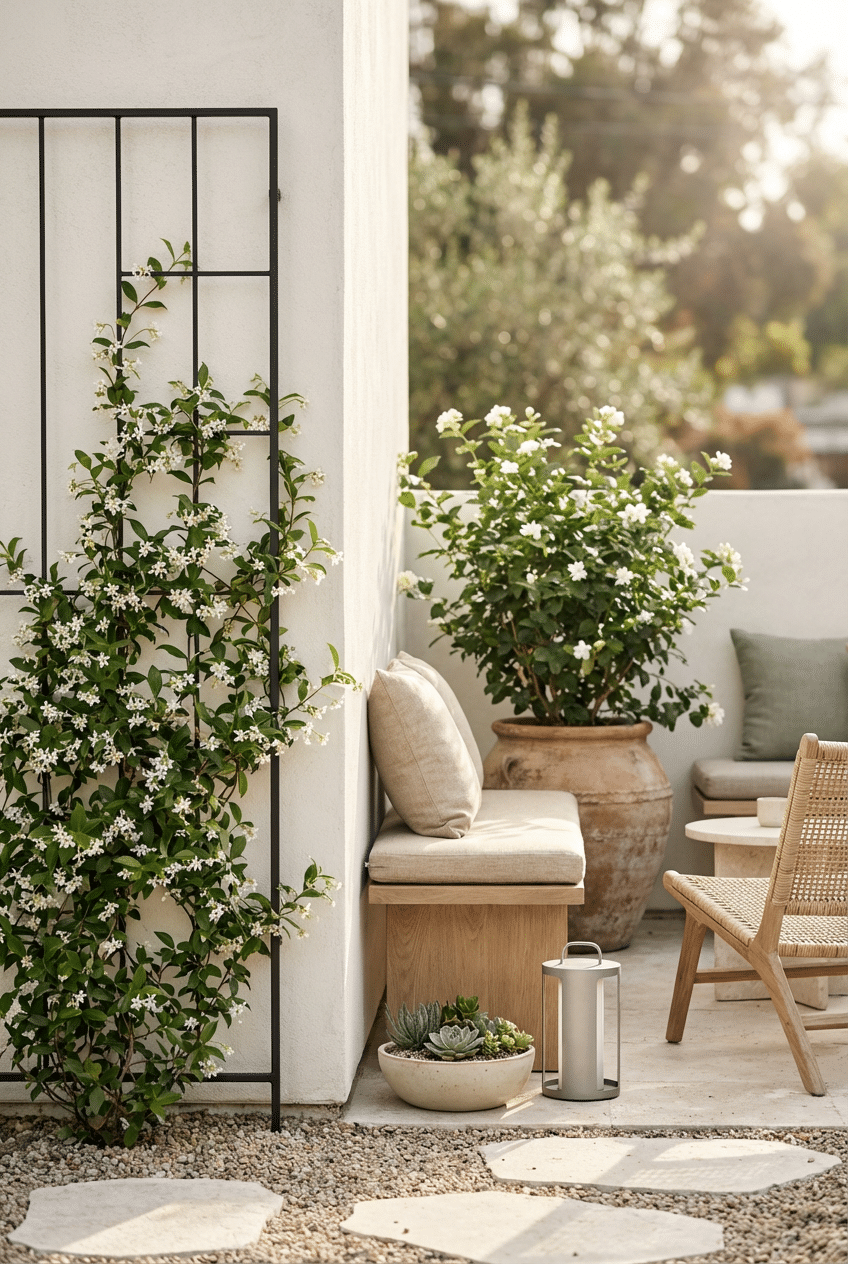
Jasmine’s white flowers and deep green foliage give you a natural starting point for building an outdoor colour palette, and the direction you take from there will define the entire aesthetic of the space. The beauty of working with the best jasmine types to grow outdoors is that their colouring is essentially neutral — a crisp, clean white against rich green reads as fresh and timeless rather than colourful, which means it pairs with almost any palette direction you choose.
For a Mediterranean or Provençal feel, pair jasmine with terracotta, dusty blue, aged brass, and warm linen tones. The jasmine becomes the cool, fresh counterpoint to those warm, earthy hues and the overall palette feels sun-soaked and deeply layered. For a contemporary, editorial outdoor space, pair jasmine with charcoal, matte black steel, white concrete, and natural timber. The contrast is graphic and high-impact, and the jasmine softens what might otherwise feel cold or industrial.
Styling note: Introduce colour through textiles and ceramics rather than large furniture pieces so you can shift the palette seasonally without losing the investment in your jasmine framework.
For a romantic, maximalist approach, layer jasmine with blush, sage, dusty rose, and antique white. This palette photographs beautifully and creates an atmosphere that is equal parts garden party and editorial shoot. Whichever direction you choose, the best jasmine types to grow outdoors will anchor the palette with their clean, timeless colouring and make every other design choice look more intentional.
An outdoor space styled around jasmine is one of those rare design achievements that engages all the senses at once — the visual lushness of cascading vines and white blooms, the intoxicating scent that drifts through warm evenings, the acoustic softness of leaves moving in a light breeze. Both of the best jasmine types to grow outdoors explored in this guide offer that quality in abundance, whether you lean toward the romantic looseness of Common Jasmine or the polished density of Star Jasmine. The difference between an outdoor space that is merely functional and one that is genuinely beautiful often comes down to decisions exactly like this — choosing a living design element that does the heavy lifting aesthetically while creating an atmosphere that no furniture piece or cushion could ever replicate on its own. Take these ideas, layer them thoughtfully across your specific outdoor space, and give every zone the editorial quality it deserves. If this guide has sparked ideas for your own outdoor styling, save it to your Pinterest boards so you can come back to it when you are ready to create — or share it with someone who has a garden, terrace, or courtyard that is waiting for its transformation.