
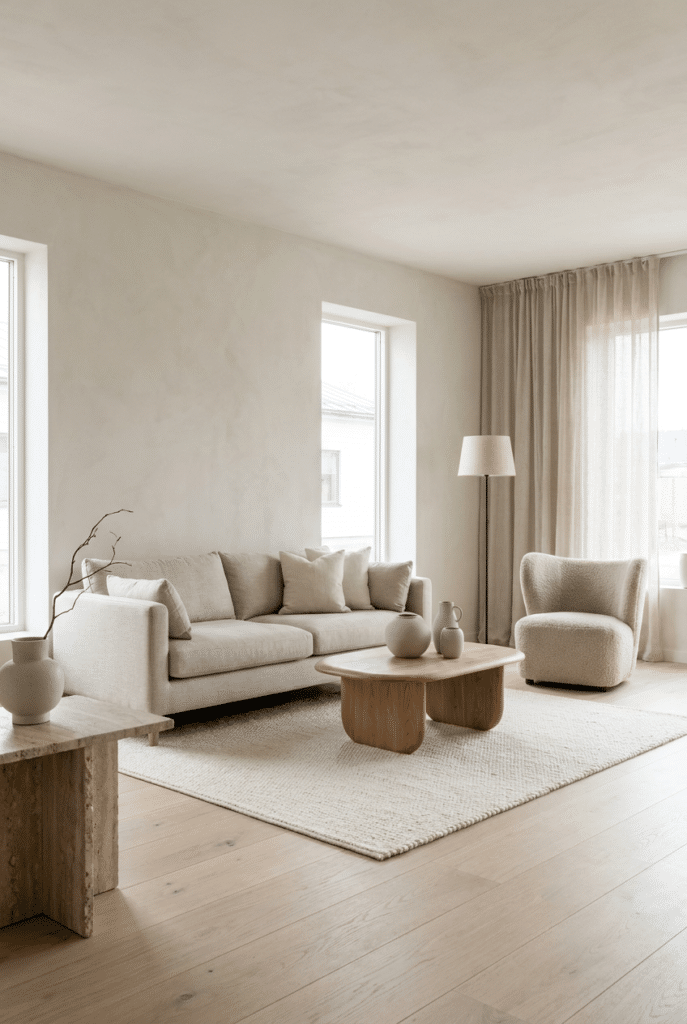
Scandinavian design trends are quietly reshaping interiors in the most breathtaking way — think warm wooden tones, soft curves, and that effortlessly cozy yet polished aesthetic that makes every room feel like a retreat you never want to leave. If you’ve ever scrolled past a Nordic-inspired home and felt that instant pang of ‘I need this in my life,’ then you already know the feeling. The best part? There are so many under-the-radar directions within this design world that most people aren’t even talking about yet — and I’m here to spill all of them. Whether you’re doing a full room refresh or just want to add a few intentional touches, these eight Scandinavian design trends are going to completely change the way you think about your space. Get ready to take notes, because your home is about to level up in the most beautiful, calm, and considered way possible.
1. Organic Minimalism: The Scandinavian Design Trend Redefining Clean Spaces
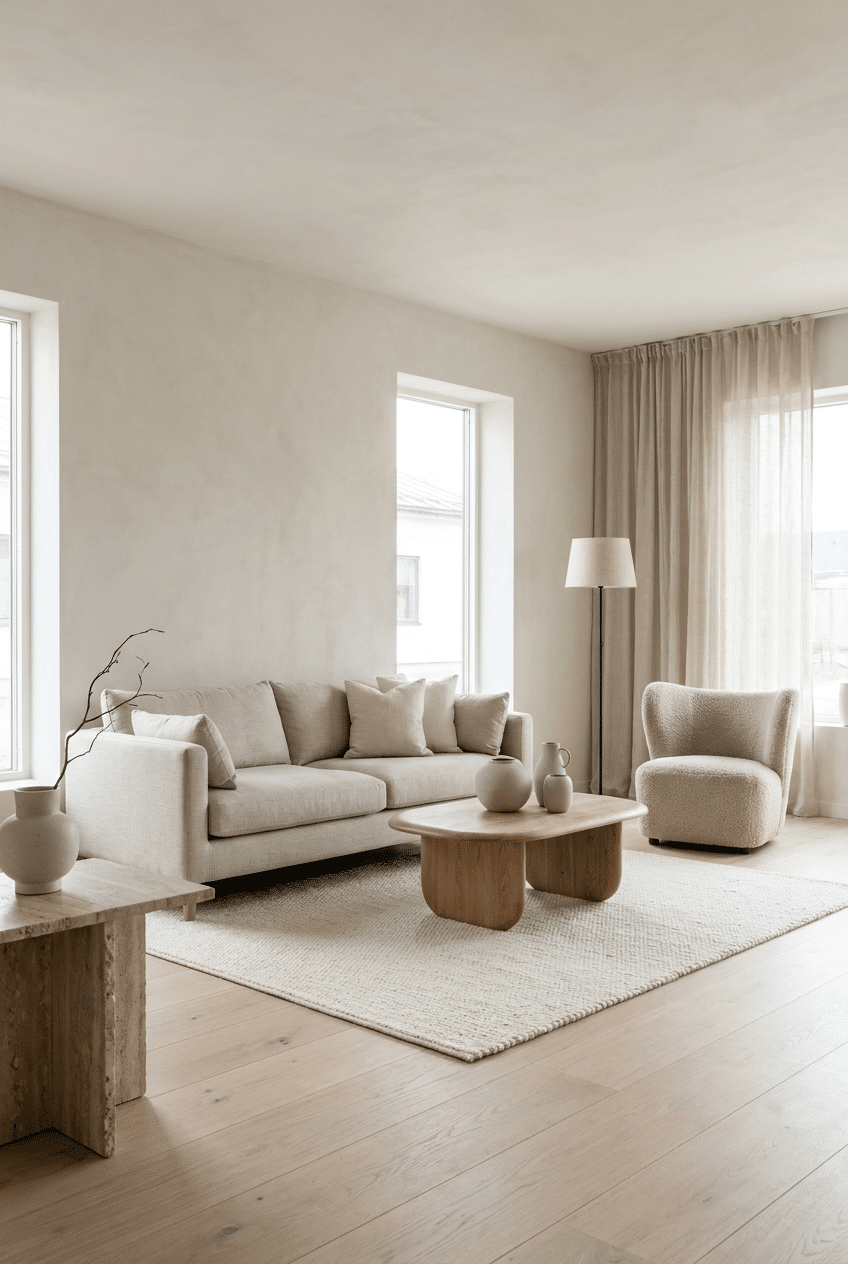
Okay so when we talk about Scandinavian design trends, minimalism is always in the conversation — but the version that’s having a major moment right now is what I’m calling organic minimalism, and it is SO different from the cold, stark white rooms we used to associate with Nordic interiors. This is minimalism that breathes. It’s about having fewer things, yes, but the things you do have feel alive, warm, and intentional. Think curved furniture with rounded edges instead of sharp lines. Think clay pots, raw linen, and natural wood grains that actually have character in them. The idea is that your space should feel edited, not empty. Every single object earns its place, and together they create this quiet, almost meditative atmosphere that just makes you exhale when you walk in. Interior designers in Denmark and Sweden have been leaning into this hard, and honestly it translates so beautifully to everyday homes too. You don’t need a massive budget — you just need to be selective and let natural materials do the heavy lifting. Start by removing anything that doesn’t serve a purpose or bring you genuine joy, then reintroduce pieces with organic shapes and honest textures.
2. Warm Neutrals Over Cold Whites
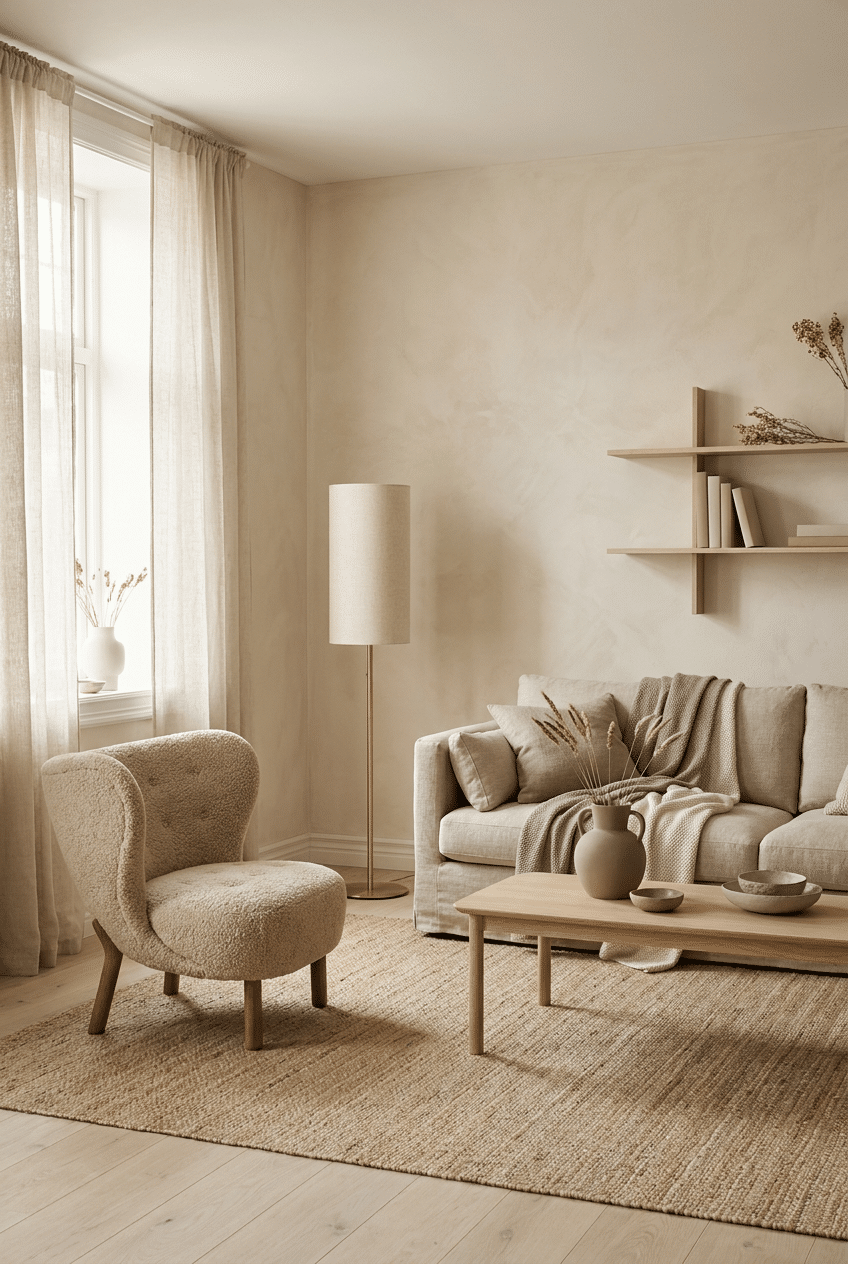
For the longest time, Scandinavian interiors were almost synonymous with stark white walls and icy, cool-toned palettes. But one of the most exciting Scandinavian design trends right now is the full pivot toward warm neutrals — and I am absolutely obsessed. We’re talking creamy oatmeal tones, soft sand, warm greige, and buttery off-whites that make a room feel like a hug. Designers across Norway and Sweden are swapping out their crisp whites for these more enveloping, cozy shades, and the difference is genuinely transformative. Warm neutrals work because they reflect light in a softer way, making spaces feel larger without feeling clinical. They also pair insanely well with natural wood tones, which are a staple in Nordic interiors. If you’re repainting a room, look for whites with yellow or pink undertones rather than blue or grey ones — that one shift alone will completely change the vibe. Layer in linen cushions, a jute rug, and a few terracotta accents, and you’ve got yourself a Nordic-inspired space that feels both modern and incredibly livable.
Styling note: Tone-on-tone layering in warm neutrals always looks more expensive than it actually is — commit to the palette and let the textures do the talking.
3. Tactile Layering with Natural Textiles
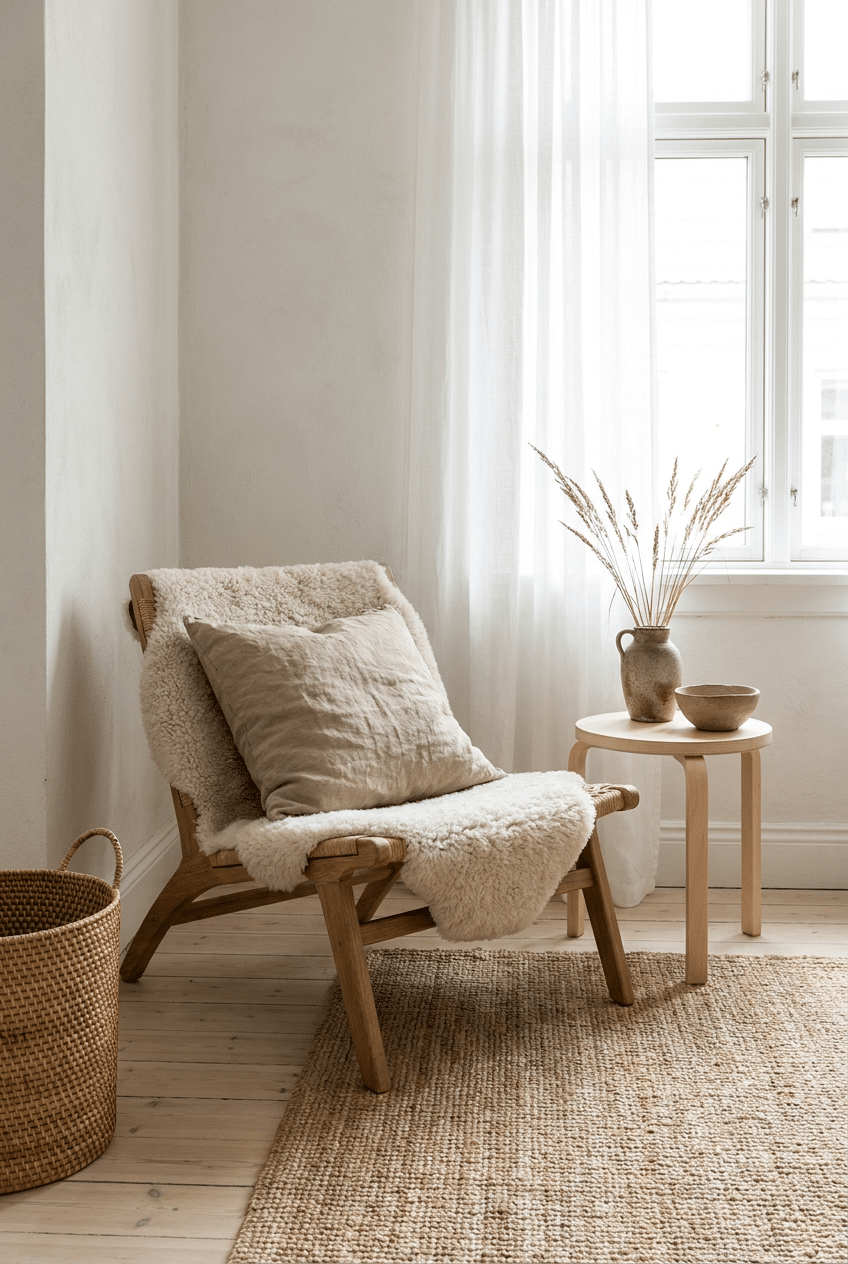
One of the Scandinavian design trends that doesn’t get nearly enough attention is the art of tactile layering — basically, the practice of mixing textures in a way that makes a room feel rich and cozy without looking cluttered. Nordic interiors have always had a masterful relationship with textiles, but the current direction is even more intentional and sensory-driven. Think chunky knit throws draped over a curved sofa, a sheepskin rug layered on top of a flatweave, linen curtains that pool slightly on the floor, and cushions in varying weights and weaves. The key here is that every texture you introduce should feel like it belongs in nature — nothing synthetic, nothing shiny, nothing that disrupts that organic flow. Wool, cotton, linen, jute, leather, and boucle are your best friends in this design philosophy. And here’s the thing — layering textures is one of those techniques that instantly makes a space feel more considered and styled, even if everything else is fairly simple. It adds depth, warmth, and that hygge-adjacent quality that Scandinavian interiors are so famous for. Don’t be afraid to go a little overboard with the throws and cushions — in this case, more really is more.
4. Functional Sculptural Furniture
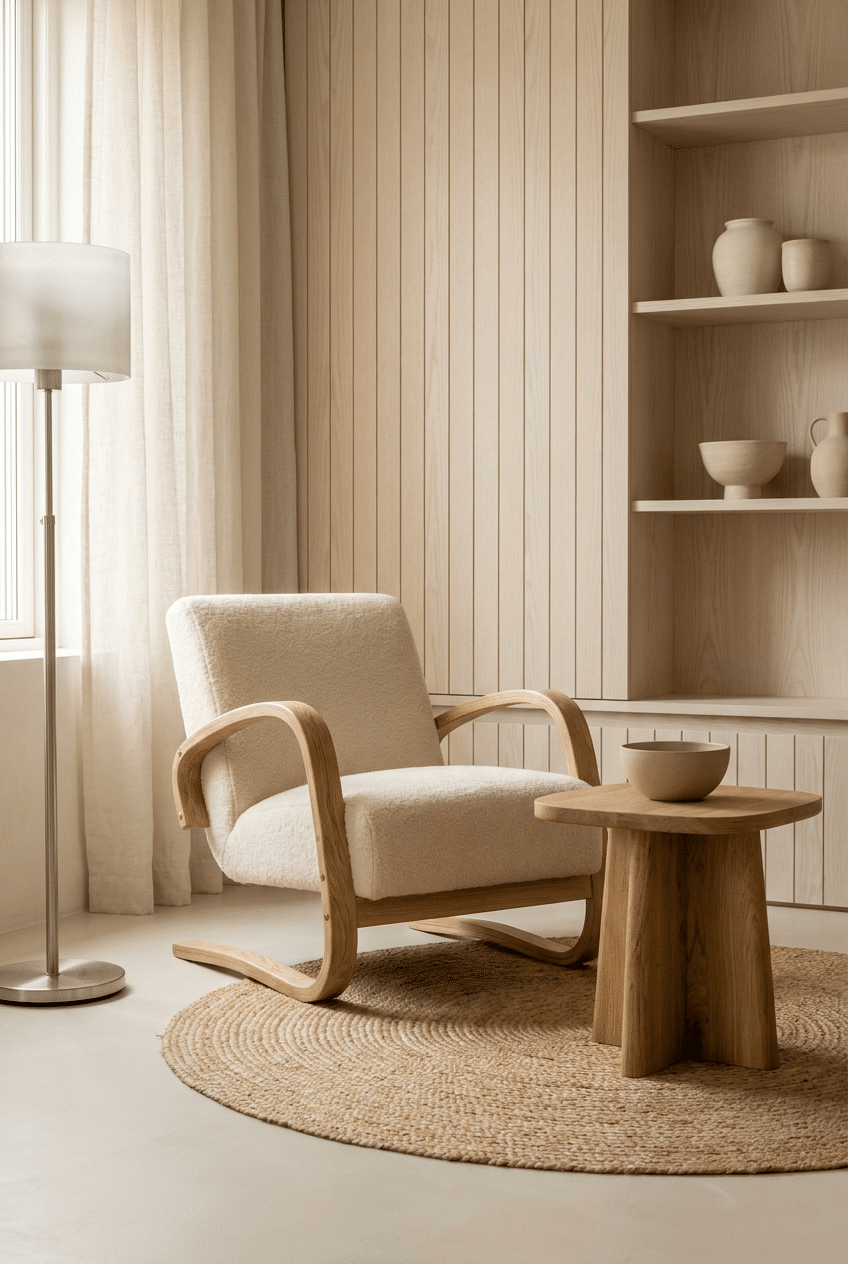
This is one of those Scandinavian design trends that makes me genuinely excited because it’s so smart and so beautiful at the same time. The idea is that furniture should be both completely functional AND visually sculptural — it should work hard and look like a piece of art doing it. Think of a dining chair with a beautifully curved backrest that’s also incredibly comfortable. Or a side table that looks like it could belong in a gallery but holds your morning coffee perfectly. Nordic designers have always had this incredible ability to merge form and function, but the current wave of sculptural furniture is pushing that even further. Pieces are being designed with an almost architectural quality — they have presence in a room even when they’re not being used. If you’re shopping for new furniture, look for pieces with unexpected shapes, interesting joinery, or an unusual silhouette. A single statement piece of sculptural furniture can completely anchor a room and eliminate the need for excessive decor elsewhere. This is a trend that’s genuinely worth investing in because these pieces tend to be timeless and deeply considered.
Styling note: One truly sculptural piece will always outperform three mediocre ones — save up and make it count.
5. Biophilic Interiors with a Nordic Edge
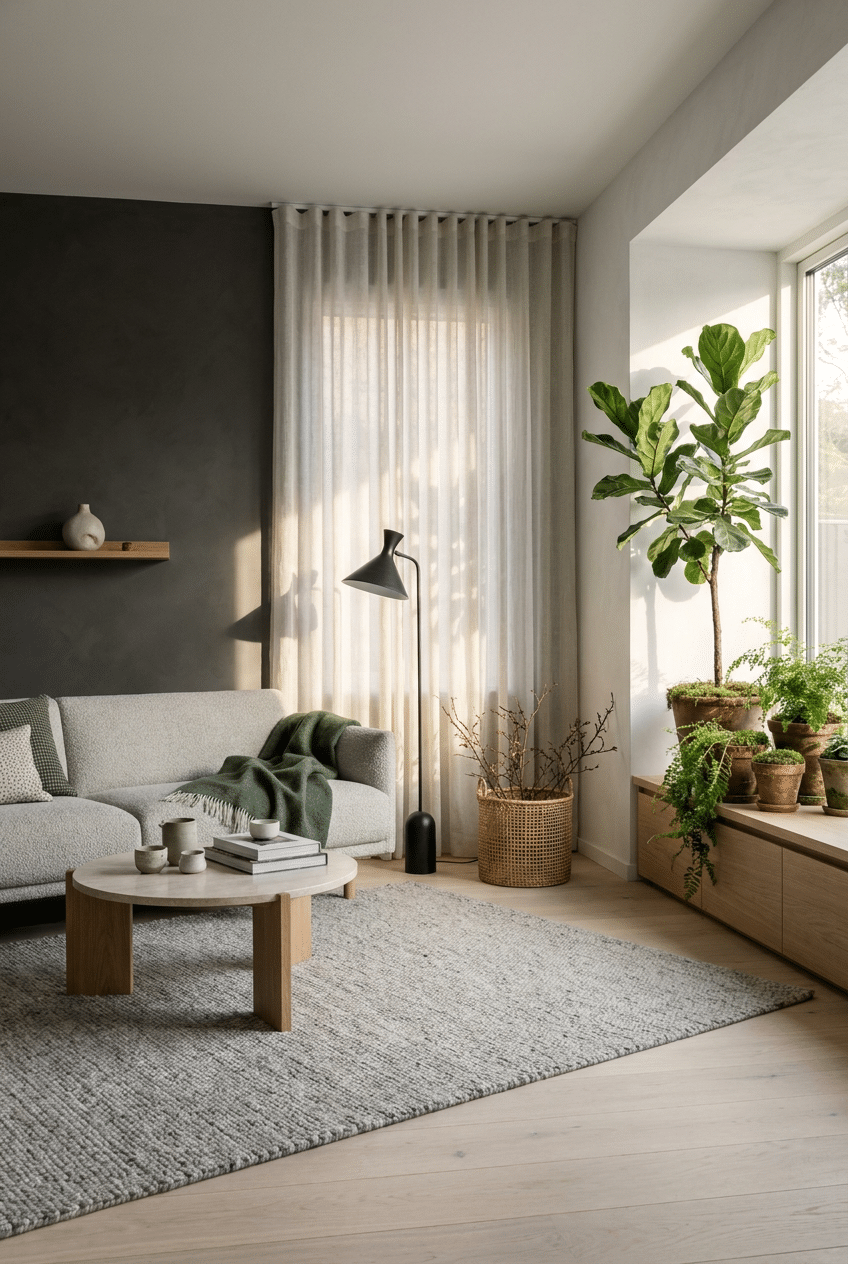
Biophilic design — the idea of bringing nature indoors — is having a major global moment, but the Scandinavian interpretation of it is its own distinct and beautiful thing. Among the most grounding Scandinavian design trends right now is this very Nordic take on biophilic interiors, which is less about filling a room with tropical plants and more about echoing the textures, colors, and quietness of northern landscapes. We’re talking about interiors that feel like a walk through a birch forest or a morning on a misty Scandinavian coastline. Stone surfaces, raw wood, dried botanicals, lichen-inspired textiles, and earthy pigments all play a role here. Plants are included, but they tend to be simpler — think a single sculptural olive tree, a cluster of succulents on a windowsill, or trailing ivy along a shelf. The light matters enormously in this aesthetic too — soft, diffused natural light is the goal, so sheer linen curtains and strategically placed mirrors become essential tools. This trend connects deeply to the Scandinavian cultural relationship with nature, and it creates interiors that feel genuinely restorative.
6. Muted Earth Tones and Clay Hues
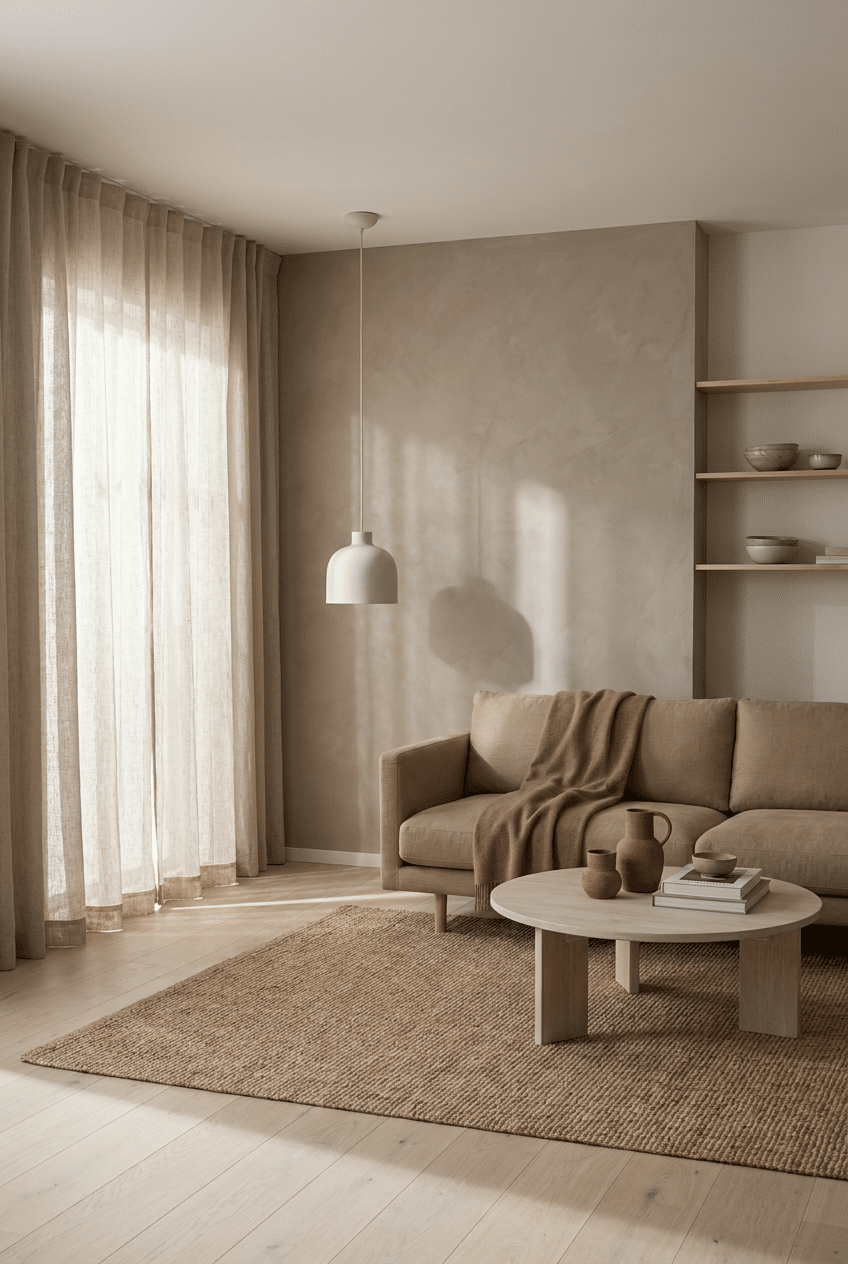
If you’ve been seeing a lot of terracotta, clay, warm sage, and dusty rose in Nordic-inspired interiors lately, you’re not imagining things — this is absolutely one of the most talked-about Scandinavian design trends in the design world right now, even if it hasn’t hit mainstream conversations yet. The shift toward muted, earthy pigments is a natural evolution from the warm neutrals trend, but it goes a step further by introducing actual color — just color that feels like it’s been kissed by the earth. These hues are never bright or saturated. They’re always slightly faded, slightly dusty, slightly vintage-feeling. Think of a clay pot left in the sun, or a moss-covered stone wall, or the color of dried wheat. These tones work beautifully together and they feel incredibly cohesive in Scandinavian-style spaces because they’re rooted in the natural world. You can introduce them through paint, ceramics, soft furnishings, or even artwork. A terracotta linen cushion or a sage-colored throw can completely shift the energy of a neutral room in the most gorgeous way.
Styling note: When working with earth tones, always pull from the same temperature family — warm with warm, cool with cool — to keep the palette feeling curated rather than chaotic.
7. The Scandinavian Design Trend of Quiet Maximalism
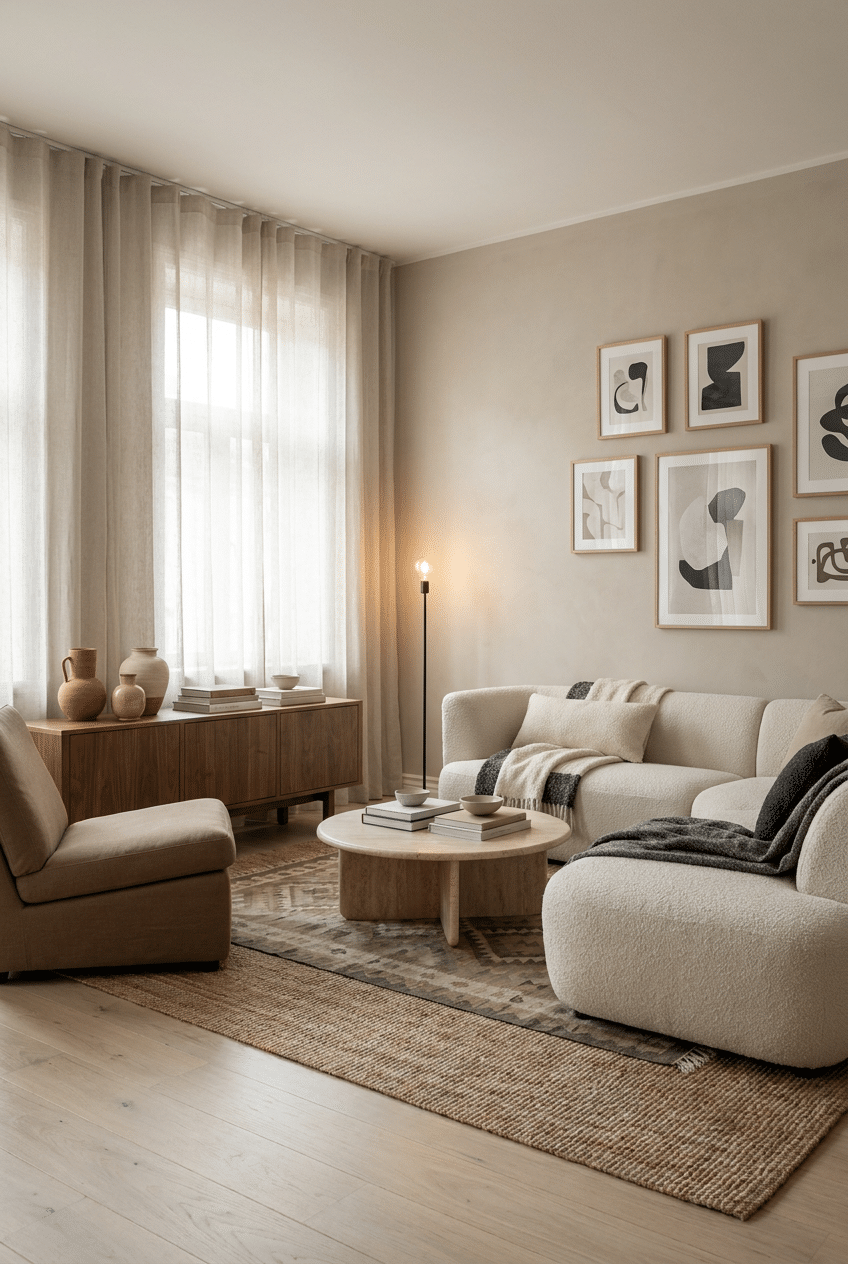
Okay, I know ‘Scandinavian’ and ‘maximalism’ sound like total opposites, but hear me out — quiet maximalism is genuinely one of the most interesting Scandinavian design trends gaining traction right now and it is everything. This is not loud, chaotic, fill-every-surface maximalism. This is a thoughtful, curated abundance — layered bookshelves filled with meaningful objects, gallery walls with consistent framing, ceramics collected over time displayed with intention. It’s the idea that a Nordic home can be full without being overwhelming. The key difference between quiet maximalism and just having too much stuff is curation and cohesion. Every element should feel like it belongs to the same story — the same color family, the same aesthetic world, the same emotional tone. Scandinavian designers are leaning into this by embracing collections, heirlooms, and meaningful objects rather than the sparse single-item approach of classic minimalism. It feels personal, warm, and deeply human — which is honestly what great interior design should always feel like. If you love collecting things and have always felt guilty about it in the context of Scandinavian style, this trend is your permission slip.
8. Handcrafted and Imperfect Finishes
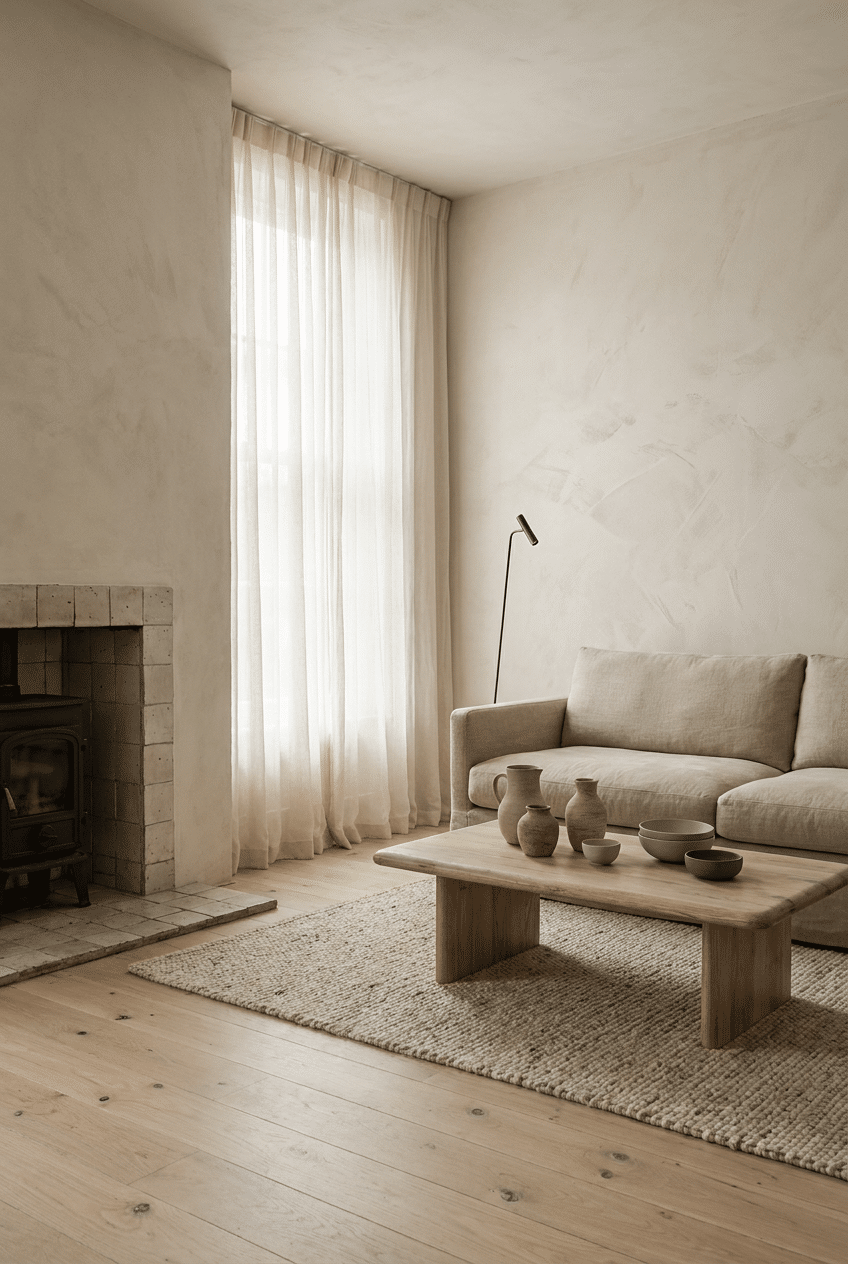
The final Scandinavian design trend on this list might be my absolute favorite because it’s the most deeply human one — handcrafted and intentionally imperfect finishes. In a world dominated by mass production and machine-perfect surfaces, Nordic designers are turning back toward the handmade, the slightly uneven, the one-of-a-kind. This shows up in hand-thrown ceramics with visible fingerprints, hand-plastered walls with subtle texture variation, woven textiles with slight irregularities, and furniture with visible wood grain and natural knots rather than polished, uniform surfaces. The Japanese concept of wabi-sabi — finding beauty in imperfection — has deeply influenced Scandinavian design in recent years, and this trend is the most visible expression of that influence. Handcrafted pieces carry an energy and warmth that manufactured items simply can’t replicate, and they instantly make a space feel more personal and story-rich. If you want to incorporate this, start with your ceramics — swap out any perfectly uniform pieces for something hand-thrown from a local potter or an online artisan shop. The difference in the feeling of your space will genuinely surprise you.
Styling note: Imperfection is the new luxury — one handcrafted ceramic from a local maker will bring more soul to your space than a shelf full of matching store-bought pieces.
These eight Scandinavian design trends are proof that Nordic interiors are evolving in the most exciting and nuanced ways — and the best thing about all of them is that they’re deeply accessible. You don’t need to renovate your entire home or spend a fortune to tap into these ideas. You just need to be intentional, choose pieces that feel honest and considered, and give yourself permission to create a space that feels genuinely like you. Whether you’re drawn to the warmth of organic minimalism, the richness of tactile layering, or the soul of handcrafted finishes, there’s something in this list that will resonate with your space and your lifestyle. Scandinavian design trends have always been about creating homes that support real life — cozy, calm, beautiful, and deeply livable. That philosophy hasn’t changed, but the aesthetic expressions of it are getting more interesting every single season. I hope this post has given you a ton of inspiration and maybe even a shopping list or two! If you loved these ideas, please save this post to your Pinterest boards so you can come back to it whenever you need a refresh — and share it with a friend who’s been thinking about giving their home a new look. Your future space will thank you for it.