
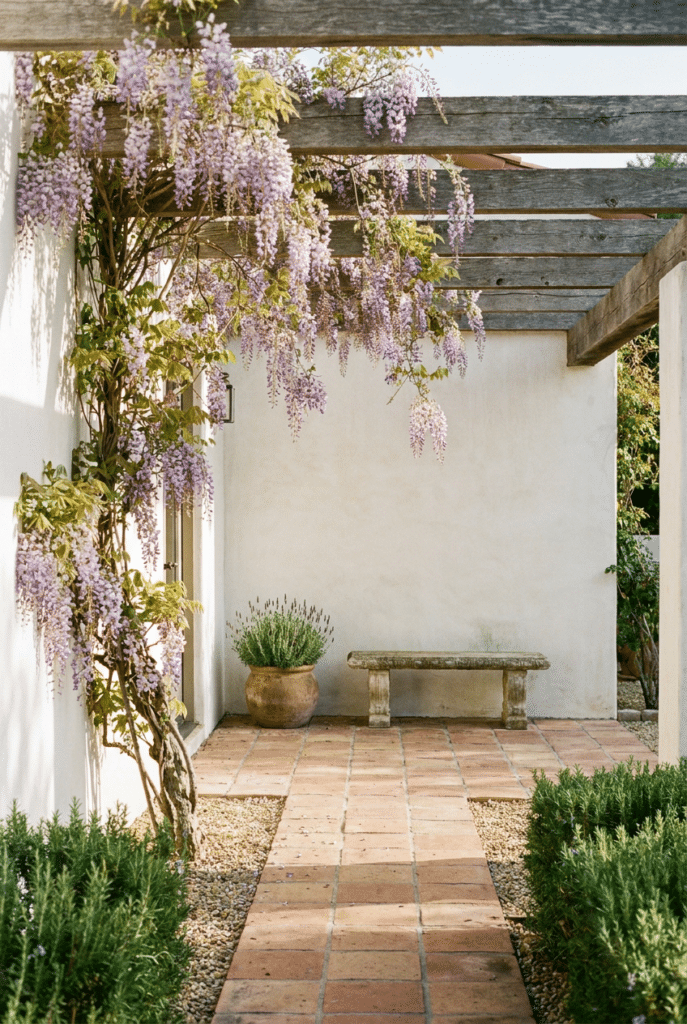
Picture this — a sun-drenched backyard filled with silvery leaves, fragrant herbs, and cascading blooms that look like they belong on the Amalfi Coast. That’s exactly the kind of vibe you can create when you start planting easy Mediterranean garden plants in your own outdoor space. Whether you have a large garden, a compact courtyard, or even a few raised beds, these plants bring effortless beauty, drought tolerance, and year-round interest without demanding constant attention. Mediterranean garden plants are having such a major moment in home gardening right now, and honestly, it’s not hard to see why. They thrive in sunny spots, look incredibly stylish, and most of them require very little fuss once they’re established. If you’ve been dreaming of a lush, textured, relaxed outdoor space that feels like a Mediterranean escape, this list is your perfect starting point. Get ready to fall in love with your backyard all over again.
1. Lavender – The Queen of Mediterranean Garden Plants
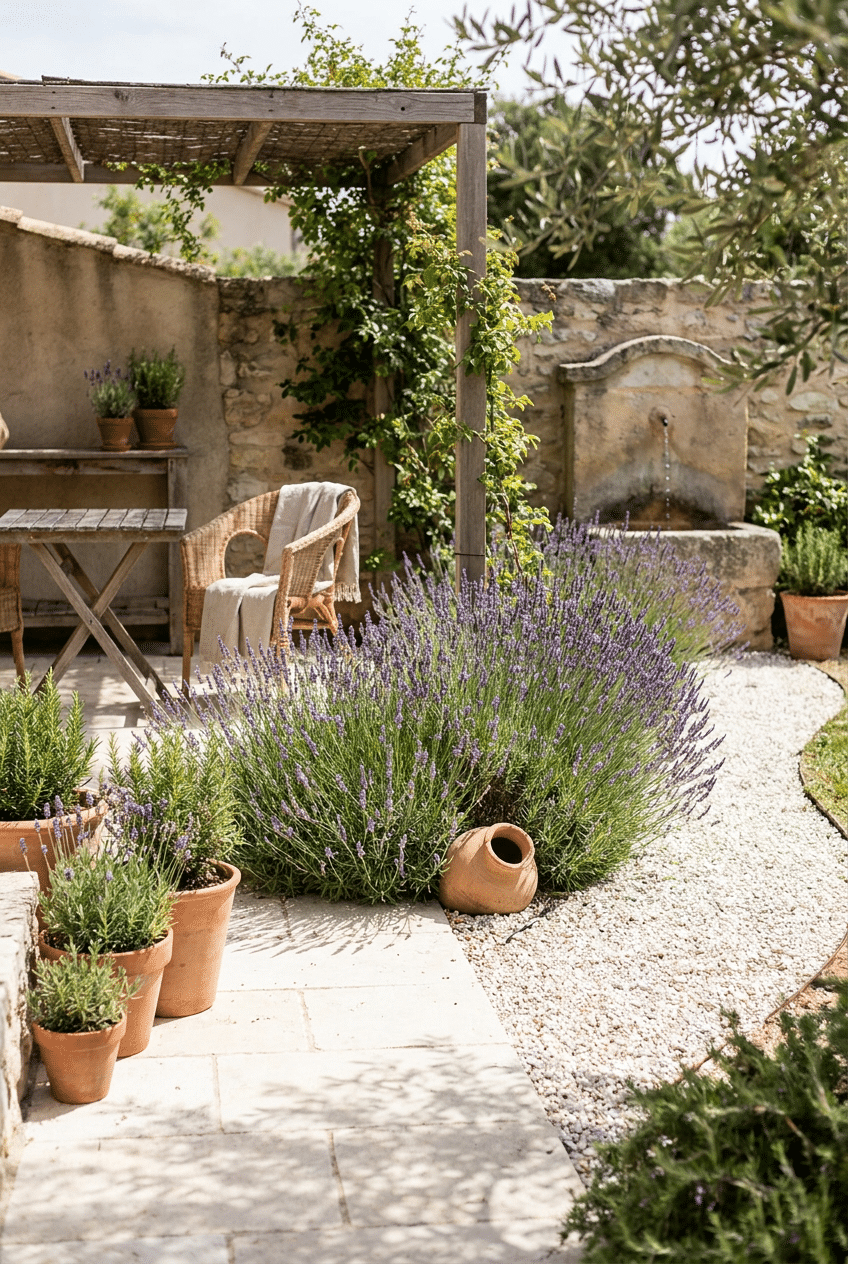
If there is one plant that instantly transports you to the sun-baked hills of Provence, it is lavender. This iconic Mediterranean garden plant is one of the easiest and most rewarding things you can grow in your backyard, and the good news is that it thrives on a little bit of neglect. Lavender loves well-drained soil and full sun, which means it is perfect for those spots in your garden where other plants tend to struggle. The purple-blue flower spikes are absolutely gorgeous from late spring through summer, and the scent is genuinely unmatched. Beyond looking beautiful, lavender is a magnet for bees and butterflies, so you are essentially adding a whole ecosystem to your garden. Plant it along pathways, in borders, or in terracotta pots for that classic Mediterranean aesthetic. Trim it back lightly after flowering to keep it bushy and full.
Styling note: Grouping lavender in odd numbers — threes or fives — creates a more natural, relaxed feel than planting in straight rows.
2. Rosemary – A Fragrant Must-Have Mediterranean Garden Plant
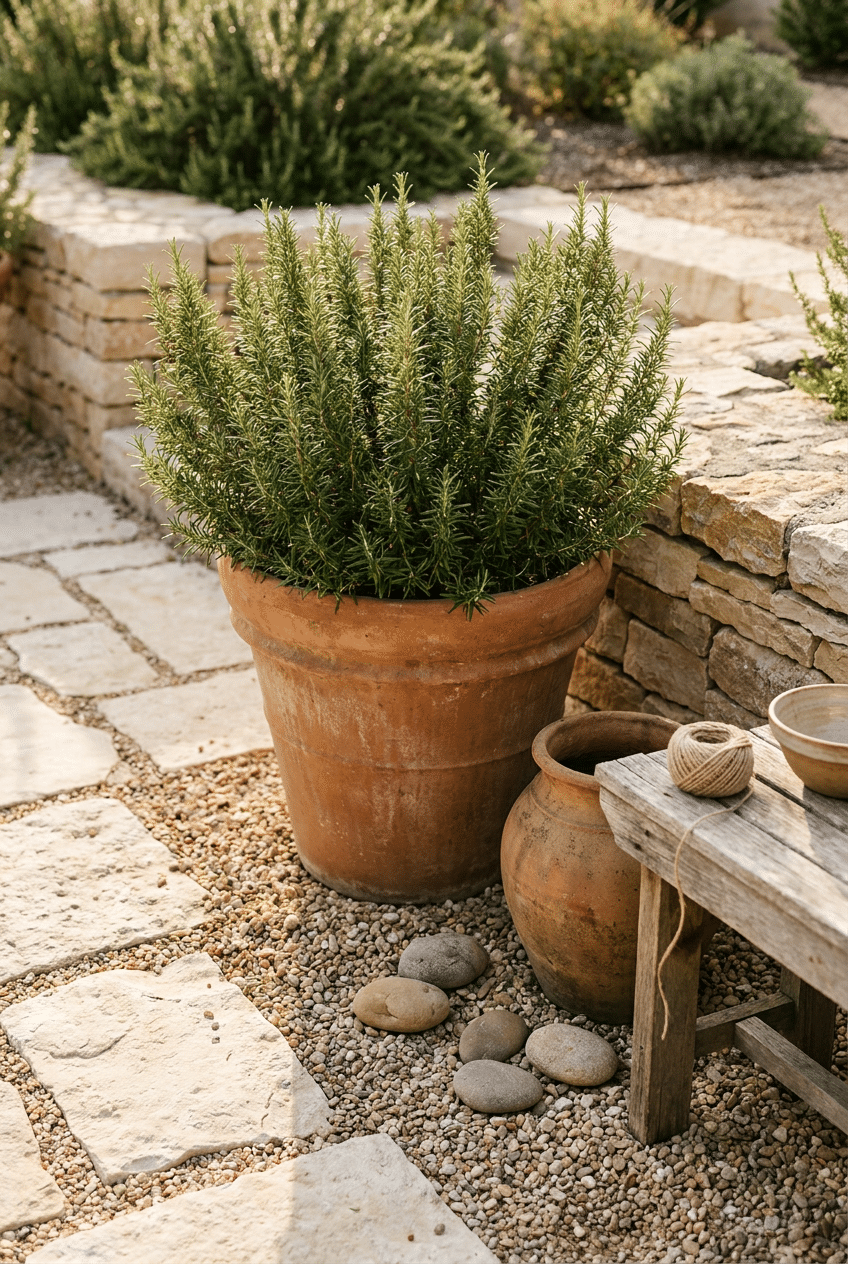
Rosemary is one of those Mediterranean garden plants that genuinely does it all — it looks amazing, smells incredible, and you can even cook with it. This evergreen shrub is incredibly hardy once established and can handle dry summers with ease. The small blue-purple flowers that appear in spring are beautiful and attract pollinators, while the needle-like foliage adds brilliant texture to borders and containers year-round. Rosemary works beautifully as a low hedge, a standalone shrub, or even trained up against a sunny wall. It pairs naturally with lavender, thyme, and santolina for a cohesive herby Mediterranean planting scheme that is as practical as it is gorgeous. One of the best things about rosemary is how little maintenance it needs — give it sunshine, decent drainage, and occasional pruning, and it will reward you for years. Plant it near your outdoor dining area and brush past it whenever you want that incredible herby fragrance on demand.
3. Olive Tree – The Icon of Any Mediterranean Garden
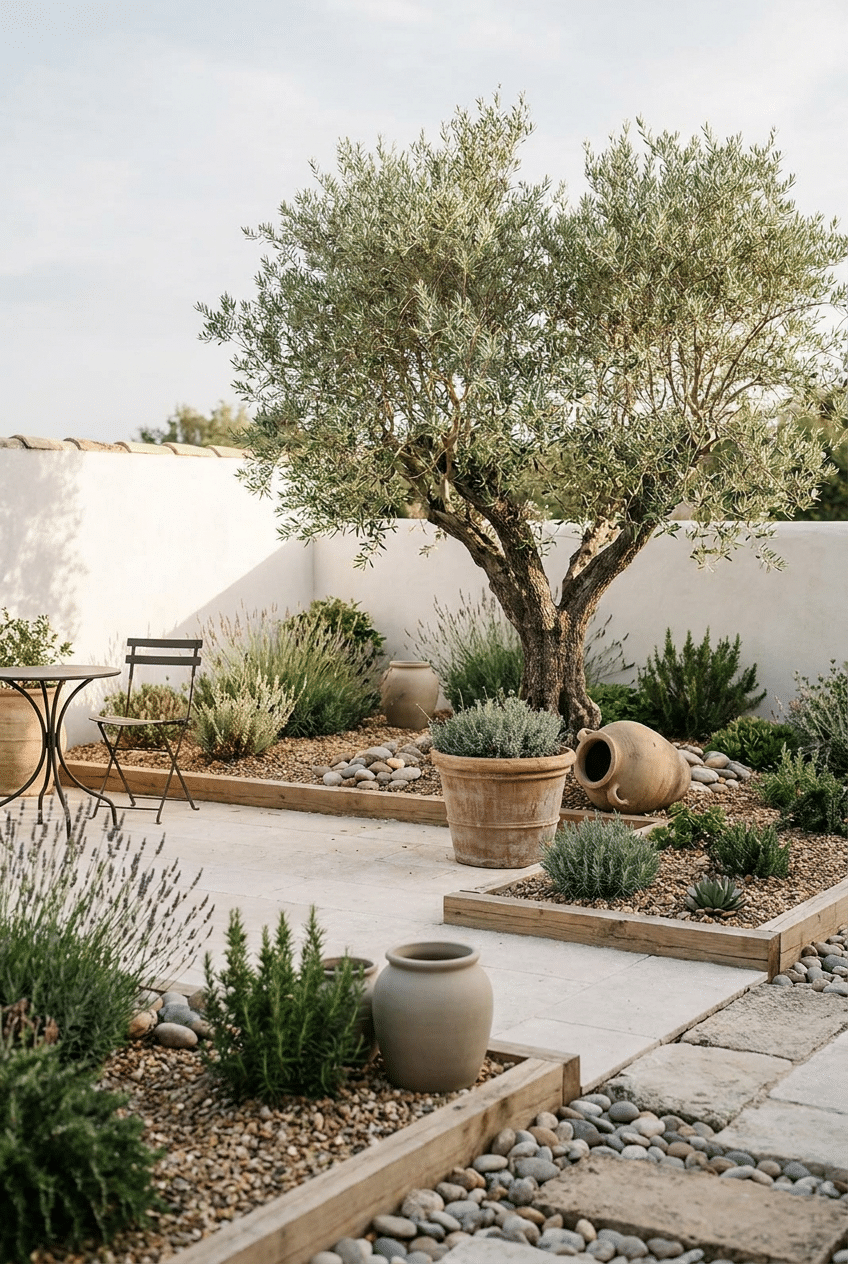
Nothing says Mediterranean garden quite like an olive tree. These ancient, sculptural trees are absolutely having a moment in garden design right now, and once you see one in a backyard setting, you will understand why everyone is obsessed. Olive trees are surprisingly hardy and adaptable — they can even be grown in large containers, making them perfect for patios and courtyards. The silvery-green foliage catches the light in the most beautiful way, and mature trees develop gnarled, characterful trunks that look like living pieces of art. They are drought-tolerant once established, evergreen, and incredibly long-lived. Even in cooler climates, ornamental olive trees can thrive in sheltered sunny spots.
Styling note: A single large olive tree in a statement terracotta pot instantly becomes the focal point of any outdoor space — no extra decor needed. Pair your olive tree with gravel mulch and low-growing herbs around the base for a fully cohesive Mediterranean garden look.
4. Cistus (Rock Rose) – Low-Maintenance Mediterranean Charm
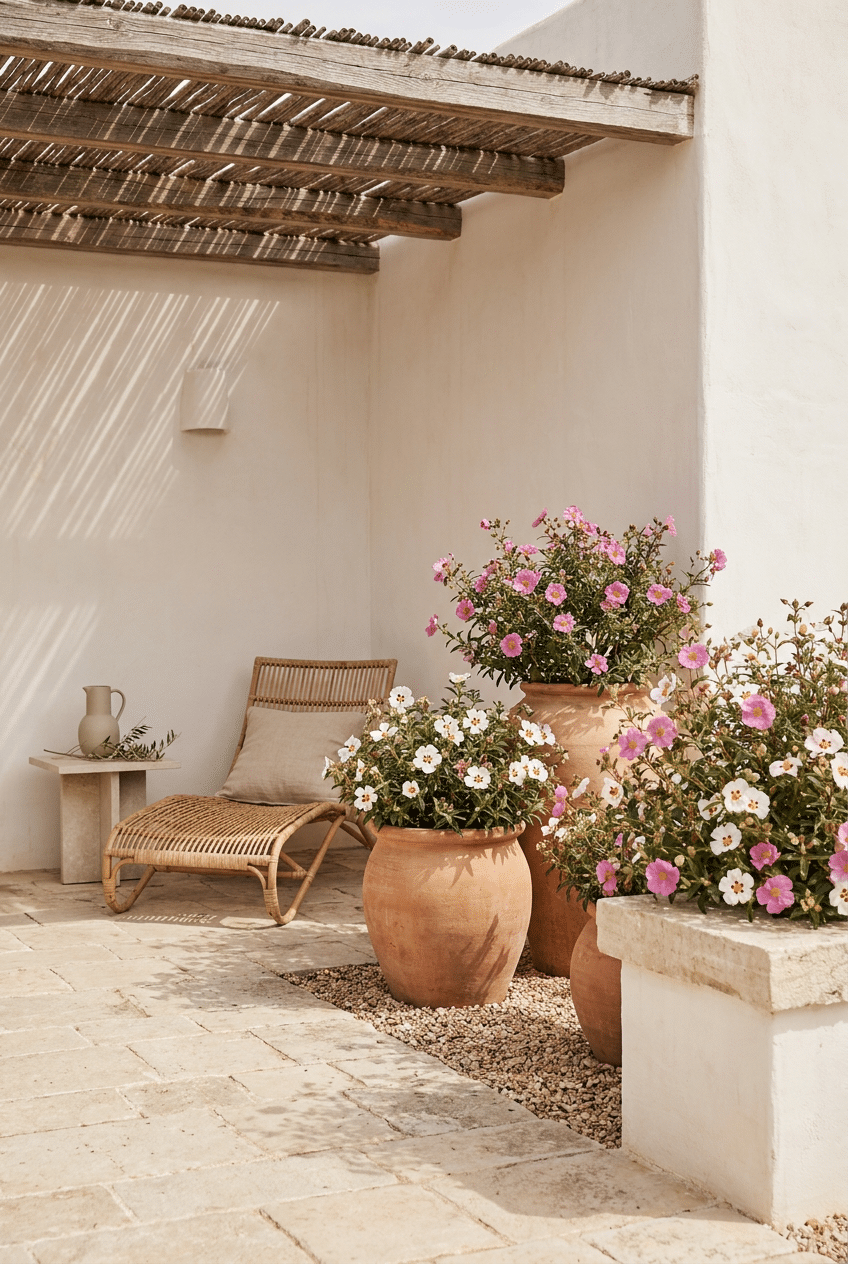
Cistus, also known as rock rose, is one of those under-the-radar Mediterranean garden plants that more people need to know about. This flowering shrub is incredibly tough, thriving in poor dry soils where many other plants simply give up. The flowers are delicate and papery, appearing in shades of white, pink, and magenta throughout late spring and early summer. Each bloom only lasts a day, but the plant produces so many of them that it stays looking spectacular for weeks. Cistus is perfect for filling gaps in sunny borders, growing on slopes, or planting in gravel gardens where drainage is excellent. It is also wonderfully aromatic — the leaves release a warm, resinous scent when touched that is utterly transportive. Once established, cistus is essentially maintenance-free, which makes it a brilliant choice for gardeners who want beautiful results without spending every weekend weeding and watering. This is one Mediterranean garden plant you will wonder how you ever gardened without.
5. Agapanthus – Bold and Beautiful in Any Mediterranean Garden
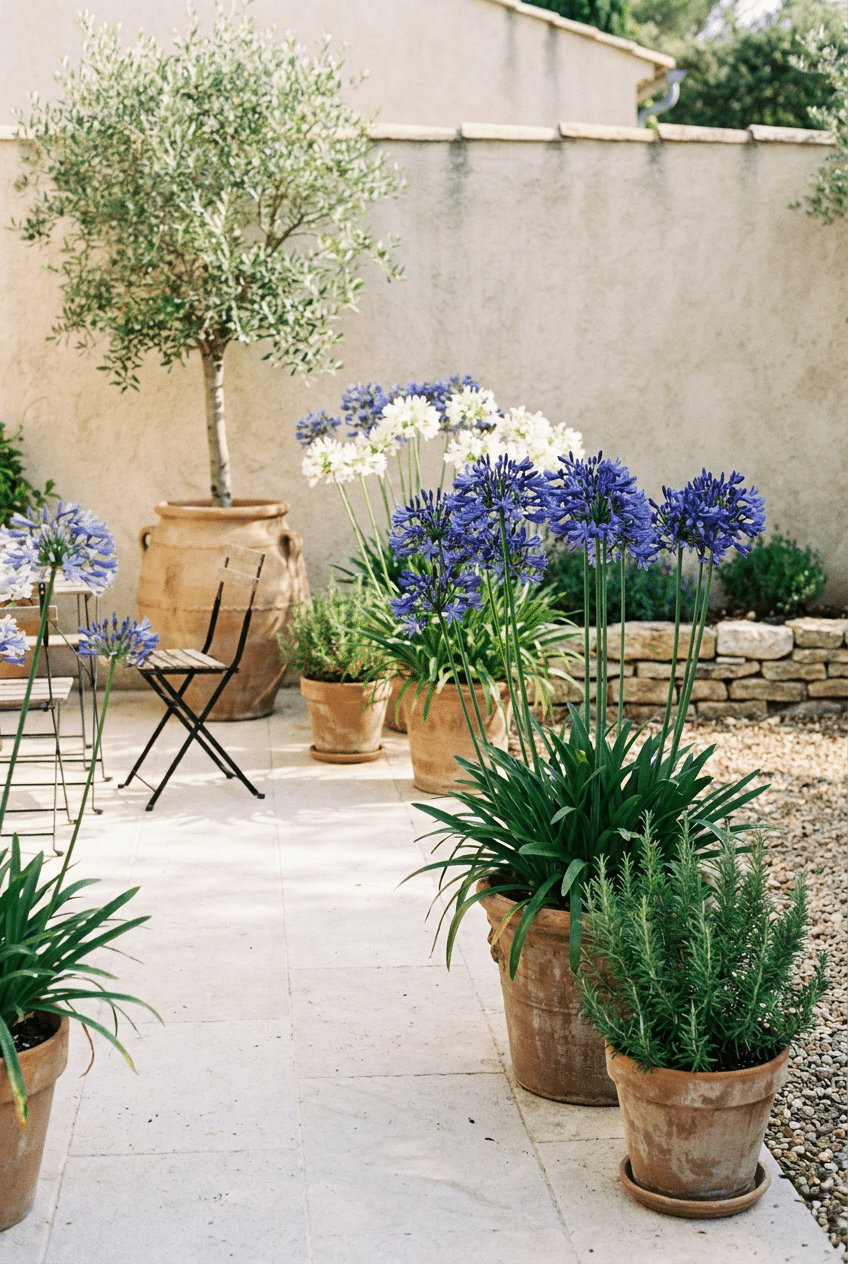
Agapanthus is the kind of plant that stops people in their tracks. Those dramatic globe-shaped flower heads in shades of deep blue, pale lilac, and pure white sit on tall elegant stems and create the most stunning display from midsummer into early autumn. As a Mediterranean garden plant, agapanthus is right at home in sunny spots and thrives in well-drained soil or containers. It is particularly stunning when planted in large groups along pathways or borders, creating a river of colour that flows through the garden. Agapanthus is also fairly drought-tolerant once established, making it a great low-maintenance choice for a Mediterranean-inspired backyard. The strap-like foliage looks good even when the plant is not in flower, adding structure and greenery throughout the season.
Styling note: Repeating the same plant at intervals along a border is one of the most effective tricks for creating a professional, cohesive garden design. Plant agapanthus in bold drifts and let them do the heavy lifting visually.
6. Santolina – A Compact Mediterranean Garden Plant You’ll Love
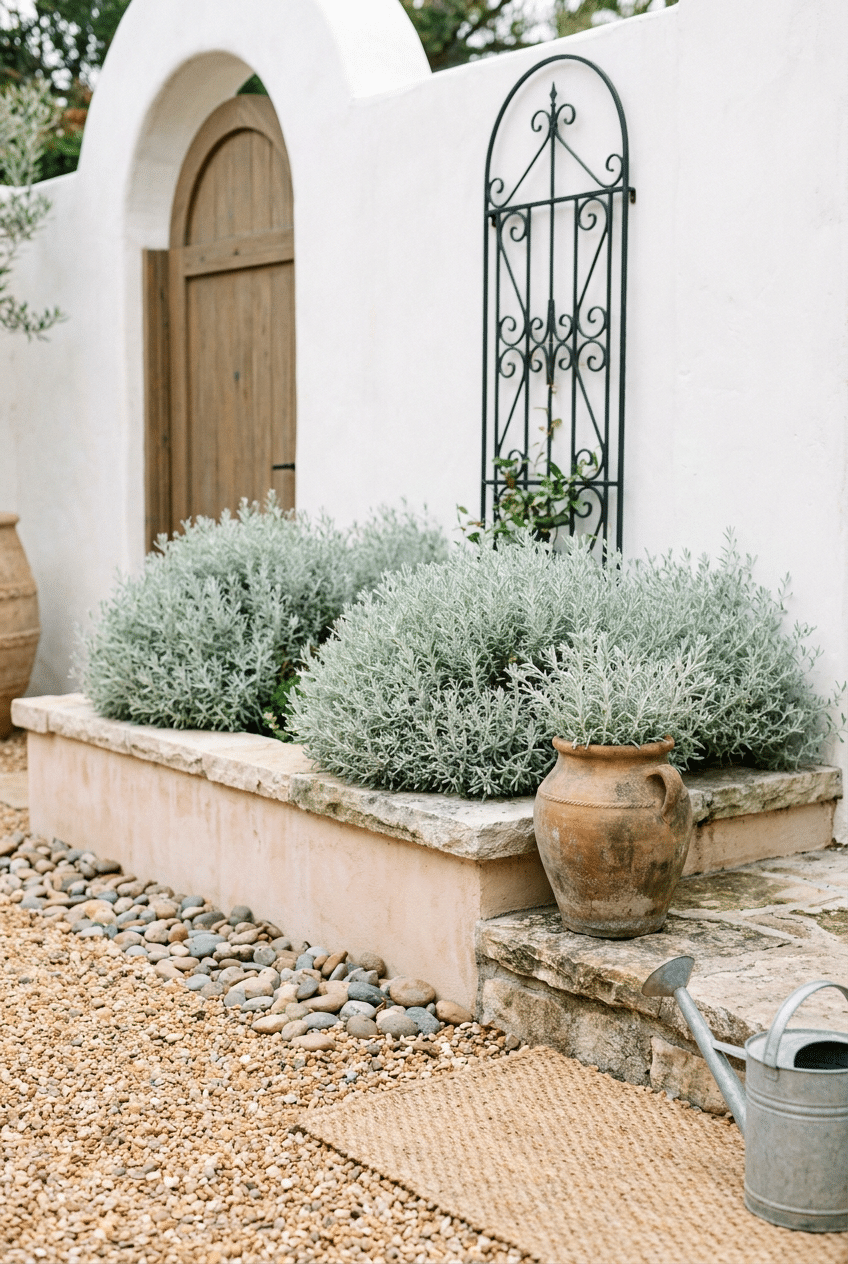
Santolina, sometimes called cotton lavender, is one of those quietly brilliant Mediterranean garden plants that experienced gardeners always seem to have in their borders. This low-growing, mounding shrub has the most beautiful finely textured silver-grey foliage that looks incredible against green plants or terracotta. In summer it produces masses of small button-like yellow flowers that are cheerful and charming. Santolina is incredibly drought-tolerant and thrives in full sun with good drainage — classic Mediterranean conditions. It is often used as edging along pathways or as part of a knot garden design because it responds brilliantly to clipping and holds its shape well. Left to grow more freely, it forms relaxed, billowing mounds that feel very natural and unfussy. The silver foliage works as a beautiful bridge between bold-coloured flowering plants, softening and unifying a planting scheme effortlessly. Give it a trim after flowering to keep it compact and looking its best throughout the growing season.
7. Bougainvillea – The Showstopper of Mediterranean Garden Plants
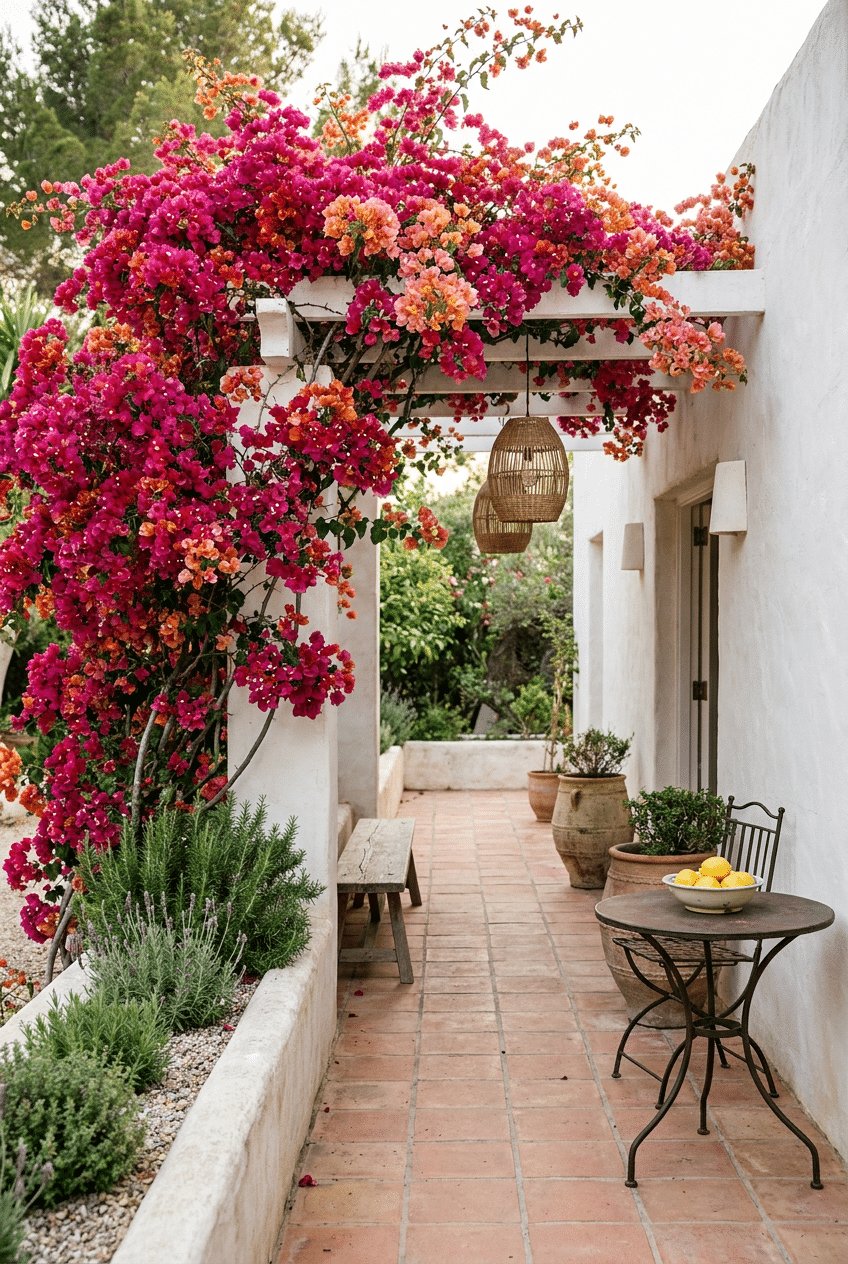
Bougainvillea is pure drama and there is absolutely nothing subtle about it — and that is exactly why we love it. This incredible climbing plant is one of the most recognisable Mediterranean garden plants in the world, covering walls, pergolas, and fences in cascades of vivid colour. The papery bracts come in the most stunning shades of magenta, orange, red, purple, and white, and in warm sunny spots the display can last for months. In milder climates, bougainvillea can be grown outdoors year-round, while in cooler regions it thrives in containers that can be brought inside during winter. It loves heat, sunshine, and slightly poor soil — too much water or fertiliser and it will produce leaves instead of those showstopping blooms. Train it over an arch or up a sunny wall for maximum impact.
Styling note: A bougainvillea-covered pergola over an outdoor dining area is one of the most effortlessly chic things you can create in a Mediterranean garden — it is resort living at home.
8. Thyme – A Tough and Tasty Mediterranean Garden Plant
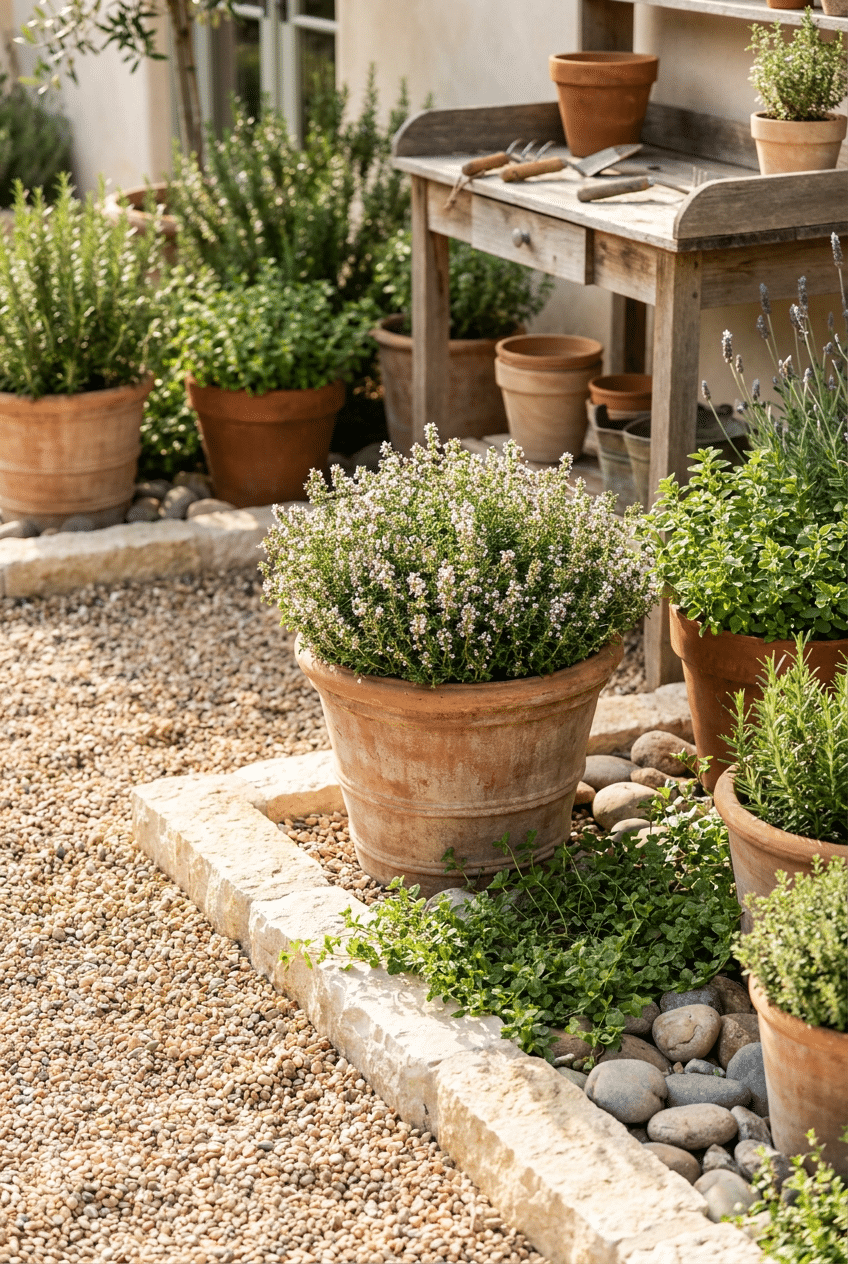
Thyme is an absolute workhorse of the Mediterranean garden and one of the easiest plants you will ever grow. This low-growing aromatic herb is happy in poor dry soils, full sun, and tough conditions that would stress most other plants. There are so many beautiful varieties available beyond the standard culinary thyme — creeping thyme makes a gorgeous ground cover between paving stones, while woolly thyme has incredibly soft silver foliage that is almost irresistible to touch. In late spring and early summer, thyme produces masses of tiny flowers in pink, purple, or white that are absolutely beloved by bees. Beyond being ornamental, thyme is of course a brilliant culinary herb that you will use constantly if you love cooking. Plant it along the edges of borders, in rock gardens, or between the cracks in a terrace for a beautifully informal look. As a Mediterranean garden plant it is virtually indestructible and absolutely brilliant value for the beauty it brings.
9. Pittosporum – A Versatile Mediterranean Garden Favourite
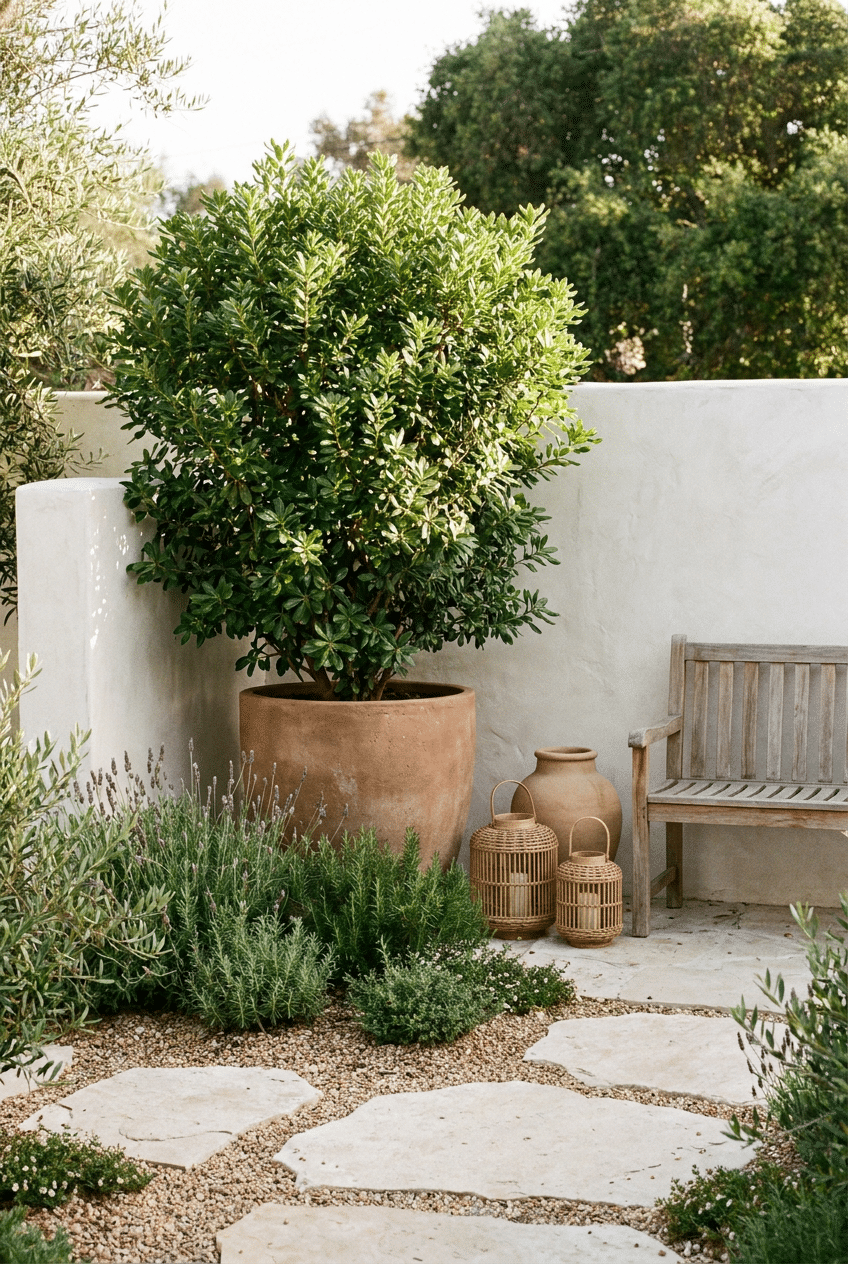
Pittosporum might not be the most talked-about Mediterranean garden plant, but garden designers are absolutely obsessed with it for good reason. This versatile evergreen shrub or small tree comes in an incredible range of varieties, from deep burgundy and chocolate brown to variegated green and cream, offering year-round structure and colour. It tolerates coastal conditions, light drought, and various soil types, making it extremely adaptable and reliable. Pittosporum is most often used as a structural backdrop plant, clipped hedge, or standalone specimen, and it works brilliantly in modern, minimal, and Mediterranean-inspired garden styles alike. The small flowers that appear in late spring are modestly pretty but carry the most extraordinary sweet fragrance that drifts across the garden on warm evenings.
Styling note: Using a dark-foliaged pittosporum as a backdrop makes colourful flowers pop dramatically — it is one of the best contrast tricks in garden design. This is a Mediterranean garden plant that earns its place in any backyard.
10. Euphorbia – A Striking Mediterranean Garden Plant
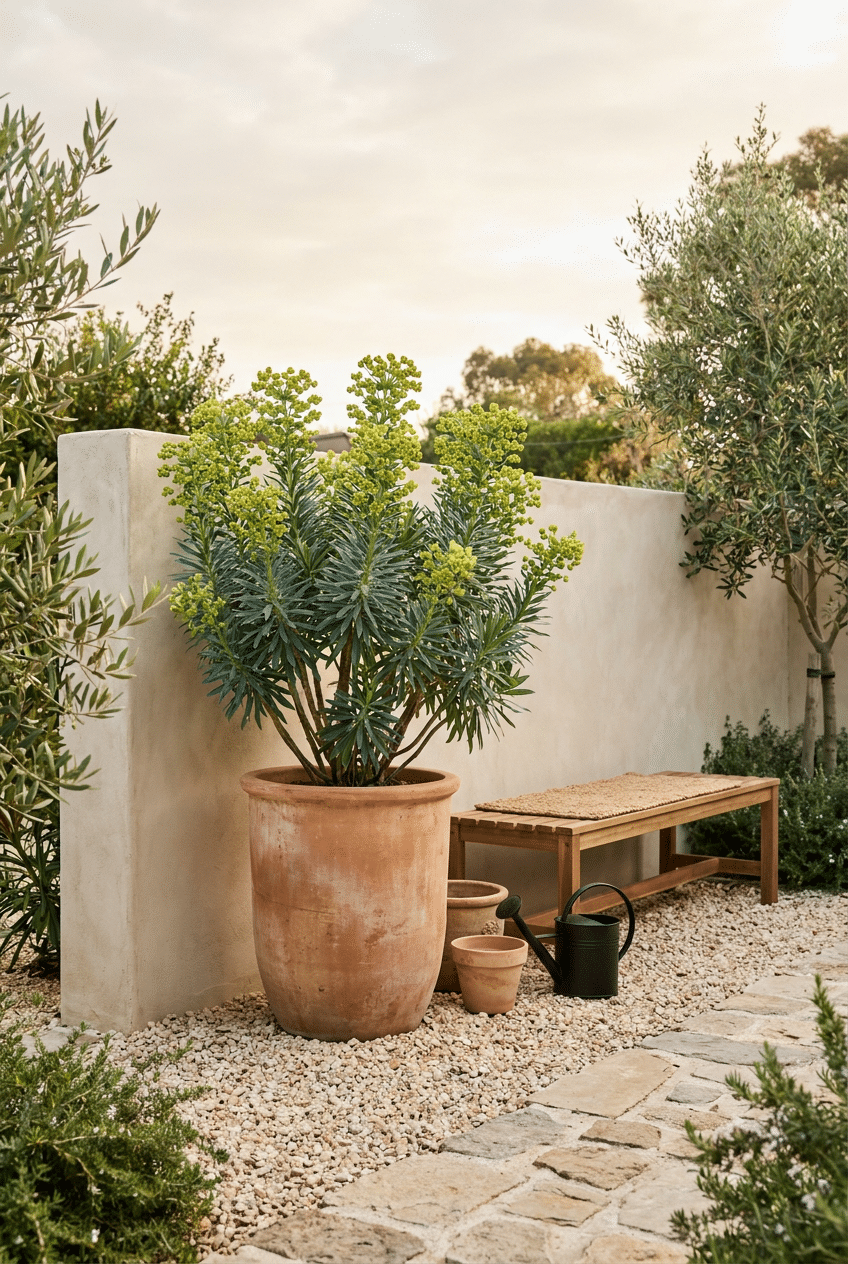
Euphorbia is one of those architectural Mediterranean garden plants that looks like it belongs in a design magazine. The structural, sculptural quality of many euphorbias is genuinely unmatched — from the bold, upright Euphorbia characias with its lime-green flower heads to the low, spreading varieties that carpet the ground in dense evergreen foliage. Euphorbias are incredibly tough, tolerating drought, poor soil, and neglect with impressive stoicism. They bring colour and interest from very early in the year, with many varieties flowering from late winter through spring when most other plants are still dormant. The fresh yellow-green bracts of many euphorbias add a surprisingly vibrant pop of colour to the garden and work brilliantly alongside dark foliage, terracotta, and silvery Mediterranean herbs. One important thing to note is that euphorbias have a milky sap that can irritate skin, so wear gloves when handling them. Beyond that small precaution, this is one of the easiest and most rewarding Mediterranean garden plants you can grow.
11. Wisteria – Dreamy Climbing Mediterranean Garden Plant
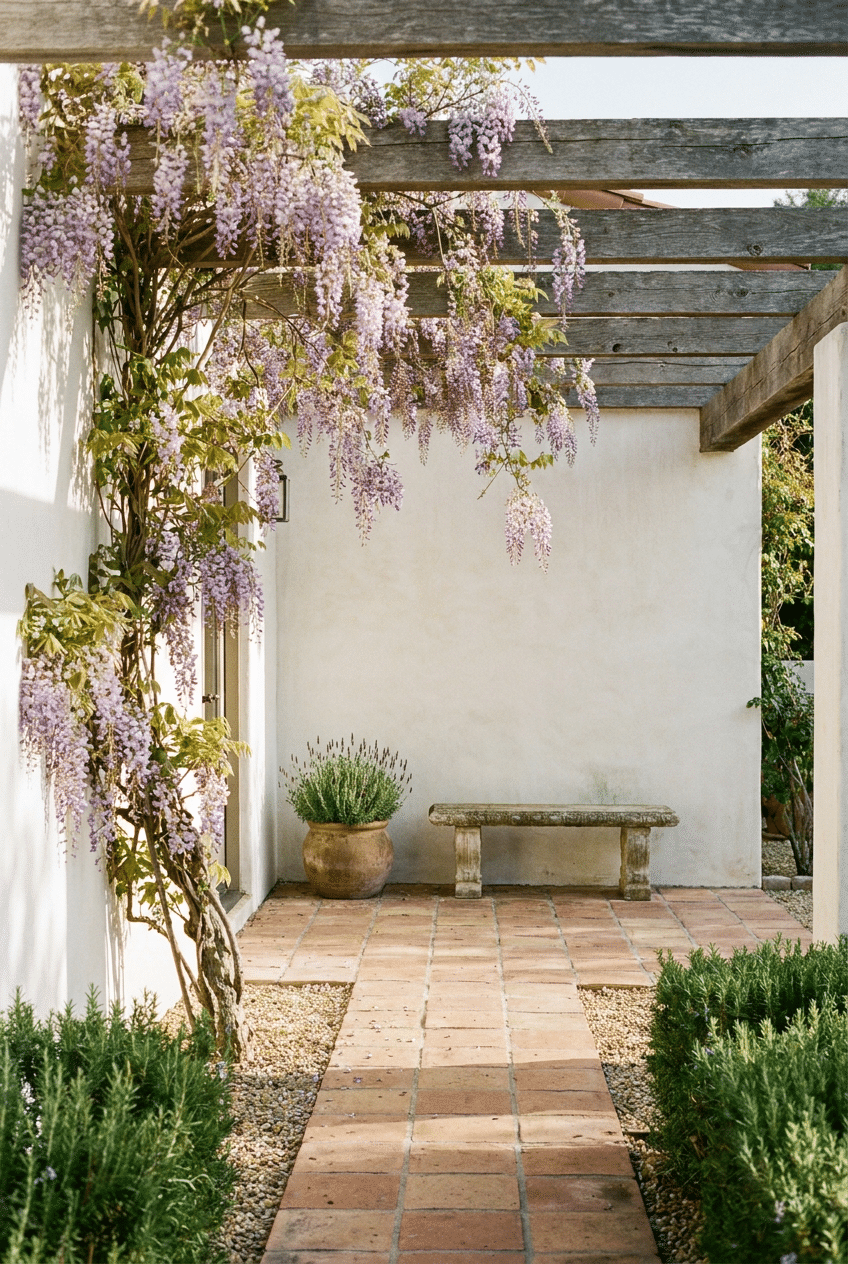
Wisteria is the ultimate romantic plant and one of the most breathtaking Mediterranean garden plants you can grow against a wall, fence, or pergola. Those cascading clusters of fragrant purple, lilac, or white blooms are absolutely iconic in late spring, creating a floral waterfall effect that is completely show-stopping. Wisteria loves a sunny sheltered spot and well-drained fertile soil, and once established it is a vigorous, long-lived climber that will reward you with spectacular blooms for decades. It does require some patience in the early years and benefits from regular pruning twice a year to keep it flowering well and in check. But honestly, when it blooms for the first time, all that care becomes completely worth it.
Styling note: Wisteria draped over a white rendered wall or a timber pergola is one of the most iconic and Instagrammable Mediterranean garden looks you can create — effortlessly beautiful and endlessly photogenic. Plant it and play the long game.
12. Salvia – A Pollinator-Loving Mediterranean Garden Plant
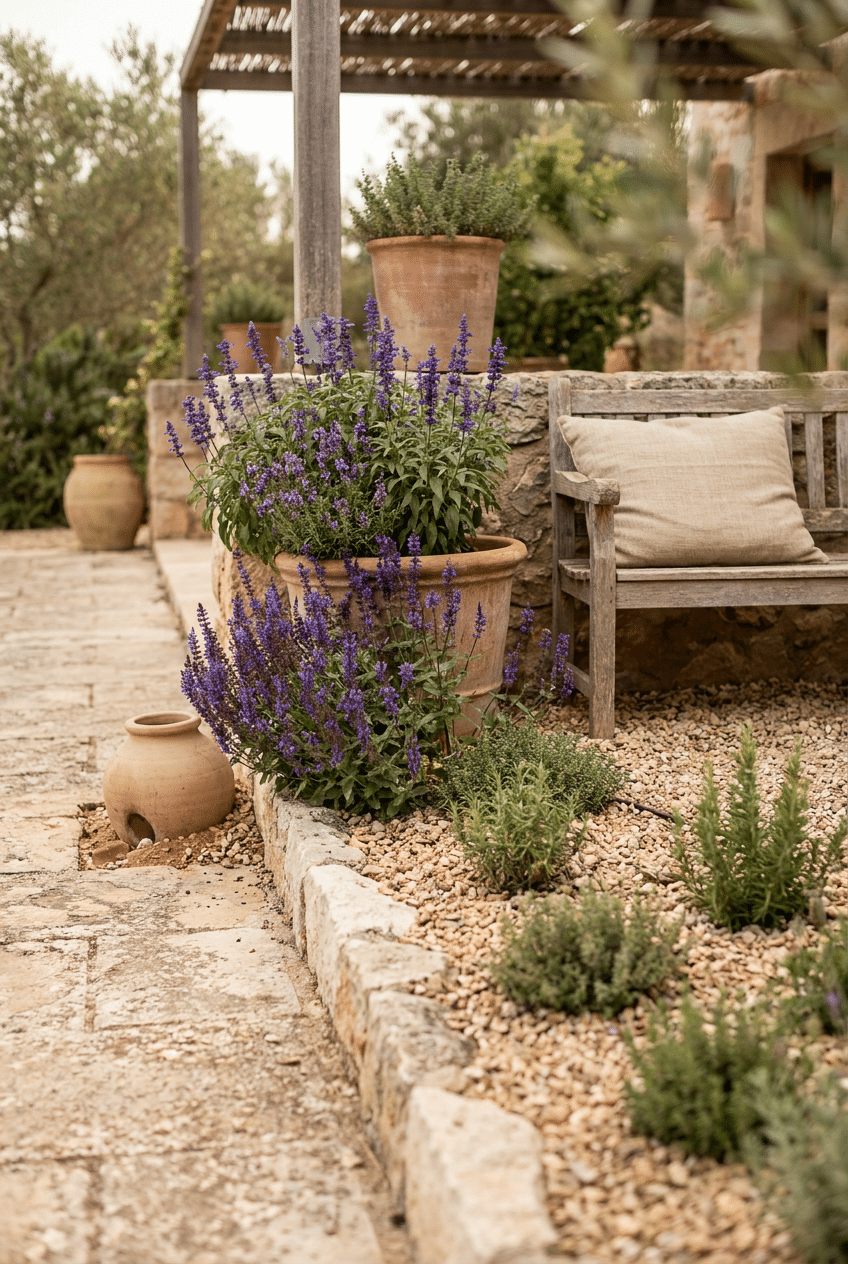
Salvia is having a huge moment in garden design right now and it absolutely deserves all the attention it is getting. This vast genus of Mediterranean garden plants includes hundreds of species and varieties, from compact border salvias to tall, dramatic specimens that create real height and presence. The tubular flowers in shades of deep purple, cobalt blue, cherry red, and soft pink are incredibly striking and appear over an exceptionally long season from summer well into autumn. Salvias are loved by bees, butterflies, and hummingbirds, making them a brilliant choice for a wildlife-friendly Mediterranean garden. Most salvias are drought-tolerant once established, preferring full sun and good drainage — perfect Mediterranean conditions. They work brilliantly alongside grasses, agapanthus, and rosemary in a naturalistic planting scheme. Deadhead regularly to extend the flowering season and cut back hard in spring for a fresh flush of growth. This is one Mediterranean garden plant that truly delivers maximum impact for minimal effort.
13. Phlomis – A Sun-Hardy Mediterranean Garden Plant
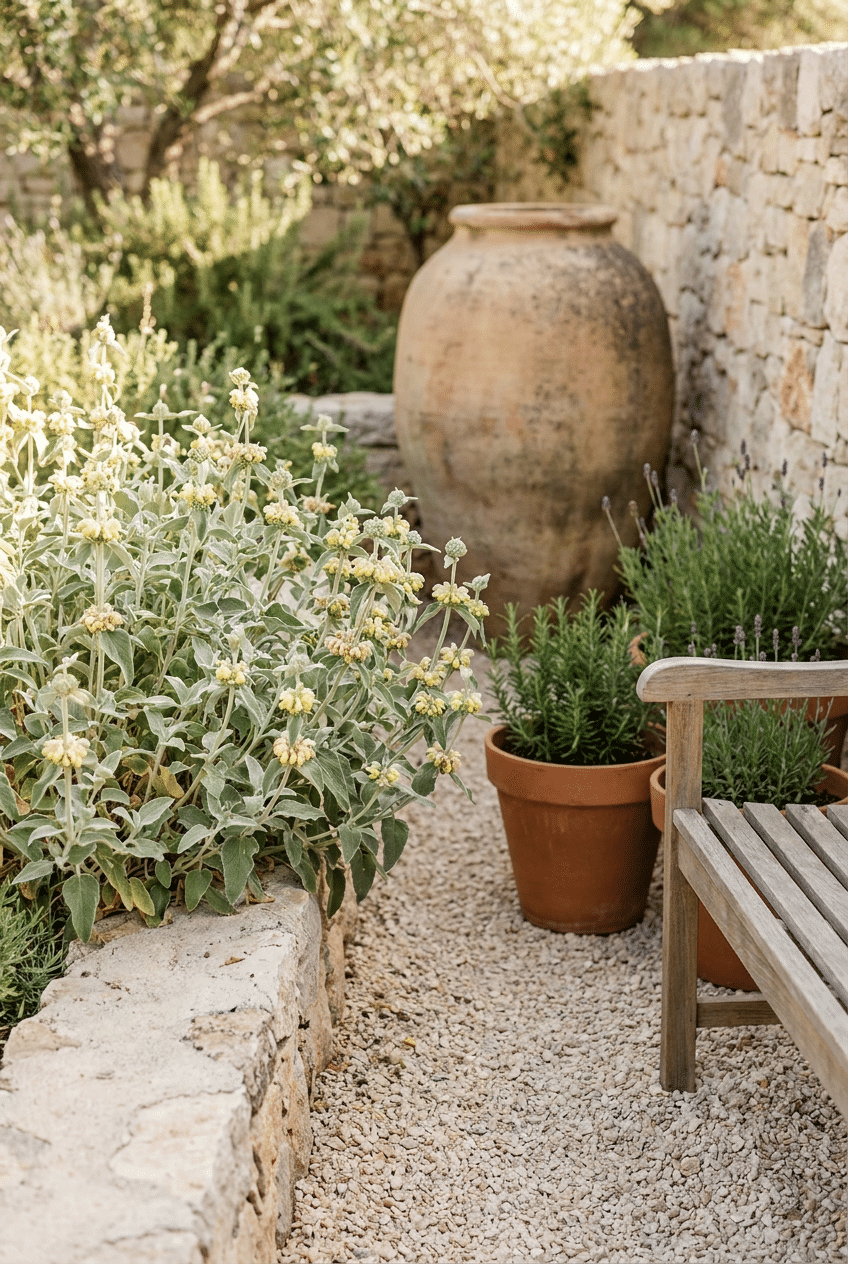
Phlomis is one of those genuinely brilliant Mediterranean garden plants that looks fantastic in every single season. The large, felted silver-green leaves create an incredible textural presence in the border year-round, and in summer the whorls of yellow or dusky pink flowers stacked up the stems create a wonderfully architectural display. Even after flowering, phlomis produces beautiful seedheads that persist through autumn and winter, catching light and frost beautifully and providing food for birds. Phlomis is exceptionally drought-tolerant and loves baking in full sun, thriving in conditions that would stress less robust plants. It works beautifully in gravel gardens, naturalistic planting schemes, and more formal Mediterranean-inspired borders alike. The combination of textural foliage, interesting flowers, and stunning winter seedheads means this plant genuinely earns its place in any Mediterranean garden. It is also deer resistant, which is a brilliant bonus for those gardening in rural areas.
Styling note: Mixing plants with contrasting leaf textures — silky, felted, spiky, and glossy — is one of the secrets to a truly sophisticated Mediterranean planting scheme.
14. Ornamental Grasses – Effortless Texture for Your Mediterranean Garden
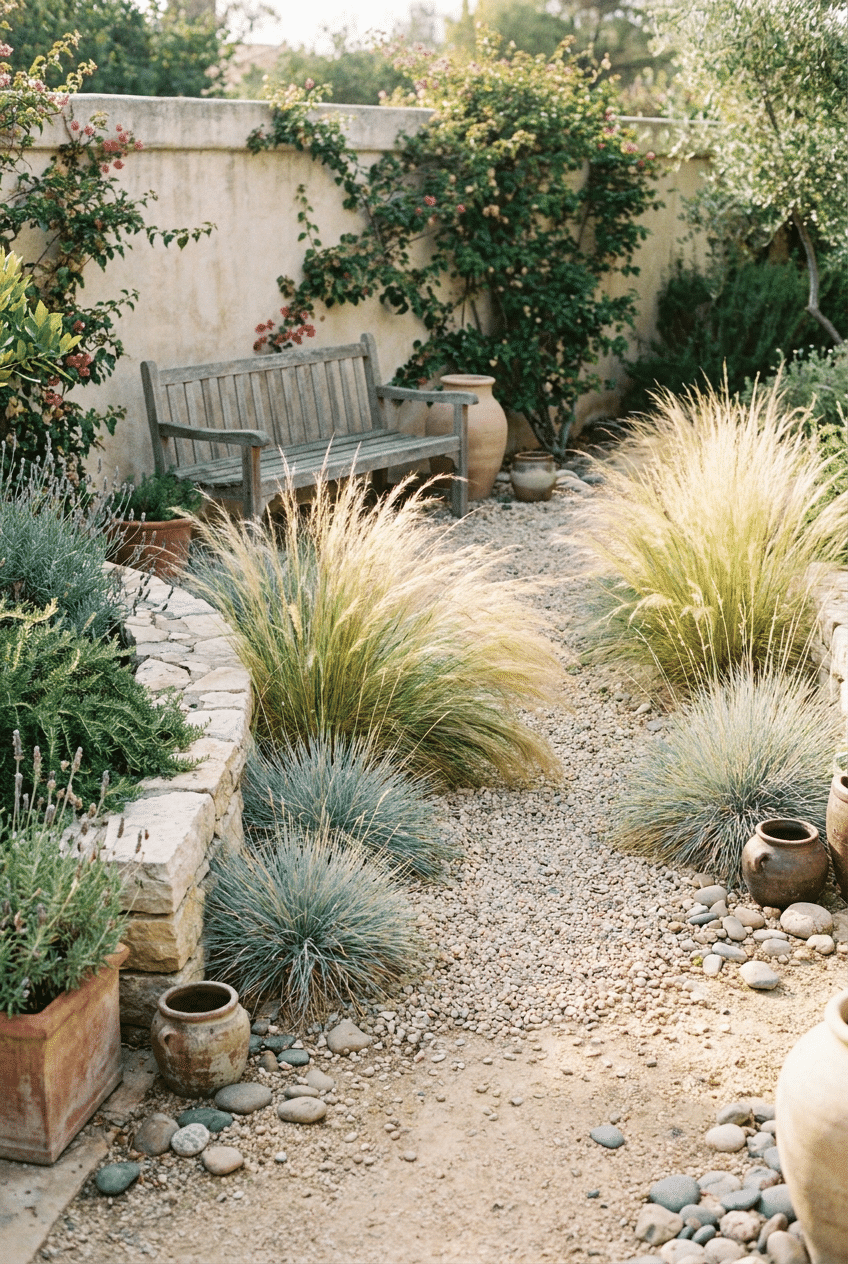
No Mediterranean garden is complete without the soft, flowing movement that ornamental grasses bring to a planting scheme. Grasses add a completely different texture and dynamic to the garden — their feathery flower plumes catch the breeze and catch the light in the most magical way, especially in late afternoon when the sun is low. Varieties like Stipa tenuissima, Pennisetum, and Festuca glauca are perfectly suited to Mediterranean garden conditions, loving full sun and well-drained soil. The golden, bronze, and silver tones of many ornamental grasses complement the silvery herbs and terracotta tones of a Mediterranean palette beautifully. They also provide outstanding year-round interest, looking spectacular from summer right through winter when their seedheads take on a warm tawny glow.
Plant grasses in bold drifts alongside salvias, agapanthus, and phlomis for a naturalistic, movement-filled planting that looks effortlessly designed. As a final touch for your Mediterranean garden, grasses bring that romantic, windswept quality that makes a backyard feel truly alive.
Creating a Mediterranean garden in your backyard is one of the most rewarding things you can do for your outdoor space, and honestly, it is more achievable than you might think. These 14 easy Mediterranean garden plants prove that you do not need to live on the coast of Italy or Spain to have a breathtaking, sun-drenched garden — you just need the right plants, a sunny spot, and a little bit of vision. The beauty of Mediterranean garden planting is that it gets better every year as the plants mature, fill out, and create that lush, layered look you have been dreaming of. Whether you start with just a lavender border, a statement olive tree, or a whole bougainvillea-covered pergola, every single one of these plants will bring you joy and beauty season after season. So pick your favourites, head to your local garden centre, and start building that Mediterranean escape right in your own backyard. If this post inspired you, please save it to your Pinterest boards so you can come back to it when you are ready to plant — and share it with a friend who is planning to transform their outdoor space this season!