
Picture a gorgeous home exterior with lush landscaping, clean pathways, and a yard that stays pristine even after a heavy rainstorm — that is absolutely achievable when you have the right drainage around the house in place. Poor drainage is one of those sneaky home problems that can quietly destroy your foundation, ruin your garden beds, and turn your backyard into a swampy mess. But here is the good news: there are so many smart, effective, and even beautiful solutions that will keep water moving away from your home exactly where it belongs. Whether you are dealing with pooling water after every rain, soggy grass that never seems to dry out, or water creeping toward your basement, this guide covers 12 drainage around the house solutions that genuinely work. We are talking practical fixes that range from simple DIY installs to more involved landscaping upgrades — all of them worth knowing about. Let us get into it!
1. French Drains: The Classic Drainage Around The House Solution
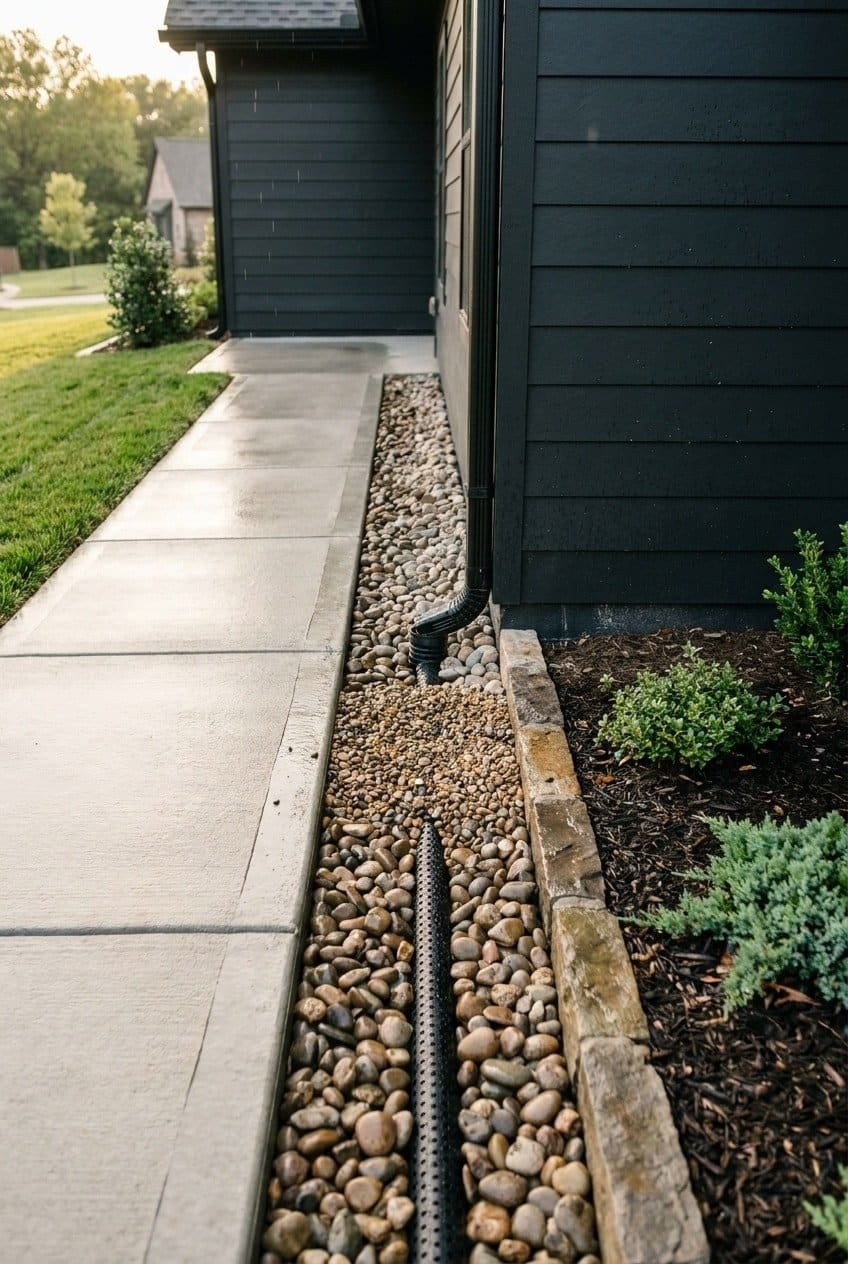
French drains are honestly one of the most trusted and time-tested drainage around the house methods out there, and for good reason — they work incredibly well. The concept is straightforward: a trench is dug around the problem area, filled with gravel, and a perforated pipe is laid inside to redirect water away from your home’s foundation and yard. Water naturally seeps into the gravel, enters the pipe, and flows away to a designated outlet like a street drain, dry well, or lower area of your yard. French drains are especially effective for homes sitting at the bottom of a slope or in areas where water consistently pools near the foundation. They can be installed along the perimeter of your home, around garden beds, or even under driveways. The trench is typically topped with more gravel and sometimes a layer of sod or decorative stone so it blends right into your landscaping. It is a solution that is as functional as it is low-profile, and once installed, it basically takes care of itself with very minimal maintenance required.
✨ Styling note: A gravel-topped French drain edged with flat stones can actually become a design feature in your yard — functional and fab at the same time.
2. Surface Swales for Natural Water Flow
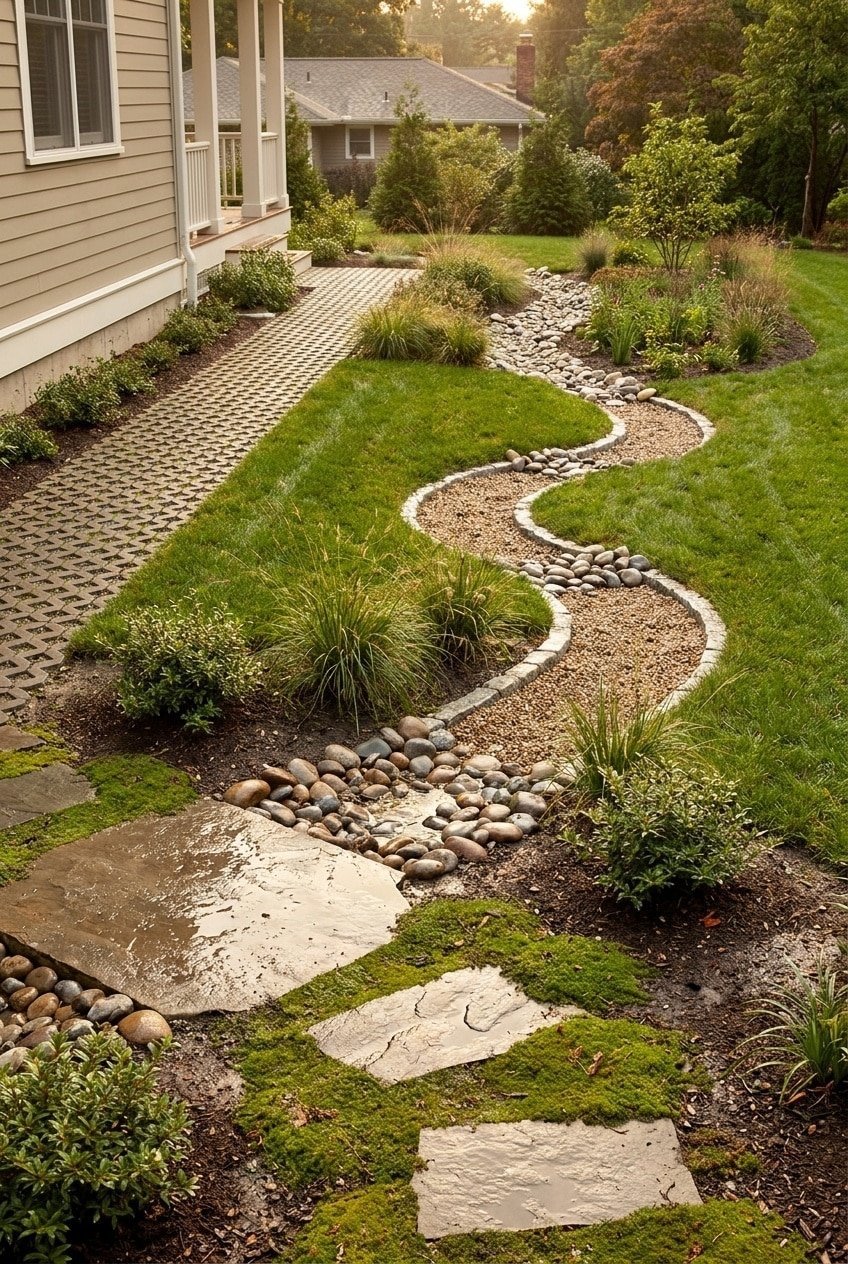
Surface swales are shallow, gently sloped channels that guide water across the surface of your yard and direct it away from your home. Think of them as the outdoor equivalent of a natural stream — they work with gravity to move water in a controlled direction rather than letting it pool or run where you do not want it. Swales are typically grass-lined, which means they blend seamlessly into your lawn and do not look out of place at all. They are a favorite in sustainable landscaping because they slow down water runoff, allow some of it to absorb into the ground, and reduce erosion along the way. Installing a swale involves some regrading of your yard to create that gentle slope, and the size of the swale depends on how much water you are managing. For larger properties or areas with significant runoff, a wider and deeper swale may be needed. This is one of those drainage around the house solutions that doubles as a landscaping feature when designed thoughtfully, especially if you line it with decorative grasses or native plants along the edges.
3. Dry Creek Beds That Look Amazing
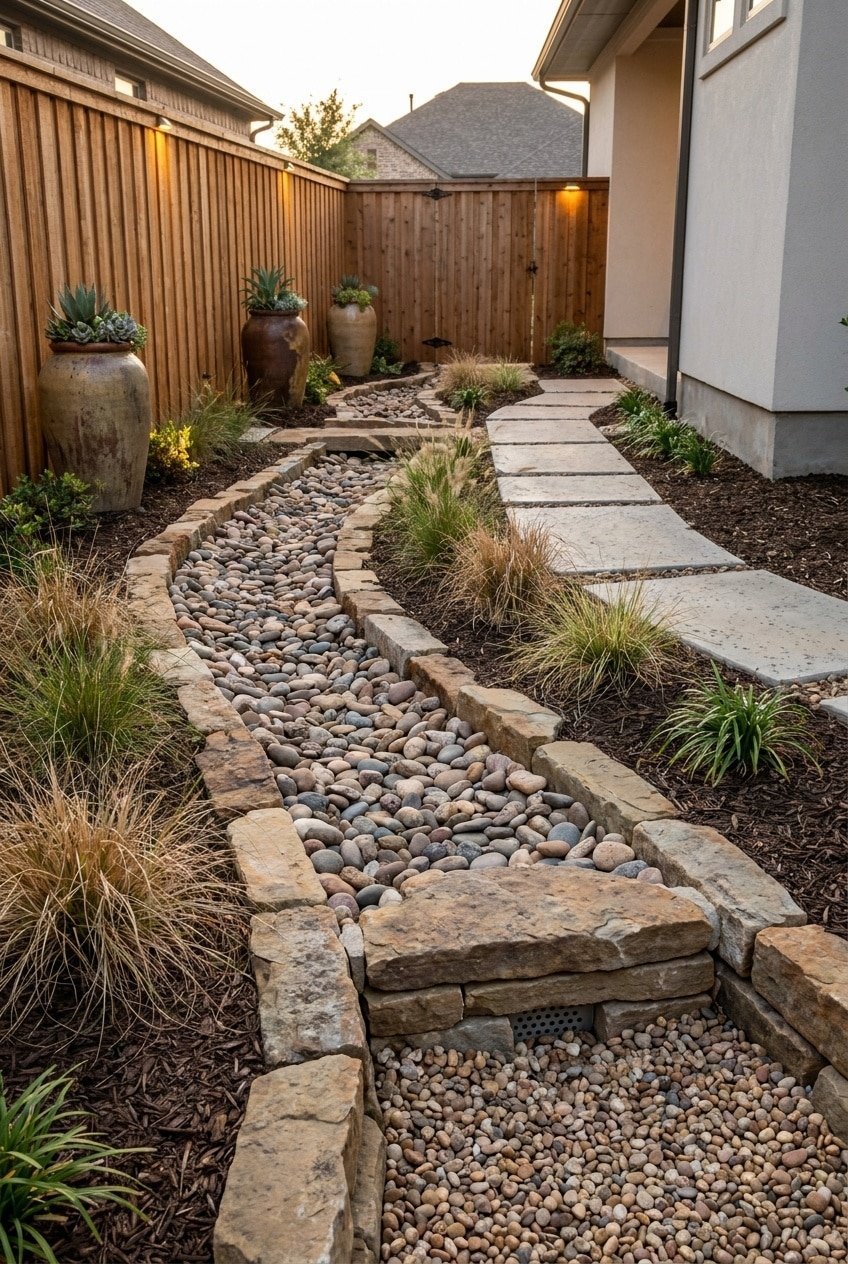
Okay, this one is genuinely one of my favorites because it is where drainage meets serious outdoor style. A dry creek bed is essentially a decorative channel made of rocks and river stones that mimics the look of a natural stream — but its main job is to direct water away from your home during heavy rain. When it is dry, it looks like a gorgeous landscape feature. When it rains, it becomes a functioning drainage channel. That is the kind of two-for-one deal we love in home design! Dry creek beds work best when placed along natural drainage paths in your yard — areas where water already tends to flow or collect. You simply define the path, excavate slightly, lay landscape fabric to prevent weeds, and fill with a mix of gravel, river rocks, and larger boulders for a natural look. You can curve it for a more organic feel and even add native plants or ornamental grasses along the edges to make it feel like it has always been there. This is genuinely one of the most beautiful drainage around the house upgrades you can make to your outdoor space.
✨ Styling note: Use a mix of rock sizes in your dry creek bed — varying textures and scales make it look natural and intentional rather than like a pile of gravel.
4. Downspout Extensions Done Right
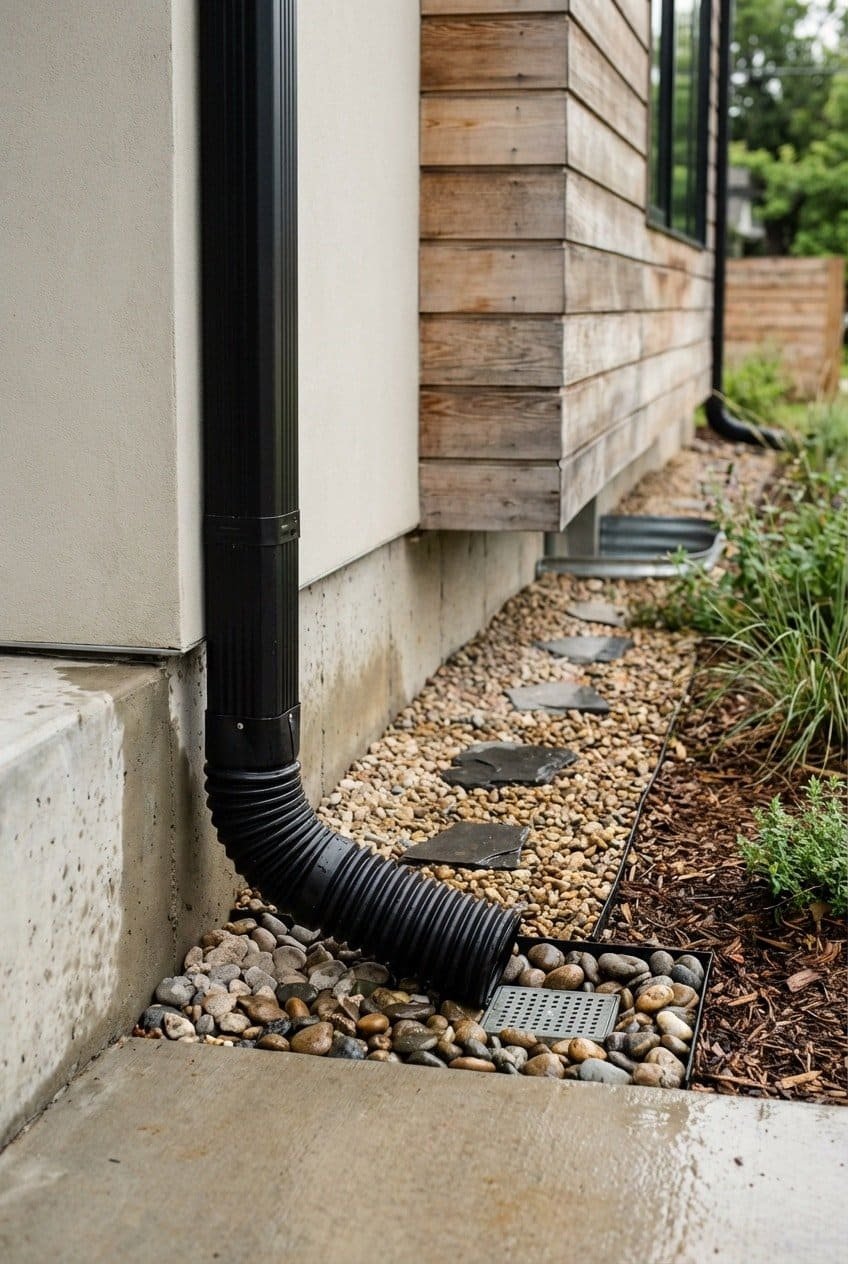
This one is so simple it almost feels too easy, but downspout extensions are one of the most overlooked drainage around the house fixes that homeowners skip over. If your gutters are draining water right next to your foundation, you are basically watering your basement walls every single time it rains. Not ideal! Downspout extensions are attachments that direct water further away from your home — typically at least six feet from the foundation is recommended. You can go with a basic plastic extension, a flexible corrugated tube, or a pop-up emitter that sits flush with the ground and opens when water flows through it. The pop-up emitter option is particularly great for maintaining a cleaner look in your yard since it stays flat and hidden until activated by rain. You can also bury the extension pipe underground for a totally seamless finish. This is a weekend project that costs very little but can make a massive difference in keeping water away from your home’s foundation and preventing moisture-related damage over time.
5. Grading and Resloping Your Yard
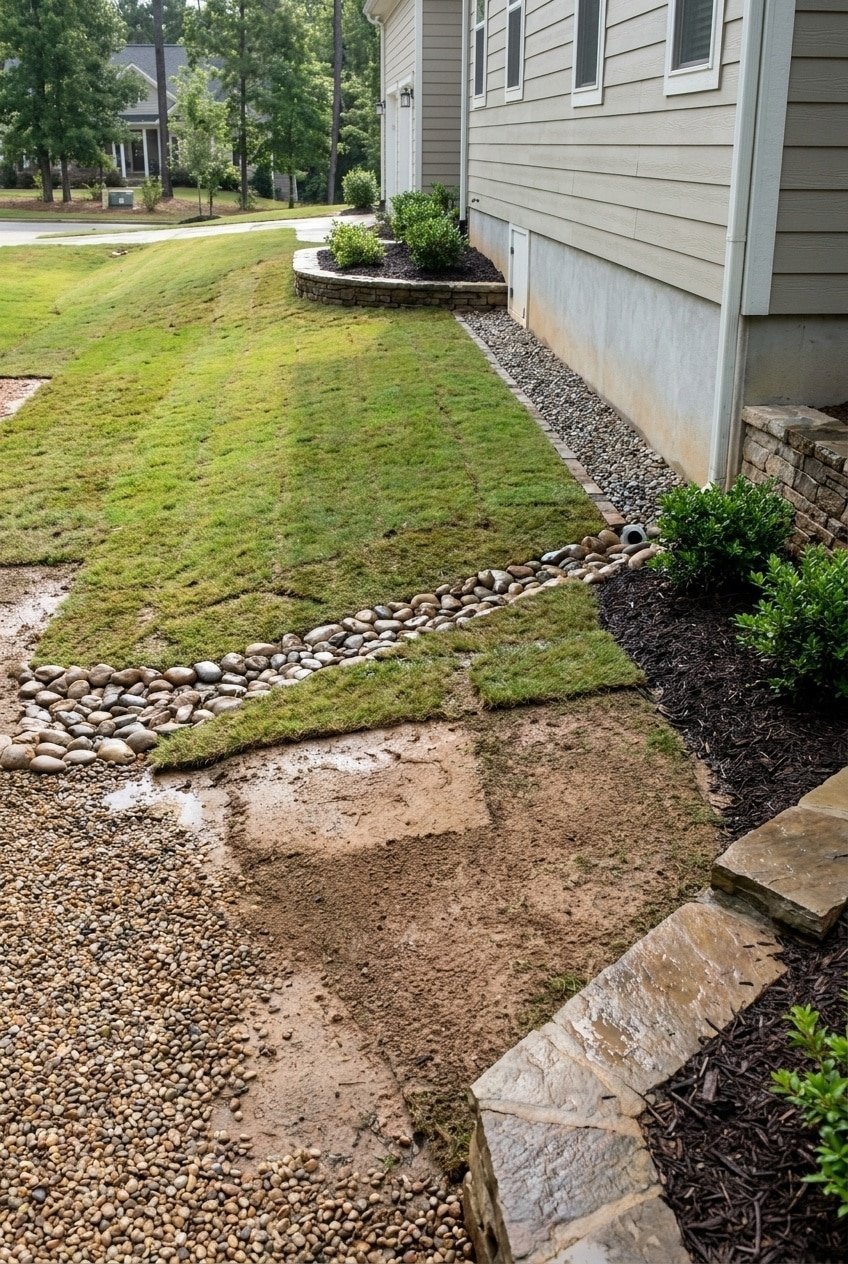
Sometimes the most effective drainage around the house solution is fixing the slope of your yard itself. Proper grading means the ground around your home should slope away from the foundation at a rate of about six inches for every ten feet of distance. If your yard slopes toward your home instead, water will naturally drain toward your foundation every time it rains — and that is a problem that all the gutters and downspouts in the world cannot fully fix on their own. Regrading a yard can range from a simple DIY soil adjustment in mild cases to a more involved project requiring professional landscaping equipment. Adding soil and compacting it against your foundation to create that outward slope is often the first step. Once regraded, you can overseed the area with grass, add mulch, or install garden beds to stabilize the new slope. This is one of those foundational fixes — pun intended — that makes every other drainage solution work better. It is the kind of upgrade that is less glamorous than a dry creek bed but arguably more important for the long-term health of your home.
✨ Styling note: After regrading, layering in tiered garden beds along the new slope adds beauty and helps anchor the soil so erosion does not undo your hard work.
6. Permeable Paving for Stylish Drainage Around The House
If you are planning a new driveway, patio, or pathway, permeable paving is one of the smartest drainage around the house choices you can make from the start. Traditional concrete and asphalt are impervious surfaces — meaning water has nowhere to go and just runs off in whatever direction gravity takes it. Permeable paving materials like gravel, permeable concrete, interlocking pavers with gaps, and porous asphalt allow water to seep through the surface and into the ground below, dramatically reducing runoff. This is fantastic not just for your own yard but also for reducing pressure on municipal stormwater systems. Aesthetically, permeable pavers come in so many beautiful styles and finishes that they honestly look just as polished as traditional options. Gravel driveways have had a huge moment in home design lately, and beyond looking chic, they are genuinely excellent for managing water. If you are already dealing with drainage issues near a hardscaped area of your yard, replacing impermeable surfaces with permeable ones can solve the problem at the source rather than requiring you to manage the runoff after the fact.
7. Rain Gardens That Double as Landscaping
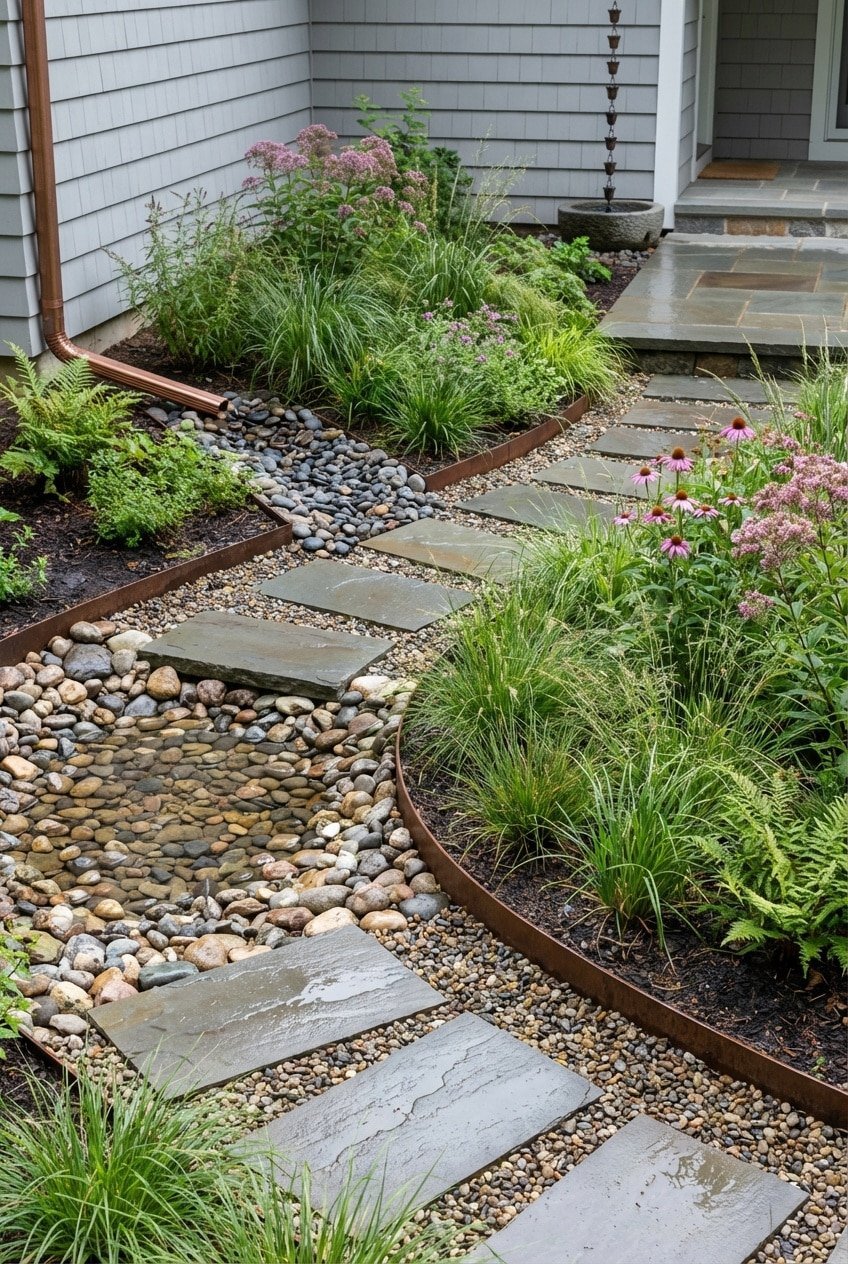
A rain garden is one of those solutions that makes you feel like a sustainability queen and a landscaping genius at the same time. It is a shallow, planted depression in your yard that is strategically positioned to collect runoff from your roof, driveway, or lawn. The plants and soil in a rain garden absorb and filter the water naturally, preventing it from pooling near your foundation or running off into the street. Rain gardens are typically planted with native plants, deep-rooted perennials, and ornamental grasses that thrive in both wet and dry conditions — because they need to handle both flood and drought cycles. The design possibilities are genuinely beautiful: think wildflower-filled bowls, structured plantings with layers of texture and color, or naturalistic meadow-style gardens. To install one, you identify the natural low point or drainage path in your yard, dig out a shallow basin, amend the soil with sand and compost for drainage, and plant it up. Rain gardens are one of those drainage around the house upgrades that genuinely increases your curb appeal while solving a functional problem.
✨ Styling note: Position your rain garden where it can be seen from inside the house too — a view of a lush planted garden from your kitchen window makes the whole solution feel like a gift to yourself.
8. Catch Basins for Heavy Water Flow
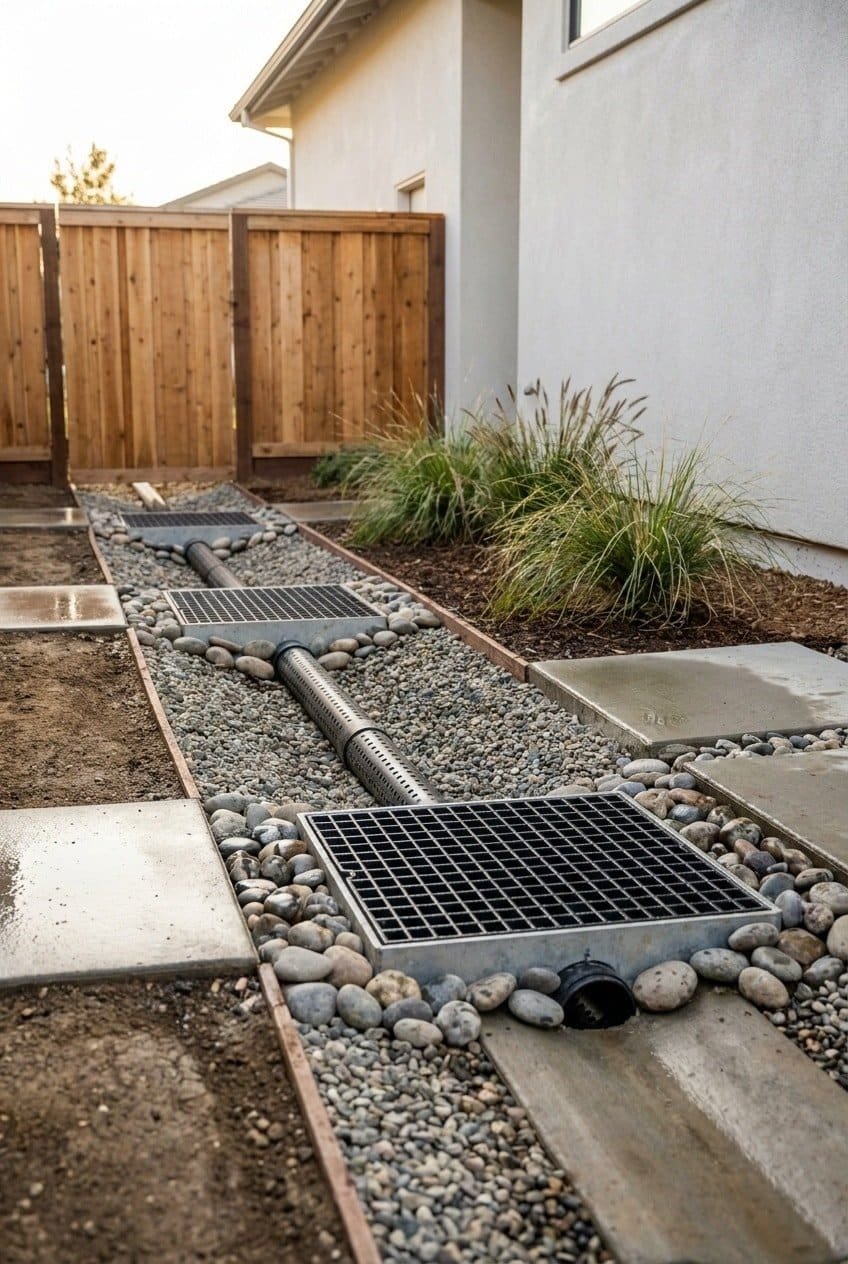
When you are dealing with serious water volume — like a yard that collects runoff from multiple sources or a low spot that floods every single time it rains — a catch basin might be exactly what you need. A catch basin is a below-ground box with a grate on top that collects surface water and directs it into an underground pipe system that carries it away to a safe discharge point. They are commonly used in driveways, at the base of slopes, or in any area where water consistently accumulates and needs to be removed quickly. The grated top is flush with the ground surface, so it does not interfere with lawn mowing or outdoor living. Catch basins can be connected to downspout drainage systems, French drains, or outlet pipes that release water into a street drain or dry well. This is definitely more of a structural drainage around the house solution, and installation often involves some excavation and pipe work, but for serious drainage problems it is one of the most effective options available. Once installed and covered with a quality grate, it is essentially invisible in your yard.
9. Window Well Drains to Protect Your Foundation
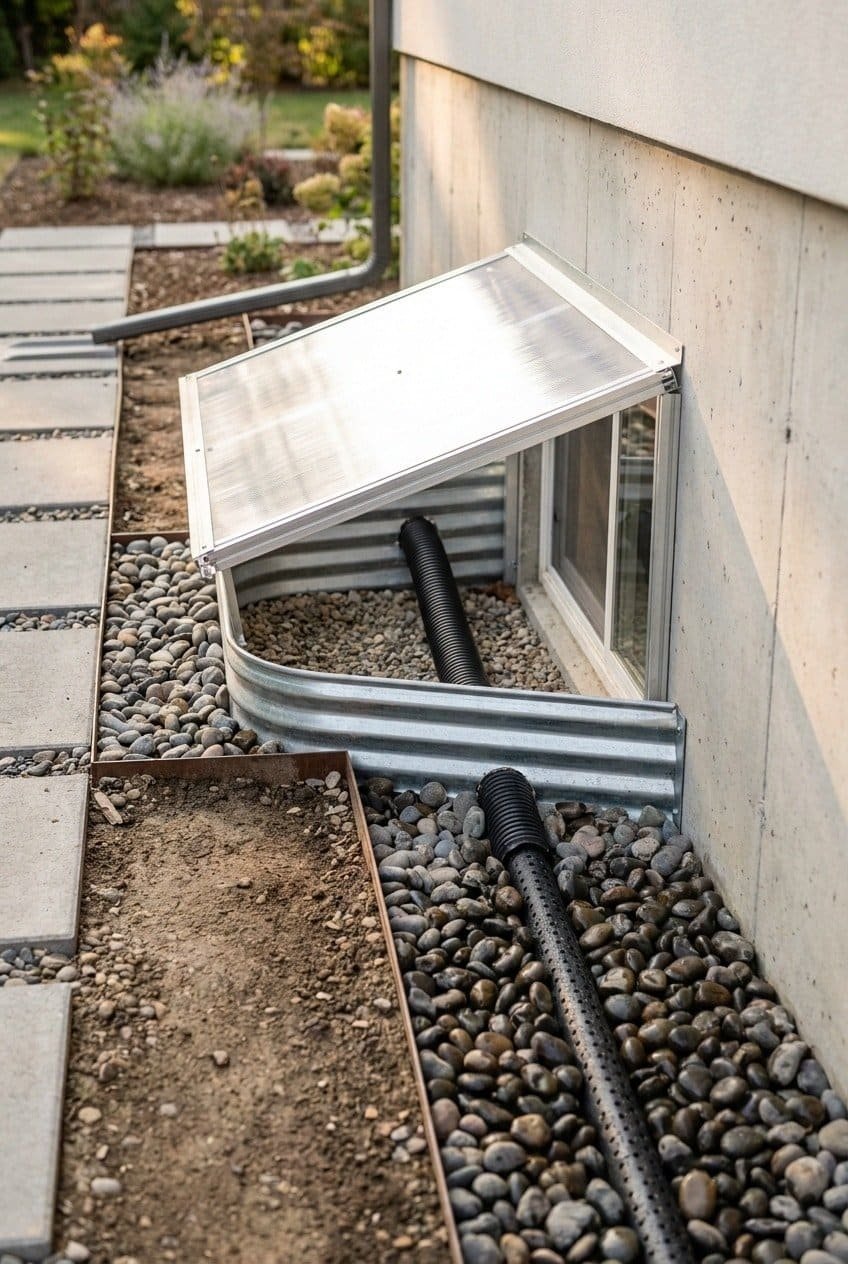
If your home has basement windows or egress windows that sit below ground level, window wells are essential — but they also need their own drainage system to function properly. Without a drain at the bottom of a window well, rainwater and snowmelt collect there and put direct pressure on your basement window, eventually leading to leaks and water intrusion. Installing a window well drain connects the base of the well to a gravel-filled pit or a drainage pipe that routes water away from the foundation. Some window well systems have built-in drainage channels, while others require a separate drain installation. This is a very targeted but critically important drainage around the house fix for homes with below-grade windows. You can also add a window well cover — a clear polycarbonate dome or a decorative metal cover — to keep most of the rainwater out in the first place. Window well covers paired with proper drainage below create a belt-and-suspenders approach that gives your basement the best possible protection against water intrusion.
✨ Styling note: Clear polycarbonate window well covers allow light to reach basement spaces while keeping water out — a small detail that makes a real difference in how livable a basement feels.
10. Sump Pumps for Serious Water Issues
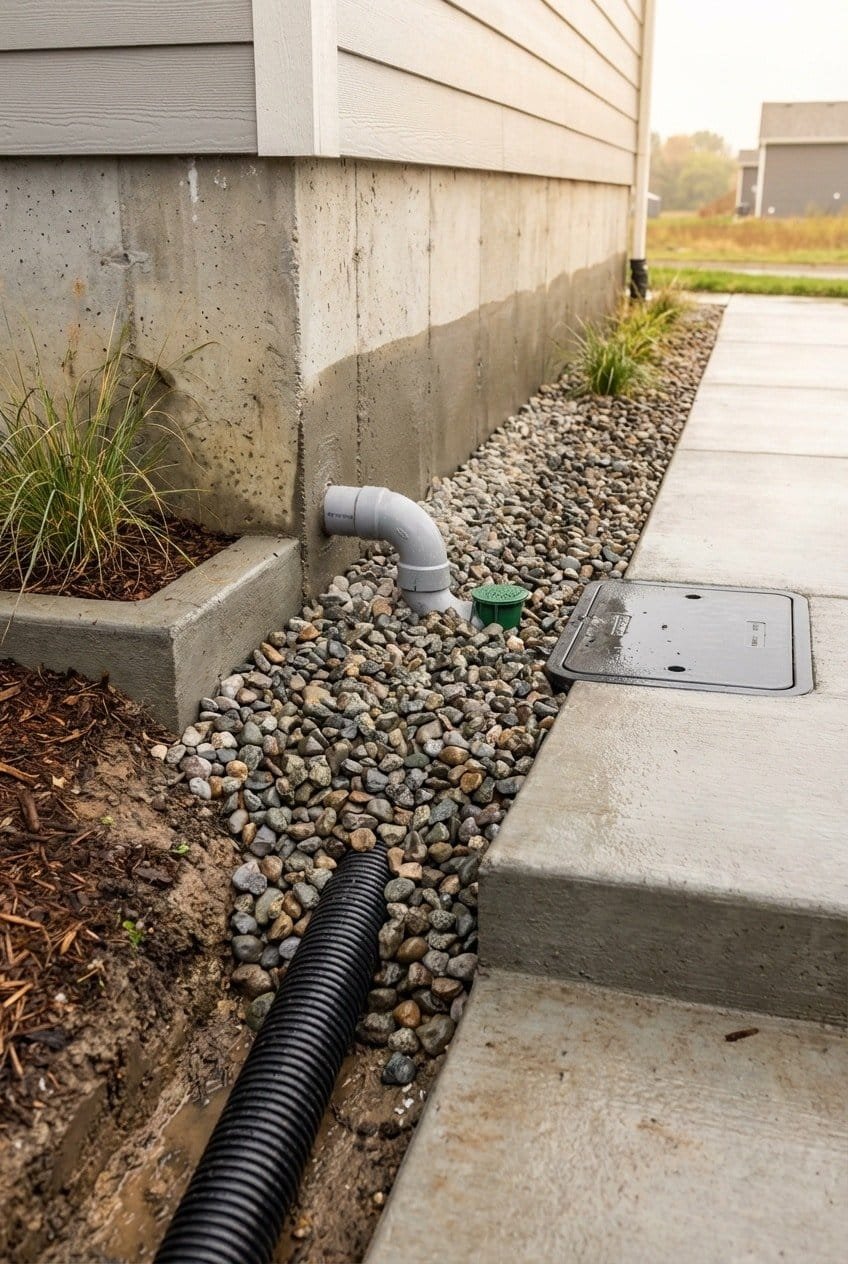
When water has already made its way into or beneath your home, a sump pump is your best friend. A sump pump is installed in a pit — called a sump pit — at the lowest point of your basement or crawl space. When water collects in the pit and reaches a certain level, the pump automatically activates and pumps the water out through a discharge pipe that routes it away from your foundation. Sump pumps are one of the most important drainage around the house solutions for homes in low-lying areas, homes with high water tables, or any home that has experienced basement flooding. There are two main types: pedestal pumps, which sit above the water, and submersible pumps, which sit inside the pit and tend to be quieter and more effective for heavy-duty use. A battery backup sump pump is also worth considering because the times you need it most — during heavy storms — are often the times when power outages happen. Pairing a sump pump with interior drainage channels and a vapor barrier in your crawl space creates a comprehensive below-grade water management system.
11. Drainage Around The House With Channel Drains
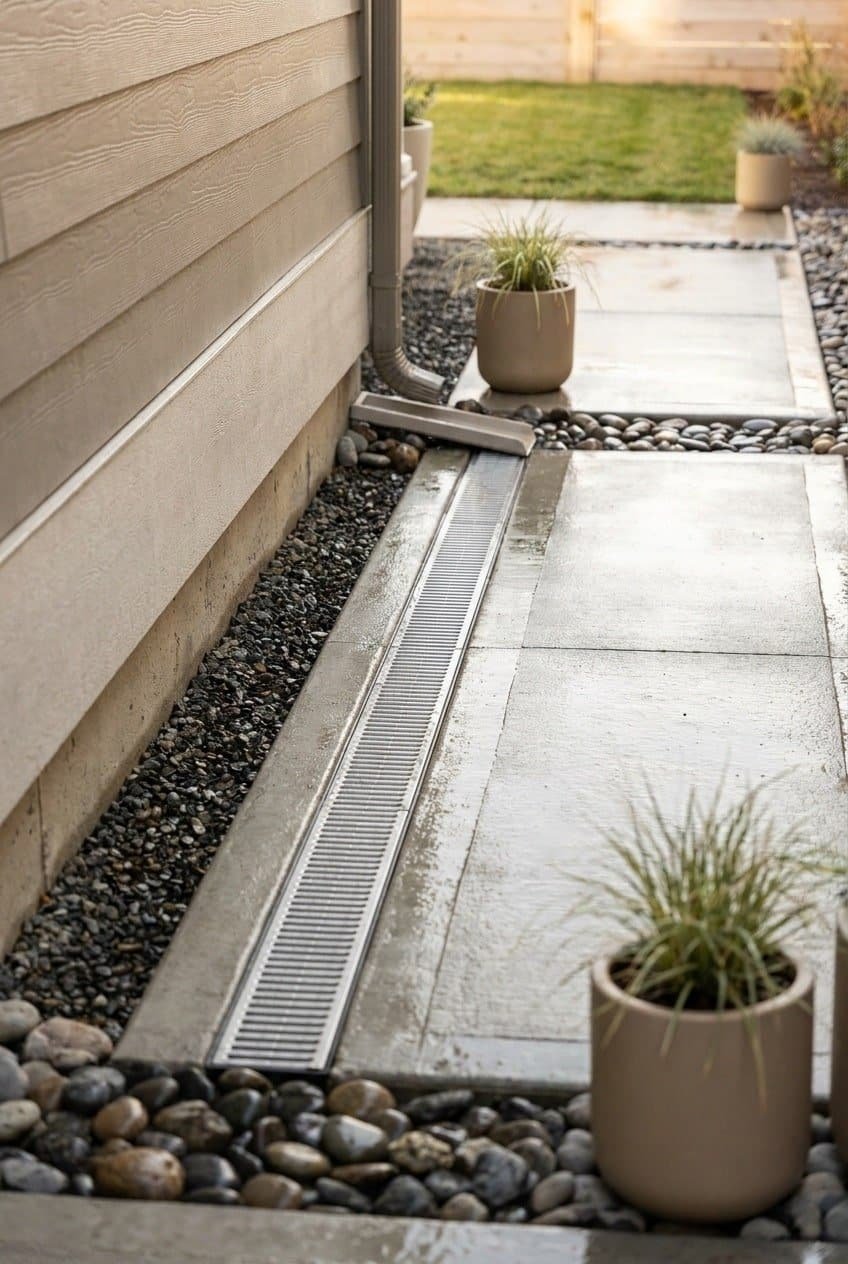
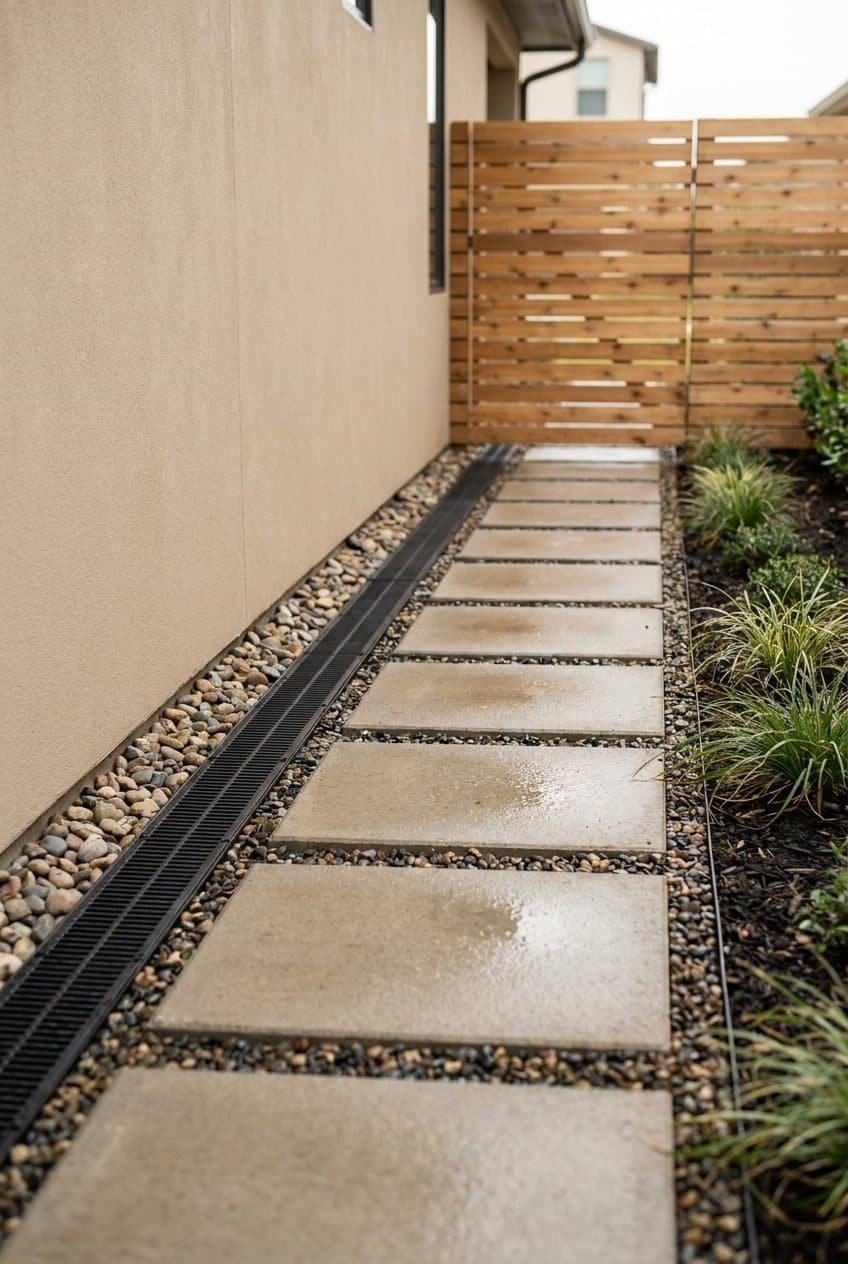
Channel drains, also known as trench drains or linear drains, are long, narrow drains installed flush with the surface of a hardscaped area to collect and redirect water runoff quickly and efficiently. They are most commonly used at the edge of driveways, across patio entrances, along the base of retaining walls, or anywhere that water sheets off a hard surface and needs to be intercepted before it reaches your foundation. Channel drains consist of a channel body installed in the ground with a grate on top that can be made from stainless steel, cast iron, or even decorative materials to match your outdoor aesthetic. The channel connects to an underground pipe that carries collected water to a suitable outlet. As a drainage around the house solution, channel drains are particularly excellent for homes with attached garages, large patio areas, or sloped driveways where sheeting water is a recurring issue. They are relatively straightforward to install in new construction but can also be retrofitted into existing hardscaped areas with some cutting and excavation work.
✨ Styling note: Stainless steel grate channel drains have a sleek, modern look that actually complements contemporary outdoor spaces — drainage can absolutely look intentional and designed.
12. Green Roofs and Rain Barrels for Water Management
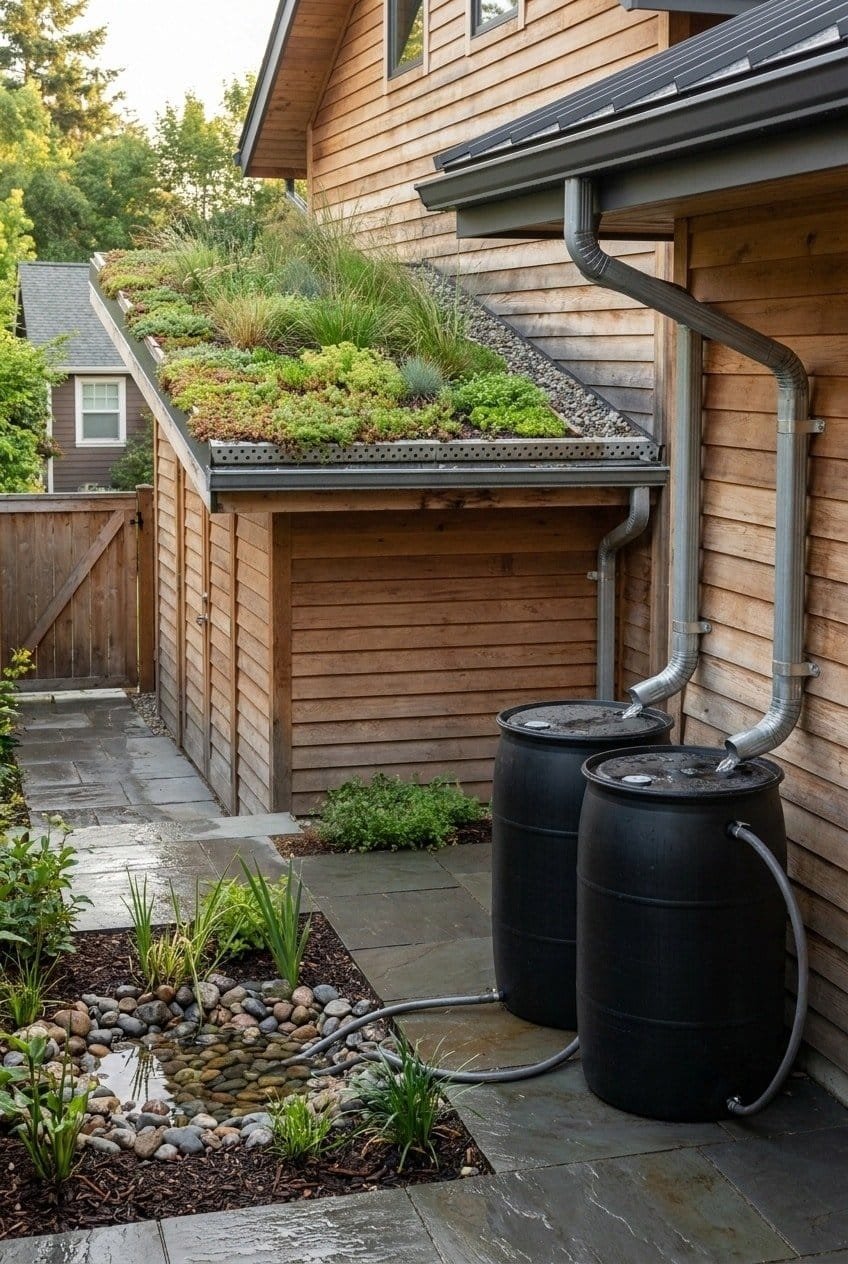
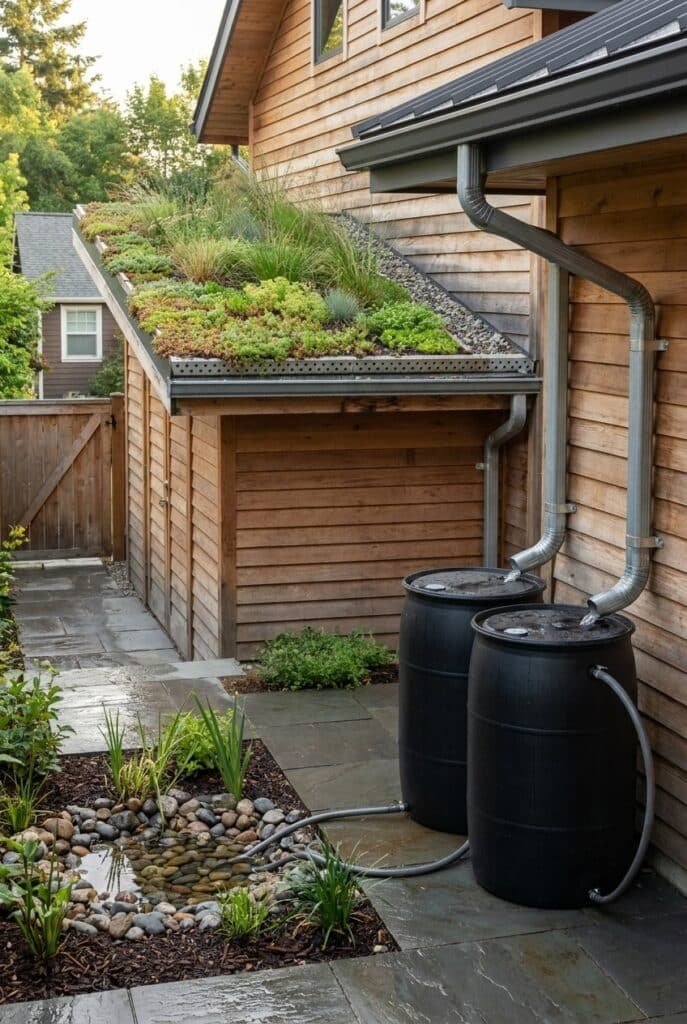
Rounding out our list with two solutions that feel especially relevant right now as homeowners look for more sustainable approaches to managing water. Green roofs — also called living roofs — are roofing systems covered with a layer of vegetation planted over waterproofing and drainage layers. They absorb rainfall at the source, reducing the volume of water that runs off your roof and into your yard or foundation drainage systems. While a full green roof is a significant investment and requires structural assessment, even smaller installations on sheds, garages, or covered porches can make a meaningful impact. Rain barrels are the more accessible companion solution: they connect to your downspouts and collect rainwater that would otherwise drain directly into the ground near your foundation. That collected water can then be used to irrigate your garden during dry spells — a genuinely circular approach to water management. Together, green roofs and rain barrels represent the newest thinking in drainage around the house strategy: intercept water before it becomes a problem rather than just redirecting it after the fact. Rain barrels come in so many styles now, including decorative options that look like planters or wooden barrels, so they can integrate beautifully into your outdoor space.
Managing water around your home does not have to feel overwhelming or purely utilitarian — as you can see from this list, so many drainage around the house solutions are genuinely beautiful, sustainable, and even design-forward. From the elegance of a dry creek bed to the practicality of a French drain, the key is identifying where your specific water problems are occurring and matching the right solution to the situation. In most cases, combining two or three of these approaches gives you the most comprehensive protection for your foundation, yard, and overall home health. The best part is that many of these solutions can be installed over a weekend with some basic tools and a little planning, while others are worth calling in a professional to get right the first time. Either way, taking action now means protecting your investment and creating an outdoor space that stays beautiful through every season and every storm. If this post gave you some ideas or inspired you to finally tackle that drainage issue you have been ignoring, save this article to your Pinterest boards so you can come back to it when you are ready to get started — and share it with a friend who is dealing with a soggy yard situation, because they will seriously thank you for it!