DIY spring decor is one of those rare creative pursuits that manages to feel both deeply personal and completely transformative — the kind of weekend project that turns a tired room into something that actually makes you exhale when you walk in. Spring is not just a season; it is a shift in energy. The light changes, the air softens, and suddenly you want your home to reflect all of that newness. But refreshing your space does not have to mean a trip to an overpriced boutique or hours lost scrolling through things that look nothing like they do in photos. These eleven projects are designed to be made with your hands, in your home, this weekend — using materials that are accessible, techniques that are forgiving, and results that look genuinely considered. Whether you are working with a sun-drenched kitchen or a dim city apartment, there is something here that will make your space feel like spring has arrived and decided to stay.
1. Fresh Floral Wreaths: DIY Spring Decor for Your Front Door
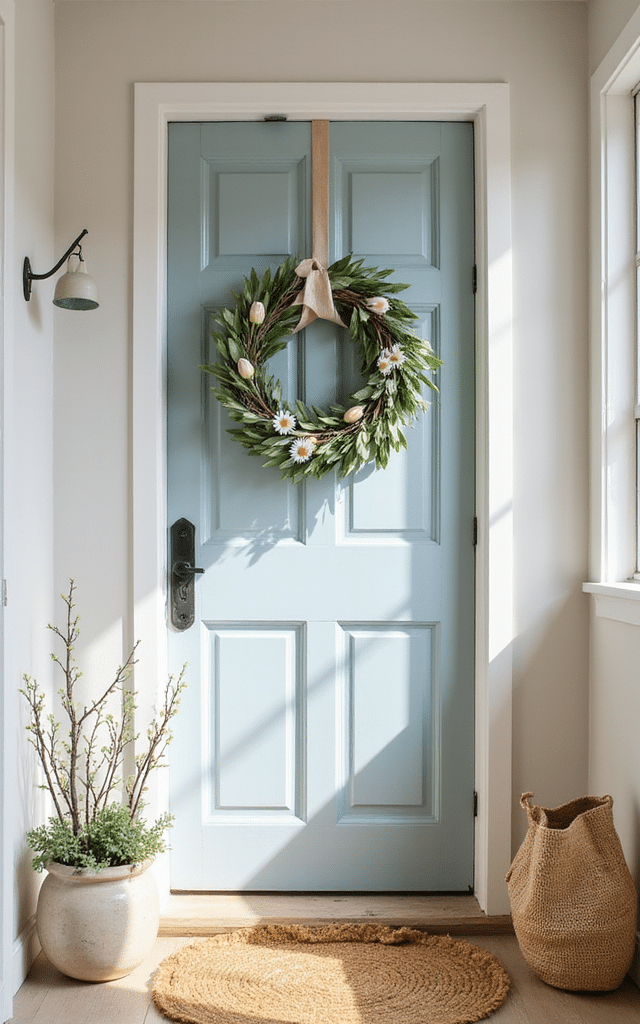
A handmade wreath on your front door is the kind of gesture that signals intention — it tells anyone approaching that someone inside cares about beauty and welcome. Using a grapevine or wire base, you can layer in ranunculus, eucalyptus, and dried pampas grass for a wreath that feels both abundant and effortless. The irregular texture is the whole point.
Pro tip:
– Work in odd-numbered clusters of blooms for a more natural, uncontrived look
– Mist fresh florals lightly before attaching to extend their life by a few extra days
– Use floral wire rather than hot glue for stems thicker than a pencil — it holds far better in outdoor heat
– Incorporate one unexpected element like a trailing ribbon, a sprig of lavender, or even a feather to give it a signature feel
2. Pressed Flower Frames: DIY Spring Decor That Feels Like Art
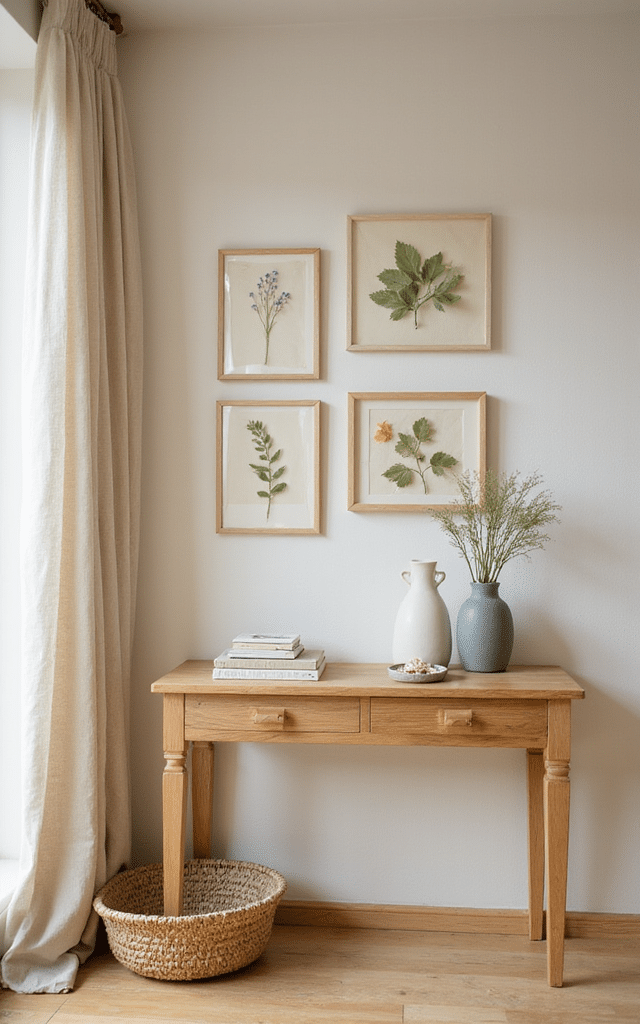
Pressed botanicals have a quiet sophistication that punches well above the effort required to make them. Collect blooms from your garden or a farmers market, press them between the pages of a heavy book for five to seven days, then arrange them on watercolor paper or linen card before framing. The result is something that genuinely looks gallery-worthy.
Why this works:
– Asymmetrical arrangements feel more intentional than perfectly centered compositions
– Neutral linen or cream backgrounds let the botanical colors breathe without competing
– Group three frames together in different sizes for a cohesive wall moment
– Ferns, pansies, and cosmos press particularly well and retain strong color
3. Painted Terra Cotta Pots: DIY Spring Decor for Every Surface
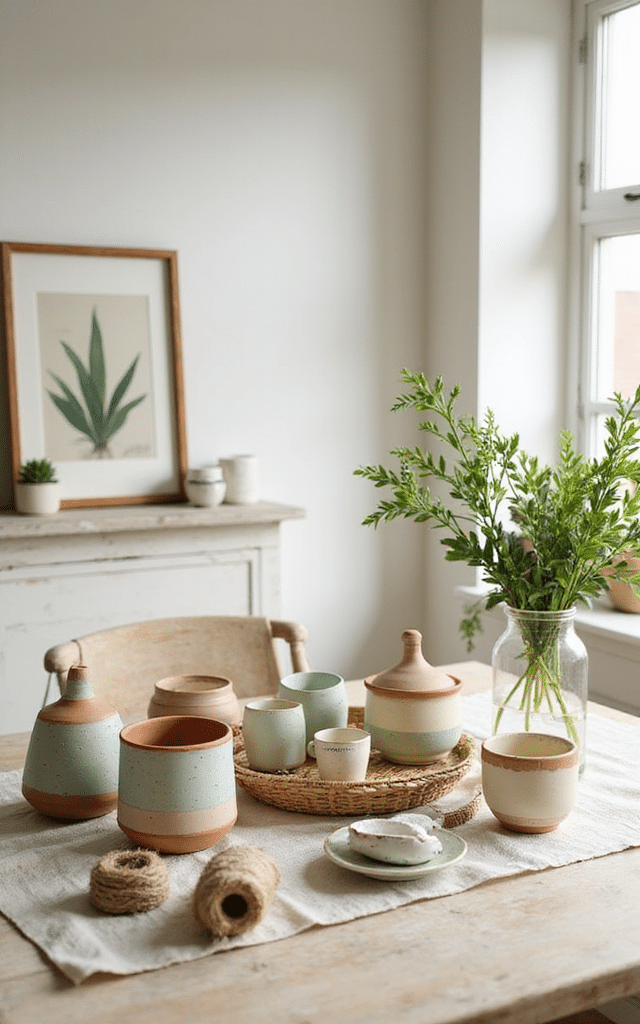
There is something endlessly charming about a painted terra cotta pot — especially when the painting feels considered rather than crafty. Using chalk paint or a matte acrylic, you can create color-blocked pots, hand-painted stripes, or abstract brush-stroke designs that look like something from a European garden shop. The porous surface of terra cotta takes paint beautifully.
Pro tip:
– Seal finished pots with a matte varnish to protect against moisture and watering
– Earthy tones like terracotta orange, sage green, and dusty rose feel cohesive grouped together
– Use a wide flat brush for a loose, gestural look that hides imperfection and adds character
– Try dipping the bottom third of a pot in white paint for an effortless half-dipped effect
4. Linen Table Runners: DIY Spring Decor With a Soft, Seasonal Touch
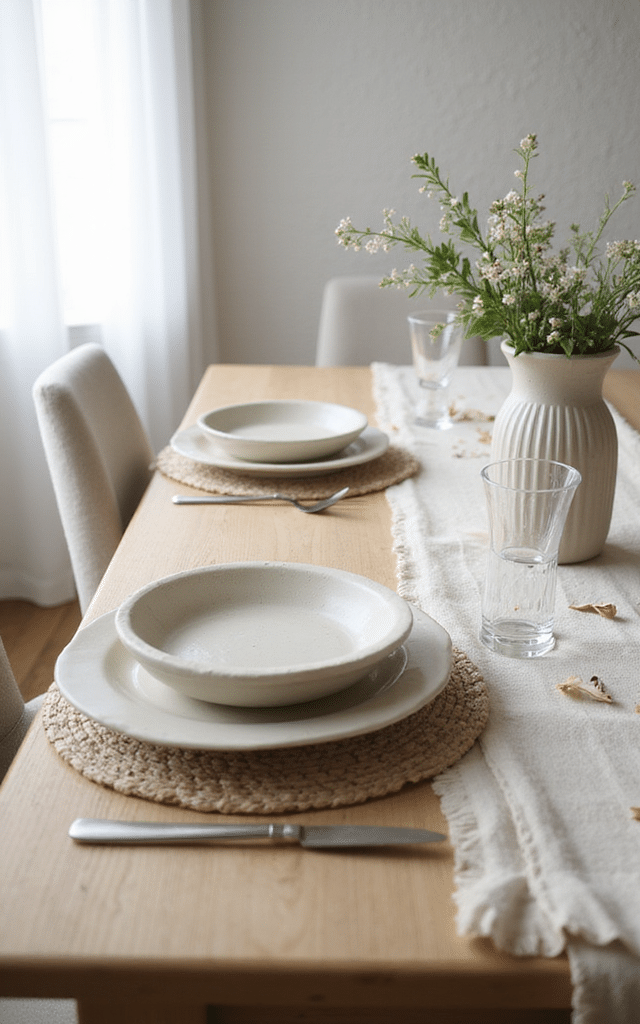 \
\A handmade linen table runner is one of the simplest ways to completely shift the atmosphere of a dining room or kitchen table. Raw-edge linen — left unhemmed or lightly frayed at the ends — has a relaxed elegance that works equally well with a rustic wooden table or a sleek marble surface. Add block printing, a hand-stitched border, or leave it beautifully plain.
Why this works:
– Raw linen softens with every wash, improving with age rather than deteriorating
– Opt for a runner that hangs at least eight inches off each end of the table for a generous, styled look
– Pair with mismatched candlesticks and a loose arrangement of garden clippings for a full tablescape
– Block printing with a floral stamp in a single accent color keeps the look refined rather than busy
5. Branch Centerpieces: DIY Spring Decor That Brings the Outside In
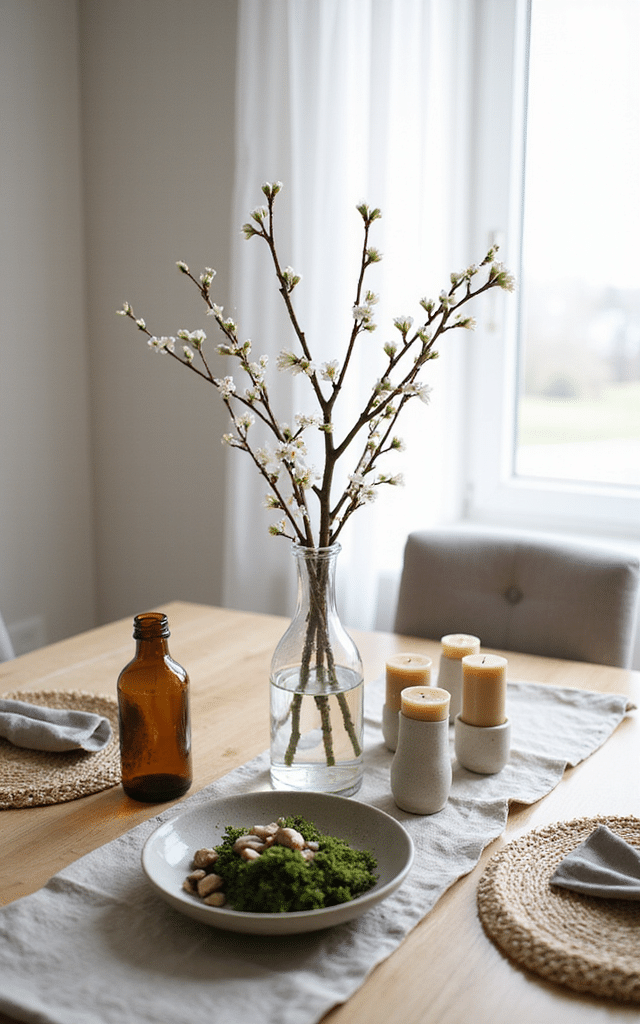
Forcing branches into bloom indoors is one of spring’s quiet pleasures. Cut branches of cherry, quince, or forsythia, place them in a tall vase with warm water, and within a week or two they will burst into delicate blossoms that fill a room with the feeling of an orchard in April. The scale alone makes a room feel effortlessly styled.
Pro tip:
– Score the cut ends of branches with a knife or lightly hammer them to help water absorption
– Change the water every two to three days to keep branches fresh and blooming longer
– A single dramatic branch in a tall cylindrical vase is often more striking than a crowded arrangement
– Combine bare branches with blooming ones for a composition that feels organic and evolving
6. Herb Garden Jars: DIY Spring Decor You Can Actually Use
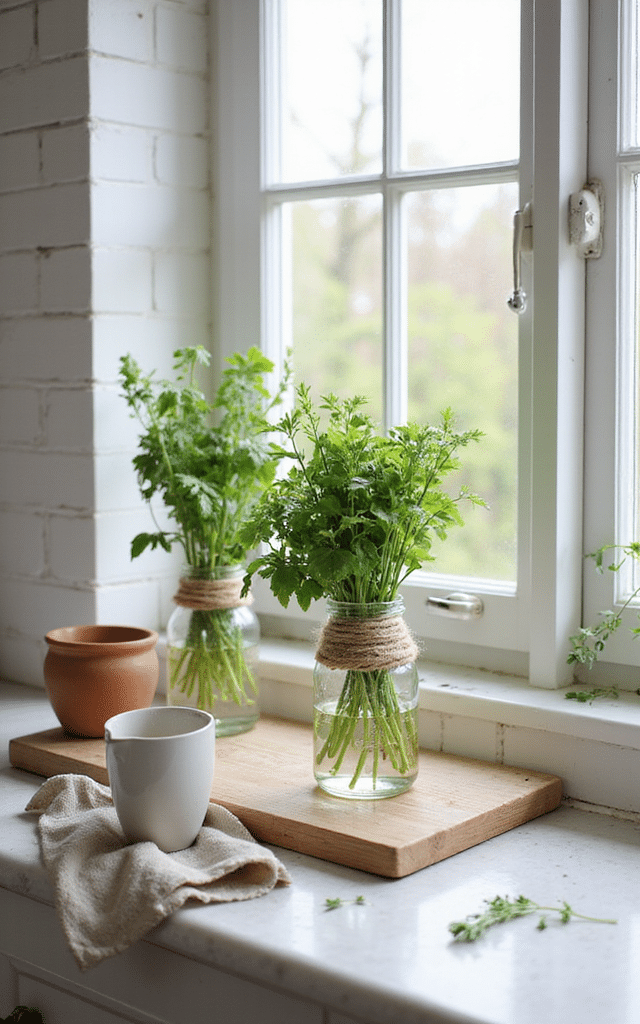
A collection of herb-filled glass jars on a windowsill is the kind of decor that earns its place twice — once aesthetically and once functionally. Basil, mint, chives, and thyme in mismatched vintage jars create a lush, layered display that smells incredible and actually gets used. The combination of greenery, glass, and morning light is genuinely beautiful.
Why this works:
– Group jars in varying heights to create visual rhythm rather than a flat, uniform row
– Use a thin layer of gravel at the base of each jar for drainage before adding potting mix
– Label jars with handwritten kraft paper tags tied with twine for a considered finishing touch
– Mint grows aggressively, so keep it in its own container to prevent it from overtaking neighbors
7. Watercolor Candles: DIY Spring Decor That Sets the Mood
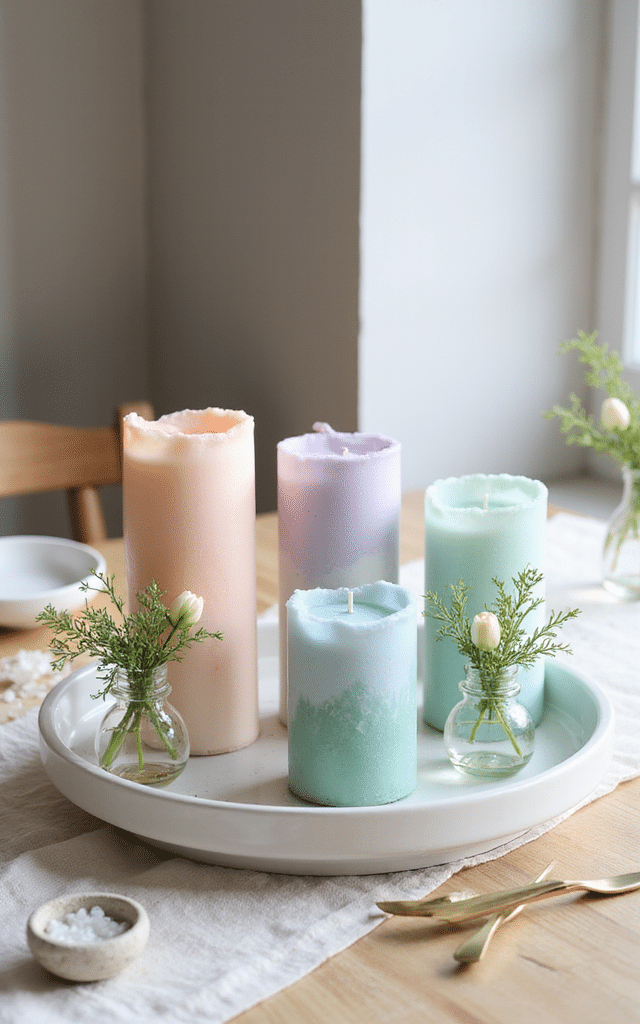 \
\Dip-dyed or watercolor-effect candles are having a well-deserved moment, and they are far simpler to make than they look. Using liquid candle dye and a simple dipping technique with pillar candles, you can create ombre effects in soft spring palettes — blush into cream, sage into white, lilac into barely there lavender. Grouped on a tray, they feel like something from a considered boutique.
Pro tip:
– Work in a warm room so the wax stays pliable and the dye adheres evenly
– Dip in slow, deliberate strokes and allow each layer to set before re-dipping for a deeper gradient
– Uneven dipping is not a flaw — it adds an artisan quality that machine-made candles simply cannot replicate
– Display on a marble or slate tray with a few dried petals scattered beneath for a complete vignette
8. Woven Basket Planters: DIY Spring Decor With Texture and Warmth
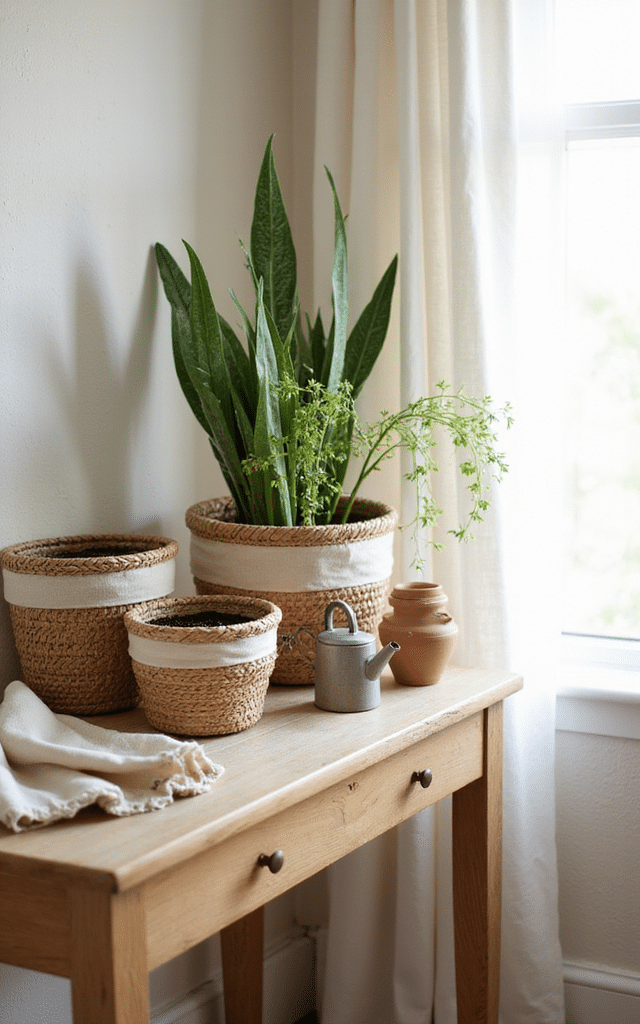
Woven baskets used as planters bring an organic warmth to any room — the kind of layered texture that makes a space feel curated rather than decorated. Line thrifted or inexpensive wicker baskets with plastic sheeting or use them as cachepots over existing nursery pots, then fill with trailing pothos, peace lilies, or flowering kalanchoe for a lush, grounded look.
Why this works:
– Varying the weave and size of baskets in a group creates visual depth without visual chaos
– Darker baskets — natural seagrass, dark rattan — act as grounding anchors for rooms with light-colored furniture
– Place the tallest arrangement on the floor and step down in size toward a surface for a natural, editorial display
– Line baskets carefully to prevent moisture damage to floors and surfaces beneath
9. Botanical Napkin Rings: DIY Spring Decor for the Table
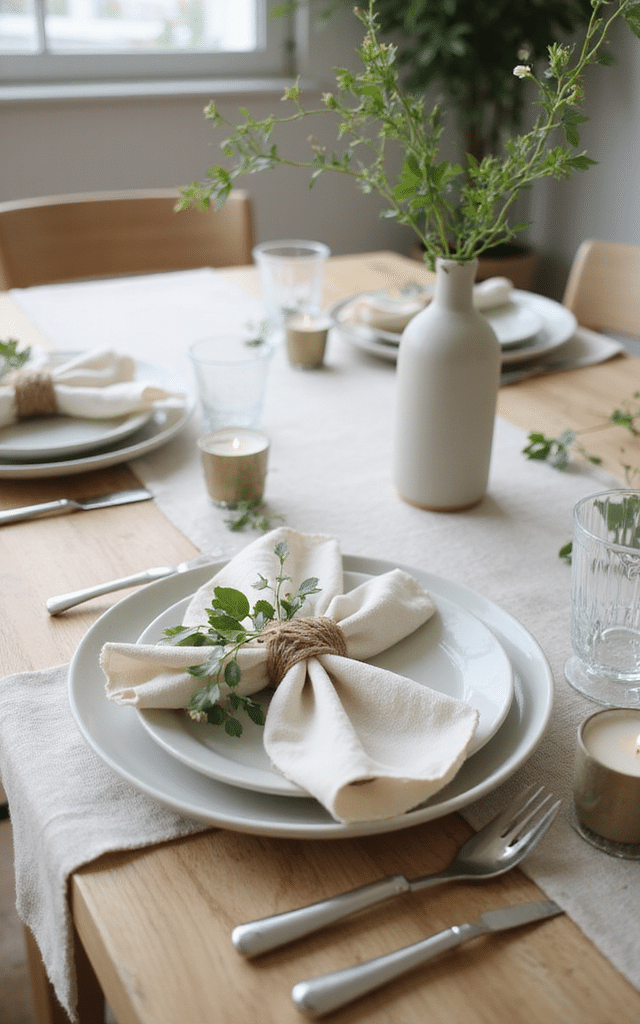
Handmade napkin rings are one of those small details that make guests feel like a meal was genuinely thought about. Wrap a small bundle of fresh herbs — rosemary, eucalyptus, or thyme — with a length of natural twine around a rolled linen napkin, and the result is fragrant, beautiful, and entirely biodegradable. They take minutes and make every place setting feel like an occasion.
Pro tip:
– Use beeswax twine for a slightly warmer, more artisan finish than standard jute
– Tuck a single small bloom — a sprig of lavender or a tiny ranunculus — into the twine bundle for color
– Make these the morning of a gathering so the herbs stay fragrant and vibrant through dinner
– These double as a small take-home gift guests will genuinely appreciate
10. Pastel Vase Arrangements: DIY Spring Decor in Under an Hour
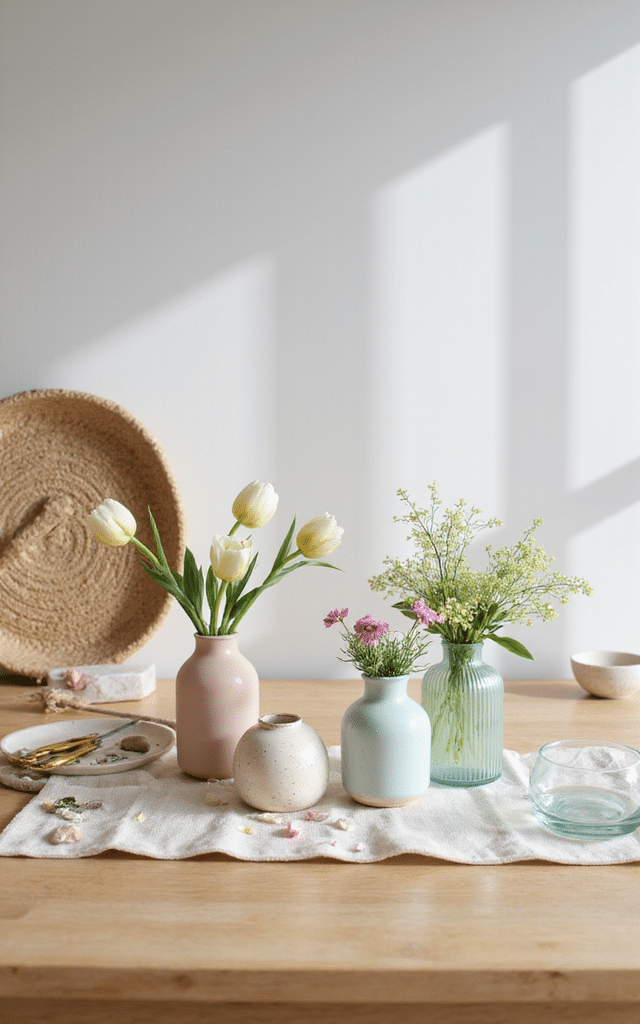
A thoughtful vase arrangement can shift the entire emotional register of a room. In spring, the palette does the work — soft blush peonies, creamy white tulips, pale yellow daffodils, and dusty mauve sweet peas together create something that feels both abundant and airy. The trick is choosing blooms at different stages of opening so the arrangement evolves over several days.
Why this works:
– Remove all foliage that will sit below the waterline to prevent bacteria and extend bloom life
– Cut stems at a 45-degree angle each time you change the water to maximize absorption
– Mix opaque and translucent vessels — a cloudy milk glass next to a clear bud vase — for more visual interest
– An odd number of bloom varieties almost always creates a more natural, gathered-from-the-garden feel
11. Windowsill Moss Gardens: DIY Spring Decor That Quietly Transforms a Room
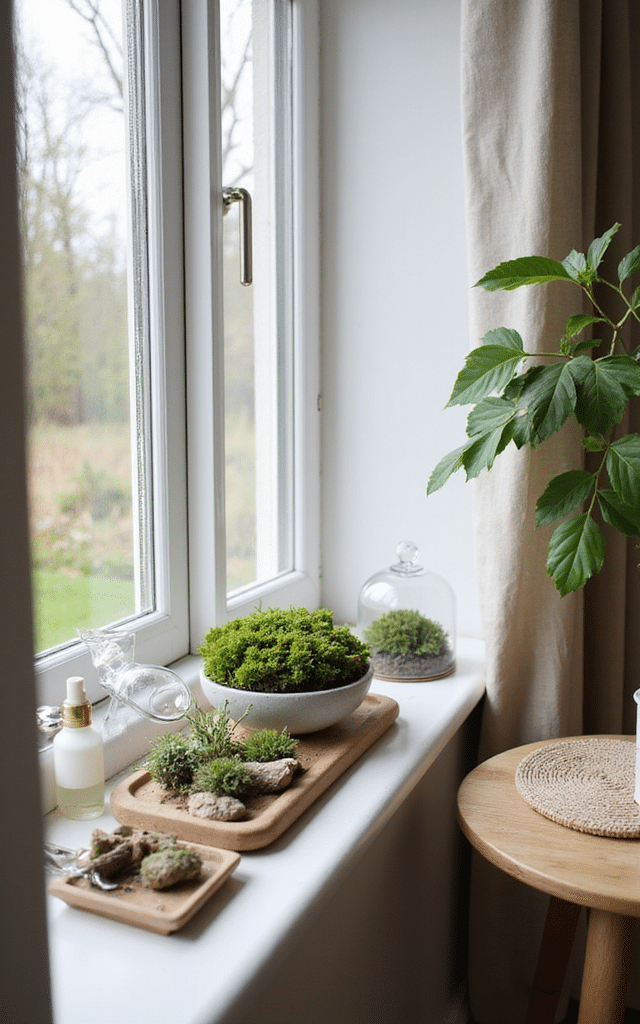
A moss garden on a windowsill is the kind of understated, meditative decor that makes a room feel genuinely alive. Using a shallow tray or vintage dish, layer preserved or living sheet moss with small river stones, miniature ferns, and perhaps a single quartz crystal or ceramic figurine. The result is a tiny landscape that catches light and holds attention.
Pro tip:
– Preserved moss requires no watering and holds its color for months — ideal for lower-light rooms
– Use a mix of moss textures — cushion moss, sheet moss, and reindeer moss — for a more naturalistic composition
– Place on a windowsill where it will catch morning or afternoon light rather than harsh midday sun
– A single element with height — a tiny sculptural piece or a delicate branch — gives the arrangement a focal point and stops it from reading as flat
Spring does not ask for perfection — it asks for presence. What makes DIY spring decor so compelling is not just the finished result but the process of slowing down, working with your hands, and making something that reflects how you want your home to feel right now. Each of these eleven projects is an invitation to engage with your space more intentionally, to notice what a single blooming branch or a handmade linen runner can do to the atmosphere of a room you thought you already knew. The beauty of making things yourself is that the imperfections become signatures. The uneven brush stroke, the slightly crooked frame, the napkin ring that smells faintly of rosemary — these are the details that make a home feel inhabited rather than staged. Start with one project this weekend. Set out your materials, put on something good to listen to, and give yourself permission to make something without pressure or precision. Then, once your space is transformed, share what you have made — save your favorites to Pinterest so others can find the inspiration they have been looking for, and let your creativity become someone else’s starting point.