There is something undeniably magnetic about a bedroom that feels like a private retreat from the world — a space so enveloping and atmospheric that stepping inside instantly lowers your shoulders and quiets your mind.
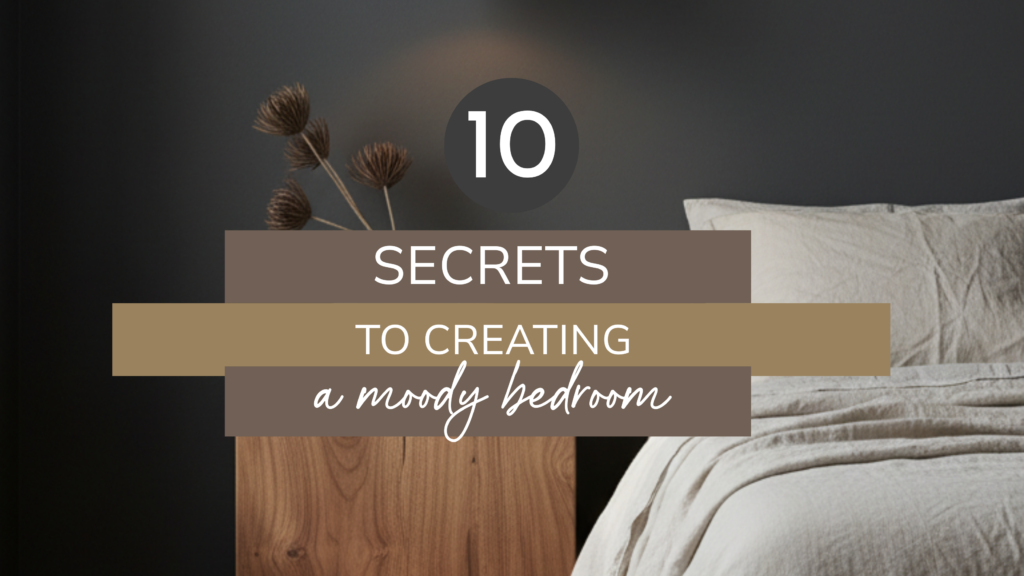
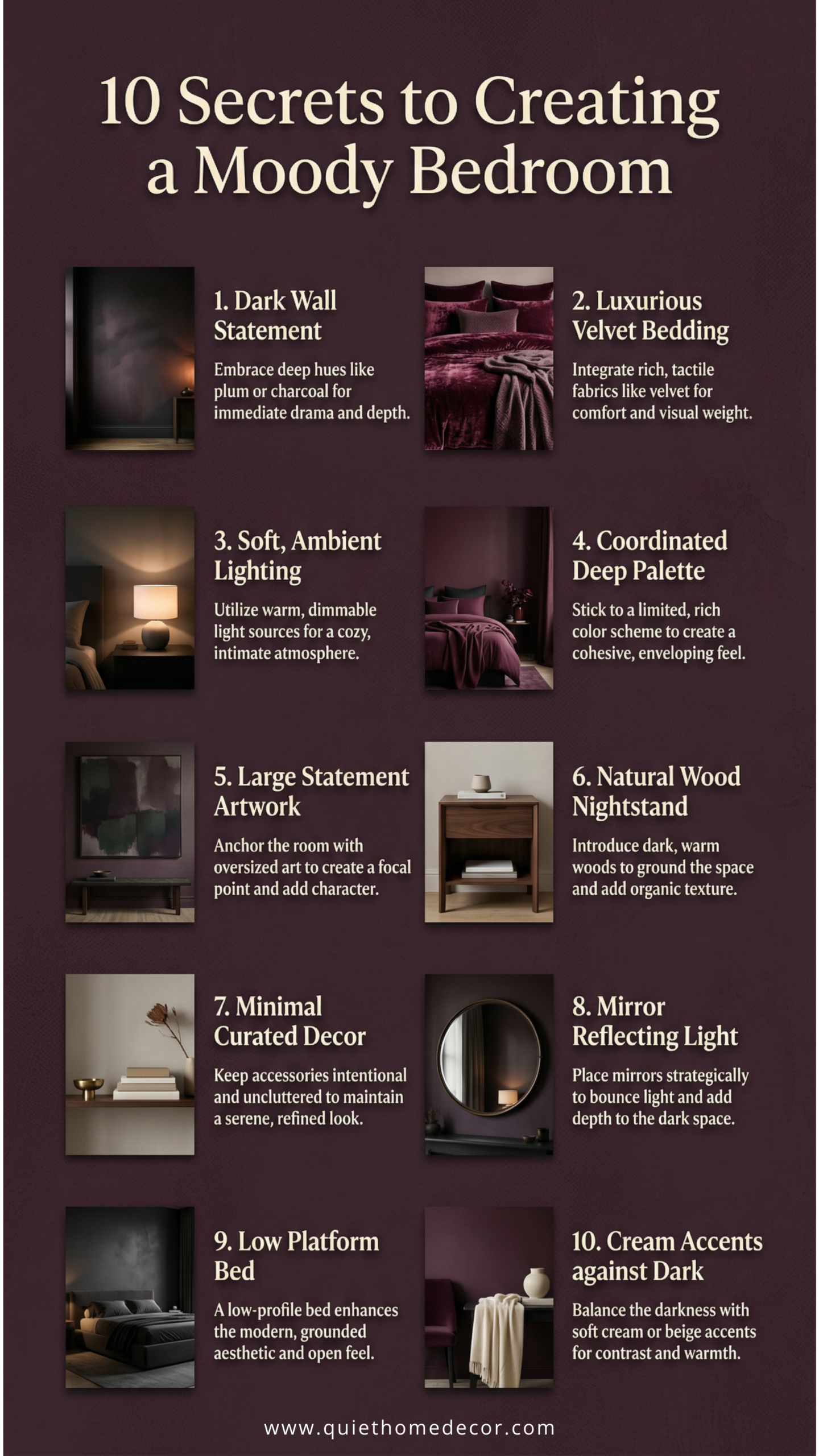
A moody bedroom done right is not about darkness for its own sake. It is about intentional design choices that layer depth, warmth, and sensory richness to create a sanctuary that feels as beautiful to live in as it looks. Whether you are starting from scratch or looking to deepen the atmosphere of an existing room, these ten secrets will guide you toward a space that truly whispers luxury.
In This Post
1. Embrace Dark Walls
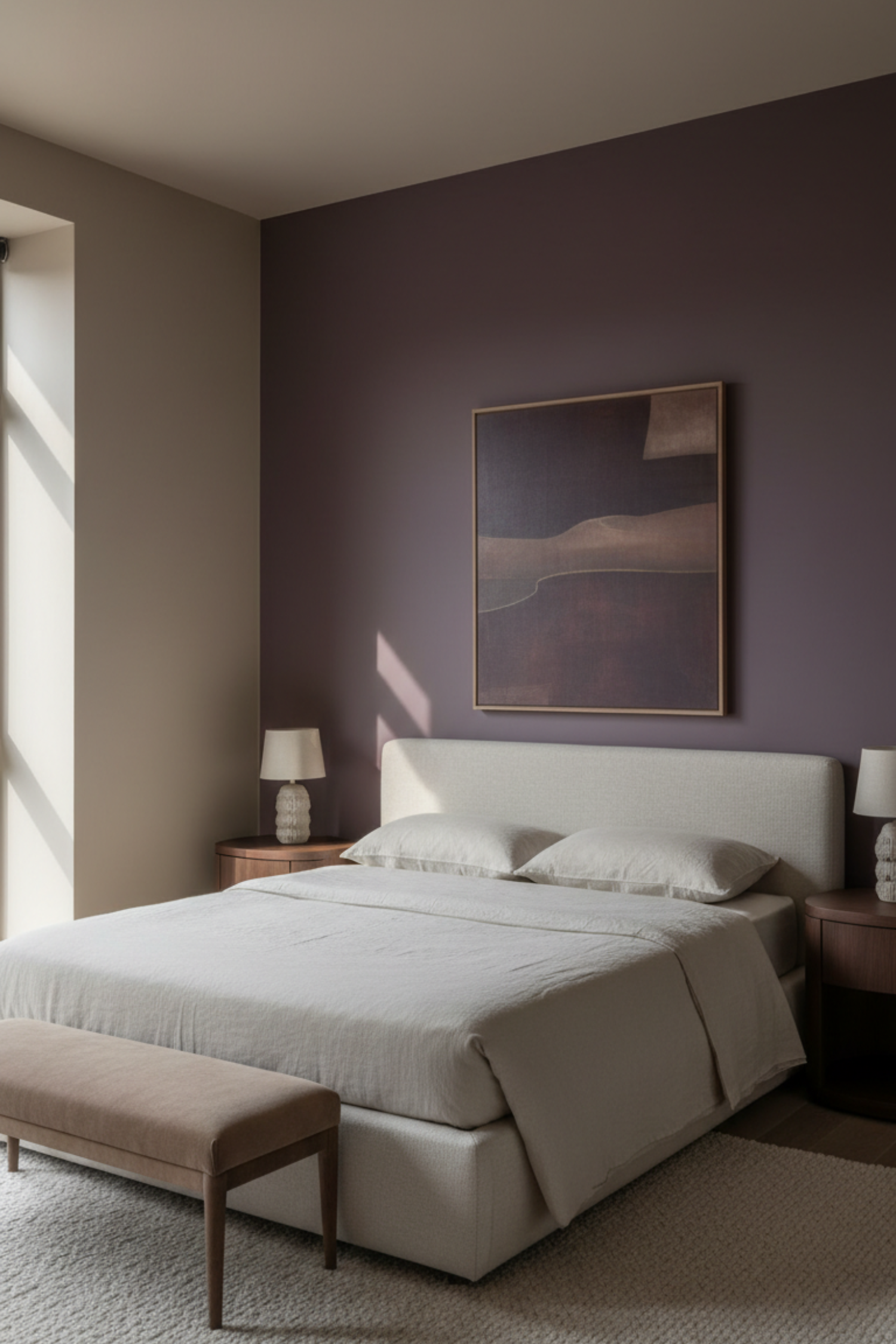
The foundation of every truly moody bedroom begins with the walls. While it can feel counterintuitive to paint a bedroom a deep, saturated colour — especially in smaller rooms — dark walls are what transform a space from simply decorated to genuinely atmospheric. They absorb light in a way that softens the whole room, eliminating harsh contrasts and wrapping everything in a velvety quality that lighter walls simply cannot achieve.
The most effective shades are charcoal, deep navy, forest green, and plum. These colours share a quality of depth — they shift and change depending on the light, appearing almost black in low evening light and revealing their true richness in daylight. Charcoal creates sophisticated restraint. Navy brings timeless elegance. Forest green evokes a lush, romantic retreat. Plum or dark burgundy introduces a distinctly sensual, jewel-toned warmth.
If painting all four walls feels too committed at first, begin with the wall behind your headboard as an accent. A single deeply painted wall instantly anchors the room and sets the entire mood, allowing you to layer from there.
2. Layer Rich Textures
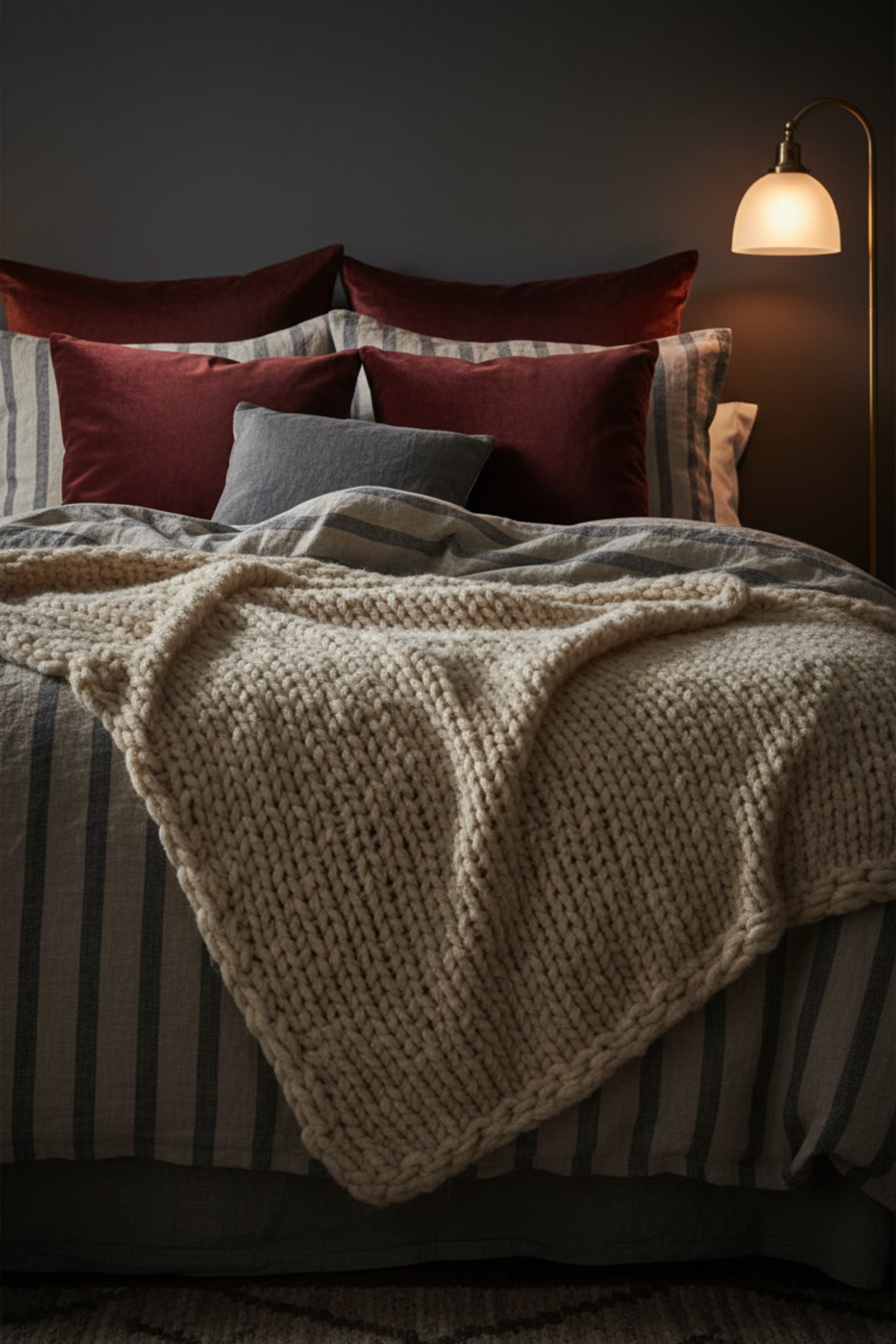
In a moody bedroom, texture is everything. Because the colour palette is typically restrained and intentional, the visual and tactile interest of the space must come from the richness of the materials you choose. Layering different textures is what prevents a dark room from feeling flat or cold and instead makes it feel decadent and inviting.
The most effective textures for this aesthetic are velvet, linen, and chunky knits. Velvet is the quintessential moody bedroom material — it catches the light beautifully, shifts from deep to luminous depending on the angle, and communicates luxury instinctively. Linen introduces a beautiful organic counterpoint, its slightly rough, natural quality softening the drama of velvet and keeping the room grounded rather than overly formal. Chunky knit throws add warmth and a sense of hand-crafted intimacy, particularly beautiful draped casually at the foot of the bed.
The key principle is layering. A bed that combines a linen duvet with velvet pillows and a knit throw is infinitely more interesting — and more atmospheric — than a bed dressed in a single material.
3. Utilize Warm, Low Lighting
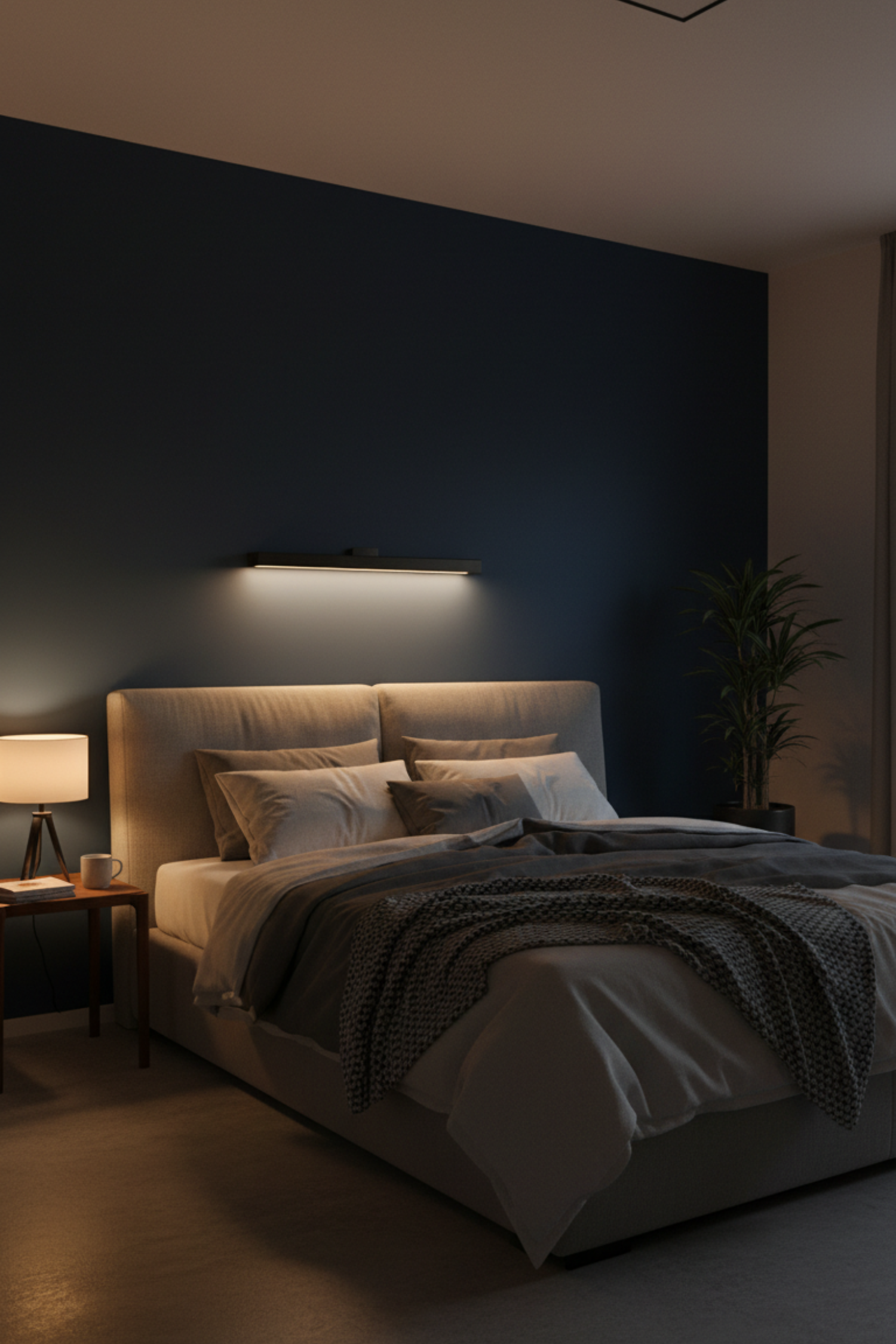
Lighting is arguably the single most transformative element in creating a moody bedroom, and it is the one most often overlooked in favour of decorative decisions. The wrong lighting — harsh, overhead, cool-toned — will completely undermine even the most beautifully styled dark room. The right lighting does more work than any paint colour or fabric choice to create that enveloping, intimate quality that defines this aesthetic.
The guiding principle is simple: eliminate harsh overhead lighting wherever possible, and replace it with multiple, low, warm sources. Rather than one bright ceiling fixture flooding the room, you want several pools of warm amber light positioned at different heights throughout the space. Bedside lamps with warm Edison-style bulbs, a floor lamp in a corner, candles on a dresser, and soft LED strips behind a headboard — each creates its own intimate focal point of light.
Colour temperature matters enormously. Look for bulbs rated at 2700K or below, which produce that golden, almost firelight quality. Install dimmer switches wherever possible — the ability to adjust light intensity throughout the evening is one of the most powerful tools available for shifting the atmosphere of a room.
4. Coordinated Moody Palette
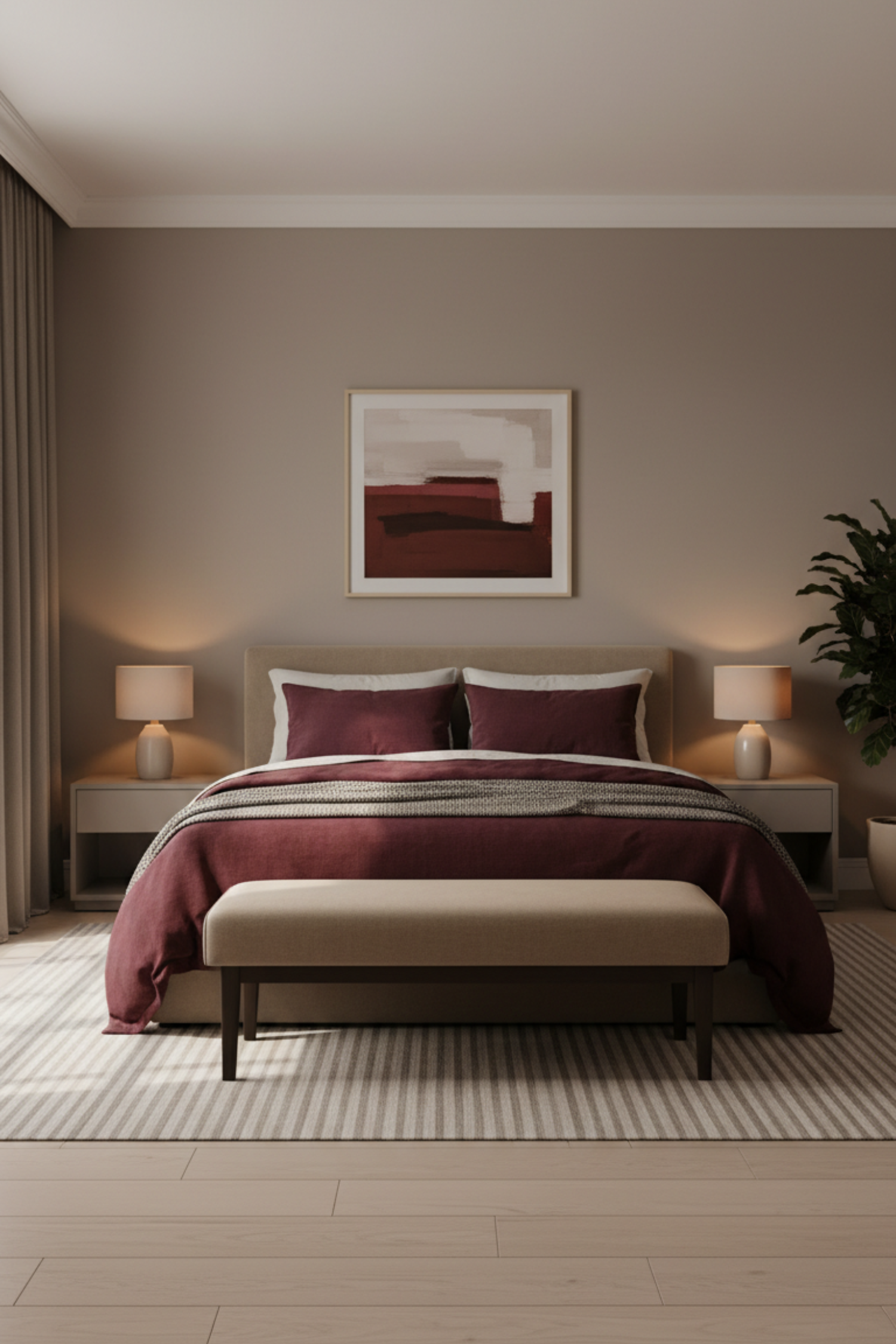
A cohesive colour palette is what elevates a moody bedroom from an eclectic collection of dark elements into a truly intentional, sophisticated space. The difference between a room that feels dramatically beautiful and one that simply feels cluttered almost always comes down to colour coordination — the discipline of sticking to a tight, carefully considered palette rather than adding dark elements in an unrelated mix of shades.
The most effective palettes work within a family of deep jewel tones — burgundy, plum, forest green, deep teal, midnight navy — grounded by warm, rich neutrals such as dark walnut, bronze, and deep espresso. The goal is for every element in the room, from the wall colour to the bedding to the accent pieces, to feel as though it belongs to the same family of colour and depth.
Choose one or two dominant jewel tones, layer in a warm neutral as a grounding element, and use a third accent colour sparingly. This restraint is precisely what creates the enveloping, cohesive quality that makes the best moody bedrooms feel so immersive.
5. Feature Oversized Moody Art
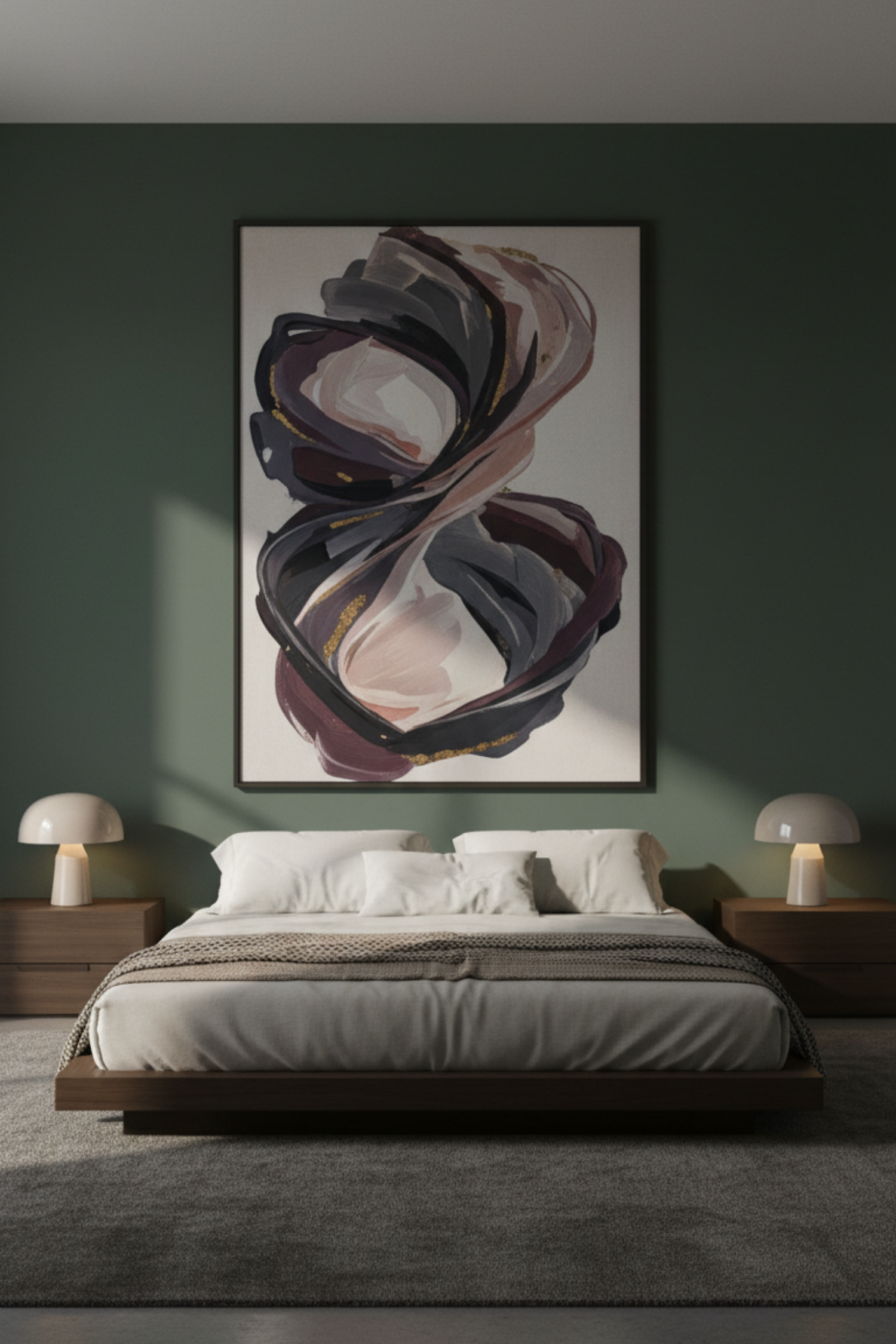
Art in a moody bedroom should do more than decorate — it should set the emotional tone of the entire space. A large-scale piece with a dark, atmospheric, or contemplative quality becomes an anchor point for the room’s entire narrative, drawing the eye and establishing a sense of depth and story that smaller art simply cannot achieve.
The most effective choices for this aesthetic are landscape paintings with atmospheric skies, abstract works in deep tonal ranges, moody figurative pieces, or dramatic still life compositions. Dark, romantic landscapes are particularly powerful: misty forests, overcast seascapes, or twilight skies in oils or watercolours evoke exactly the contemplative, retreat-like quality of the best moody bedrooms.
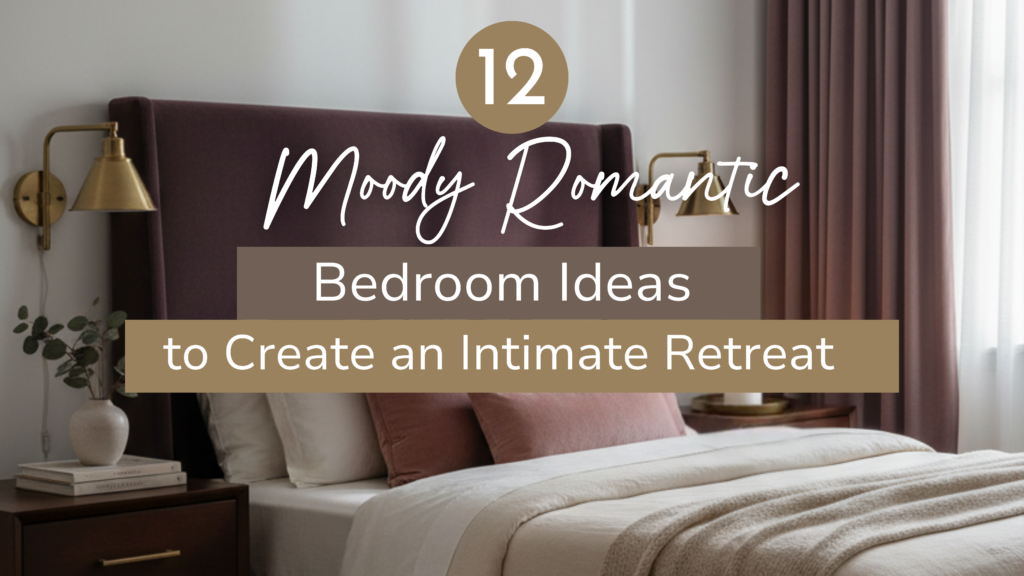
Scale matters as much as subject. A piece that fills a significant portion of the wall above the headboard makes a far stronger statement than a collection of small framed prints. For more inspiration on building this aesthetic, take a look at our 12 moody romantic bedroom ideas for beautifully composed rooms that incorporate statement art.
6. Incorporate Natural Wood
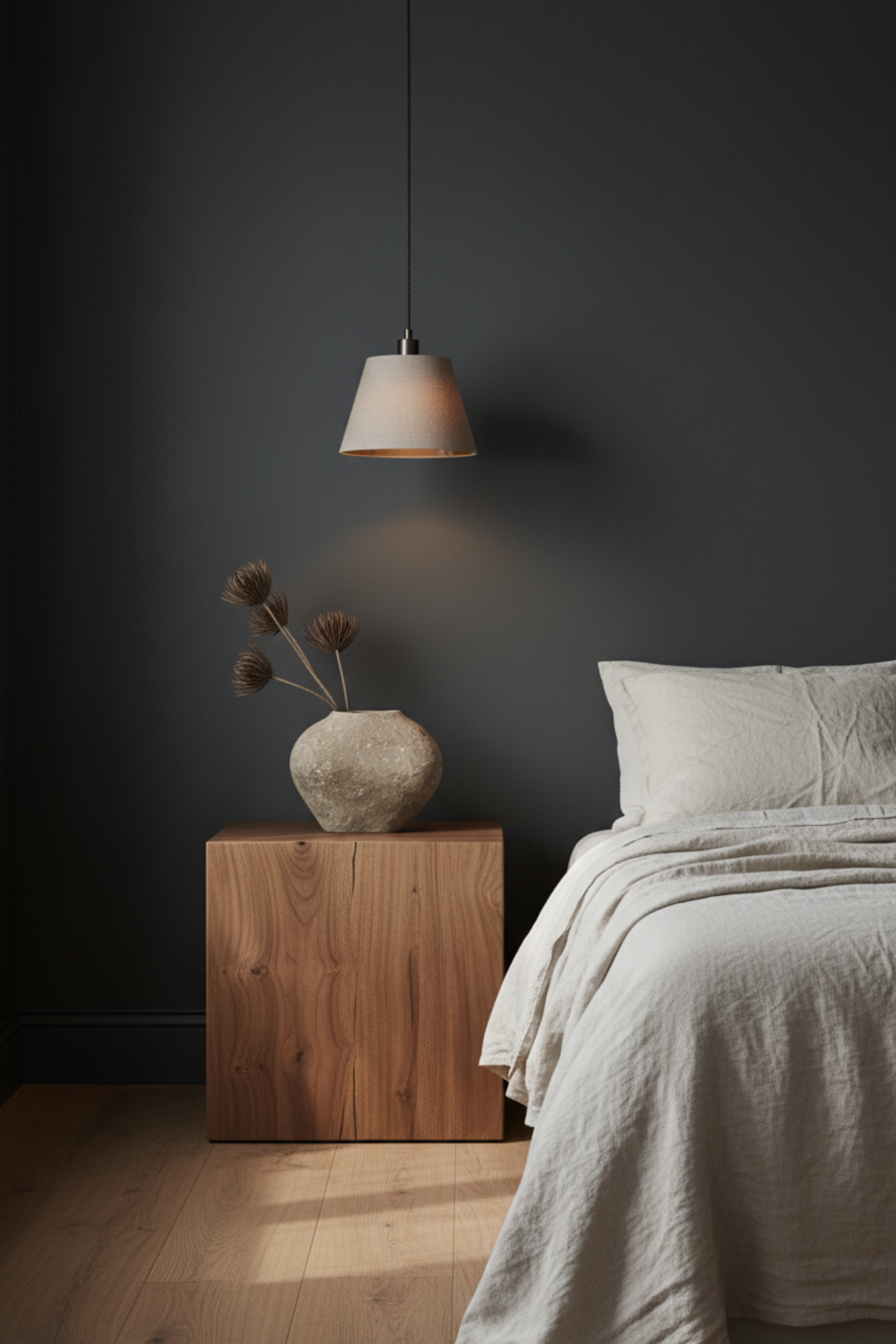
One of the most common pitfalls in designing a moody bedroom is creating a space that feels cold rather than warmly atmospheric. The antidote is almost always the introduction of natural wood — specifically, dark-toned woods like walnut, mahogany, dark oak, or espresso-stained pieces that add an organic warmth and grounding quality to the space.
Wood functions as a bridge between the deep, saturated colours of the walls and bedding and the world of natural, tactile materials. Its grain and variation introduce visual interest that no painted surface can replicate, and its inherent warmth counterbalances the coolness that dark colours can sometimes bring. A dark walnut nightstand, a rich wood bed frame, or a walnut-toned dresser can transform the feeling of an otherwise stark dark room into something that feels genuinely organic and lived-in.
The finish matters as much as the species: matte and oiled finishes have a more natural, intimate quality that suits the moody aesthetic beautifully. Look for pieces with visible grain and a sense of honest materiality. Even a single well-chosen wooden element — a bedside table, a framed mirror, a wooden tray on the dresser — can make an outsized difference to the warmth of the room.
7. Add Curated Decor Styling
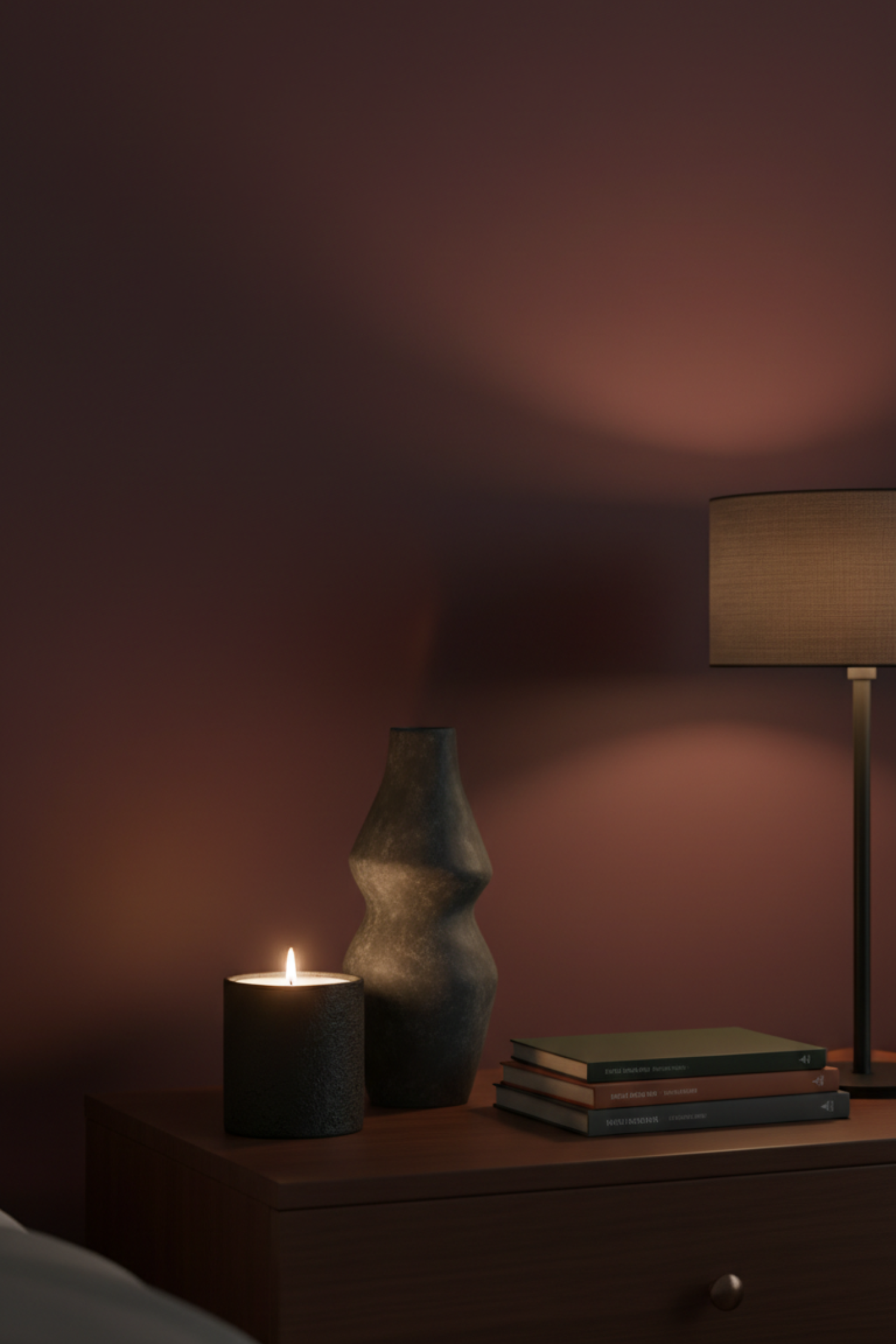
The difference between a moody bedroom that feels intentionally styled and one that simply feels dark lies almost entirely in the quality and curation of the decorative objects within it. In this aesthetic, less is emphatically more — but what is there should feel deeply considered, beautifully composed, and rich with atmospheric detail.
Candles are perhaps the single most effective decorative element for this style. Grouped in clusters of varying heights on a dresser, nightstand, or mantel, they contribute both visual interest and the warm, flickering light that is central to the moody atmosphere. Choose candles in neutral, earthy tones — cream, ivory, dark burgundy — and look for interesting vessels: ceramic, glass, or antiqued metal holders all add their own textural richness.
Sculptural objects — a ceramic vase, an abstract figurine, an interesting mineral specimen — add quiet focal points that reward closer attention. Vintage finds such as a tarnished silver tray, an antique clock, or a collection of old books with beautiful spines introduce a sense of history and story that new objects often lack. The principle of styling in this aesthetic is always the same: group objects thoughtfully, vary heights and materials, and resist the urge to add more.
8. Use Mirrors Strategically
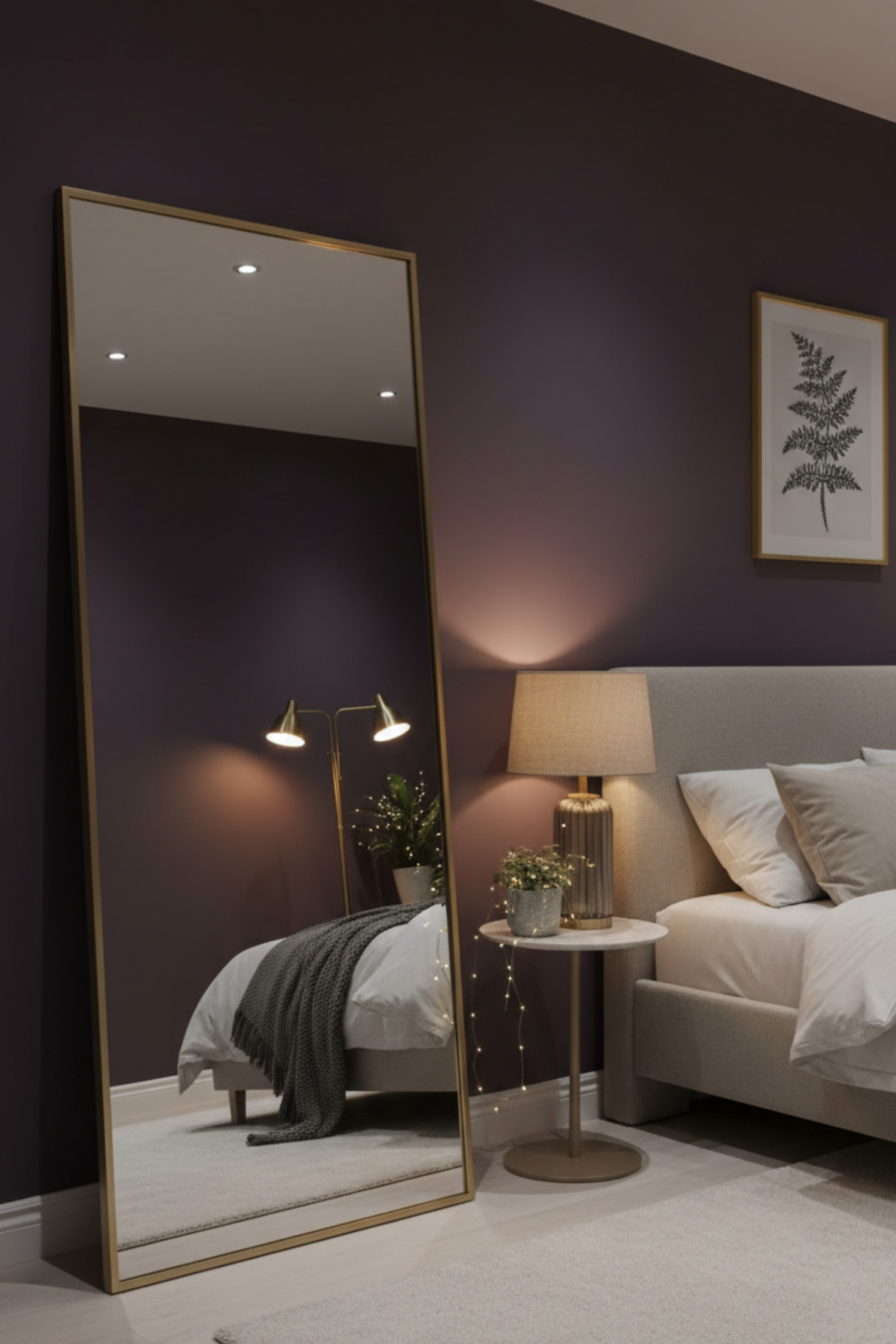
Mirrors are one of the most powerful and underutilised tools in designing a moody bedroom. In a dark, atmospheric space, a mirror placed thoughtfully captures and reflects the warm pools of lamp and candlelight throughout the room, multiplying the golden glow and creating a luminous quality that makes the space feel simultaneously more intimate and more expansive.
The style of mirror matters as much as its placement. For the moody bedroom aesthetic, ornate frames in aged gold, dark bronze, or antiqued silver are the most effective choices. An elaborately framed full-length mirror leaning against the wall, an arched mirror with a dark metal frame, or a collection of vintage mirrors grouped together on a wall — each contributes its own visual richness while reflecting light and adding perceived depth to the space.
Position mirrors to capture the reflection of a lit lamp or candles wherever possible. A mirror placed opposite or adjacent to the primary light source will do far more to enhance the atmosphere than one placed on a dark wall with nothing interesting to reflect.
9. Opt for Low-Profile Furniture
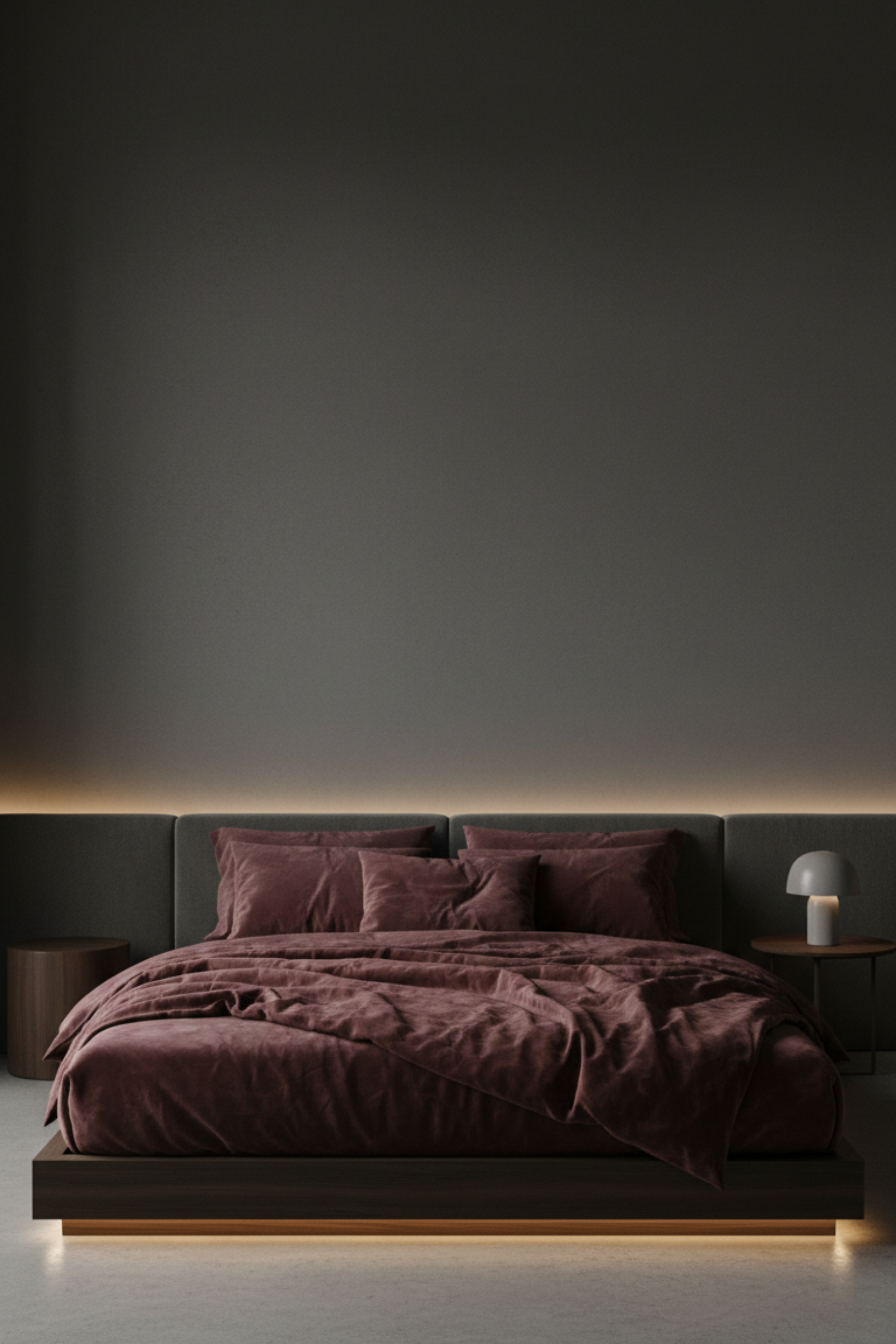
Furniture scale and proportion play a significant role in the atmosphere of a moody bedroom, and the most effective choice for this aesthetic is consistently low-profile, grounded pieces. Low-slung beds, platform frames, and furniture that sits closer to the floor create a sense of horizontal expansiveness that enhances the feeling of relaxation and intimacy — qualities that are central to what a moody bedroom is designed to offer.
A lower bed creates a more immediate feeling of being embraced by the room. The visual weight sits lower, the eye is drawn along horizontal planes rather than upward, and the overall impression is one of groundedness and rest. Apply this principle beyond the bed: low bedside tables, a long low dresser rather than a tall chest of drawers, and seating positioned close to the floor all contribute to the same enveloping quality.
Pair this low-profile approach with deeply coloured walls to create a beautiful sense of proportion — a low bed against a dark wall creates a particularly dramatic and satisfying compositional contrast. Browse our curated best moody romantic bedroom Amazon finds for low-profile bed frames and nightstands that embody this look beautifully.
10. Create Contrast with Cream
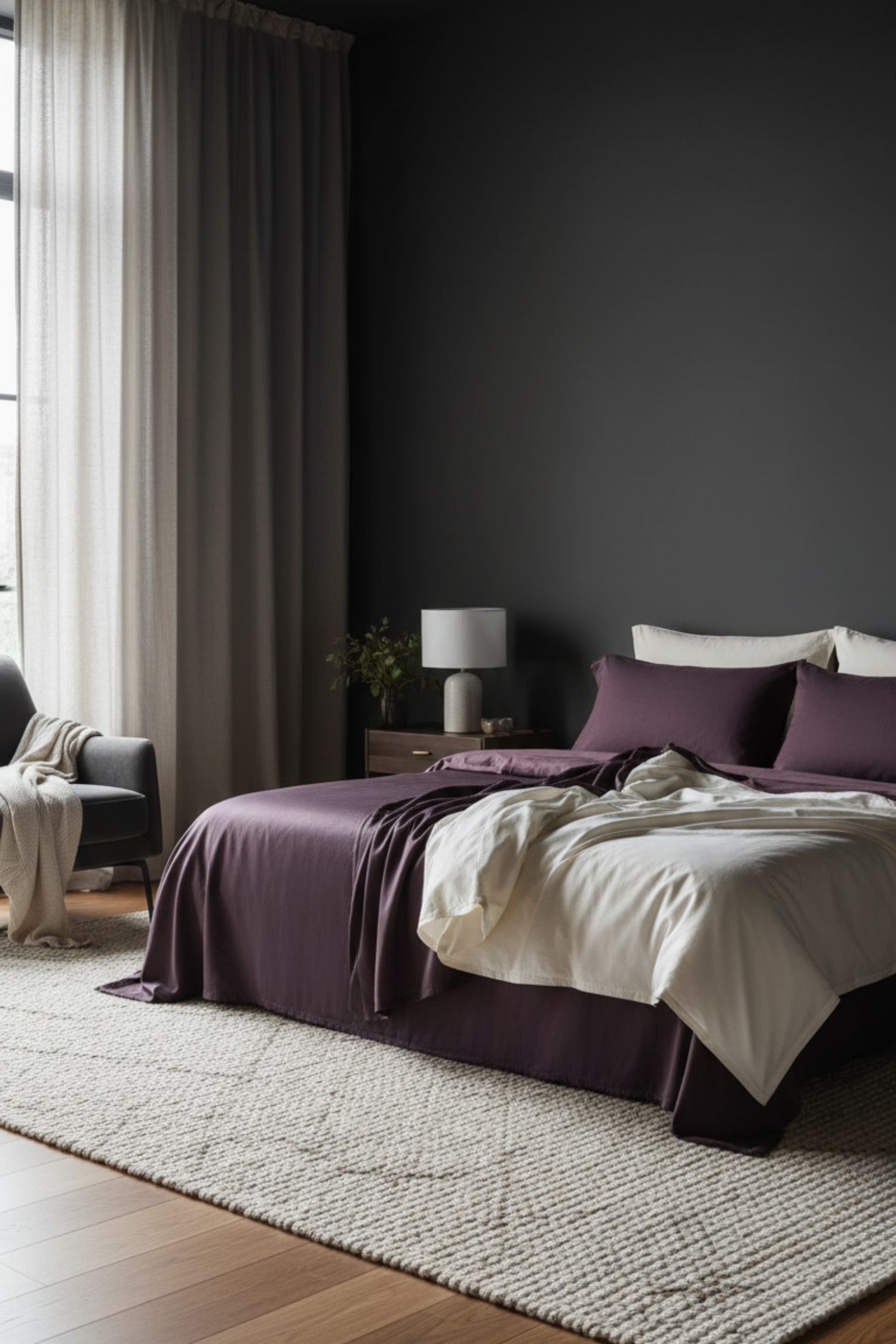
The final secret of a beautifully executed moody bedroom is perhaps the most counterintuitive: the deliberate introduction of lightness. A room that is uniformly dark from wall to ceiling to floor can tip from atmospheric into oppressive, losing the sense of visual breathing room that keeps even the most dramatic spaces feeling luxurious rather than heavy. The solution is intentional contrast, and cream is the most elegant tool for creating it.
Against a deep charcoal or navy wall, cream-coloured pillowcases, a light linen throw, or ivory candles on the nightstand glow with a warmth and softness that reads almost luminous by contrast. This back-and-forth between the deep background and the light accents is precisely what creates the visual dynamism that makes the best moody rooms feel so richly layered.
The key is restraint. Cream should appear as an accent — in bedding, in the odd decorative object, in the natural material of a linen throw — rather than as a competing colour. Think of it as the light in a Rembrandt painting: small in area, but doing enormous work in creating the sense of depth and warmth of the whole composition. This final layer of contrast is what transforms a dark bedroom from a stylistic exercise into a genuinely beautiful and liveable space.