
A small bedroom is not a limitation — it is an invitation to edit with intention. Whether you are working with a compact guest room, a city flat, or a bijou master suite, the right layout transforms every square metre into something quietly purposeful. The difference between a room that feels cramped and one that feels considered almost always comes down to a handful of decisions: where the bed sits, how storage is distributed, and whether the floor is kept clear enough to breathe. Before adding anything, it is worth understanding what each arrangement actually achieves — and which one is the right fit for the shape and size of your room. Here are ten layouts worth studying.
The Wraparound Built-In System
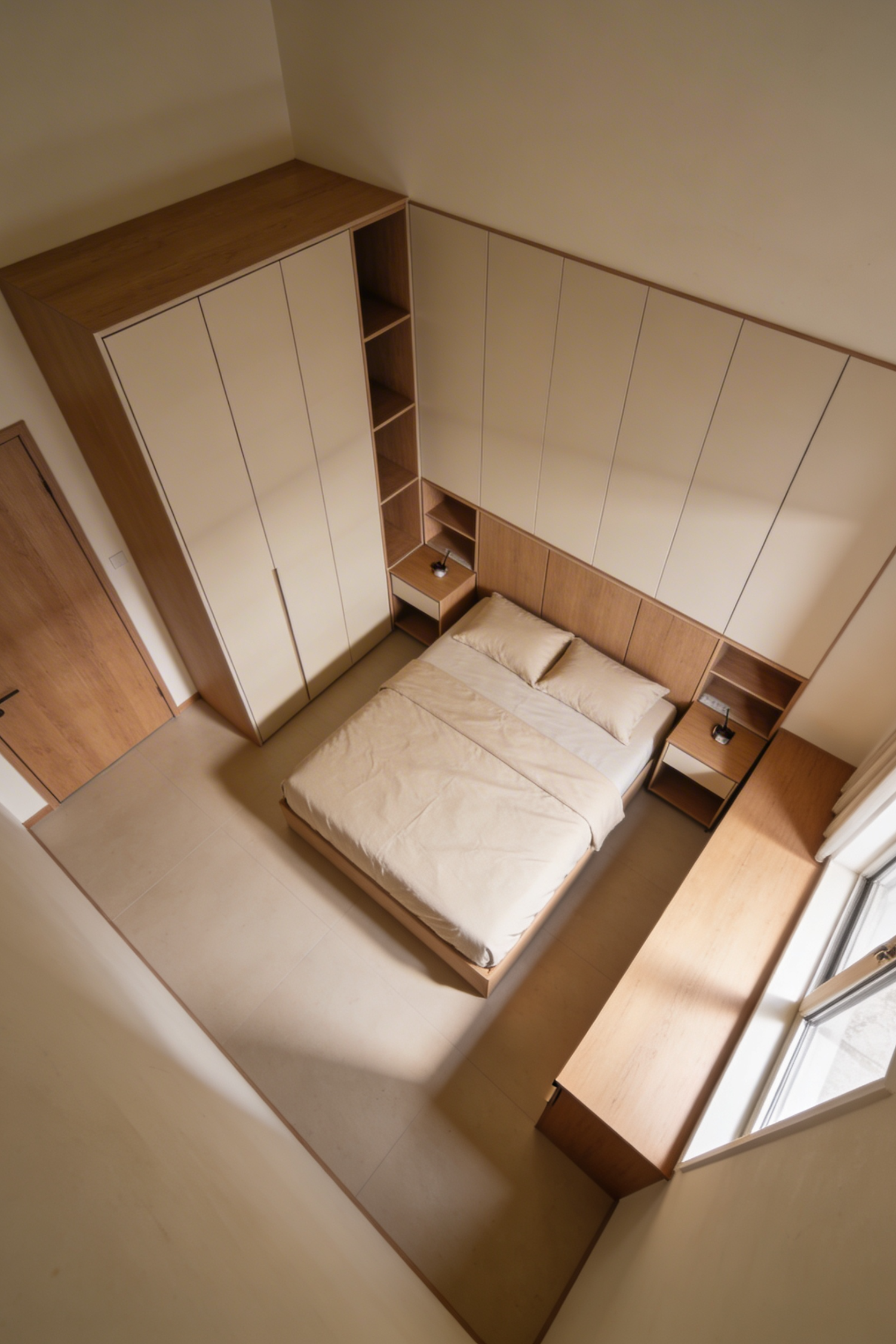
In this layout, built-in storage wraps continuously around three walls, with the bed positioned centrally against the headboard wall. The key spatial principle here is that by eliminating freestanding furniture entirely, every circulation pathway remains clear — there are no protruding wardrobes or bedside tables to navigate around. The joinery extends to ceiling height, which draws the eye upward and makes the room feel taller than it is, while open niches are cut at bedside height so they function as integrated side tables without occupying any additional floor space.
This layout works particularly well in square rooms or rooms under 10–12 square metres, where placing a wardrobe on a separate wall would create an awkward, cramped corridor alongside the bed. By wrapping storage around the headboard wall and the flanking walls simultaneously, you gain significantly more capacity than a freestanding wardrobe provides, while keeping the floor plan completely open. The bed becomes the only object on the floor — the fastest way to make a small room feel uncluttered and genuinely spacious.
The Floating Desk Alcove
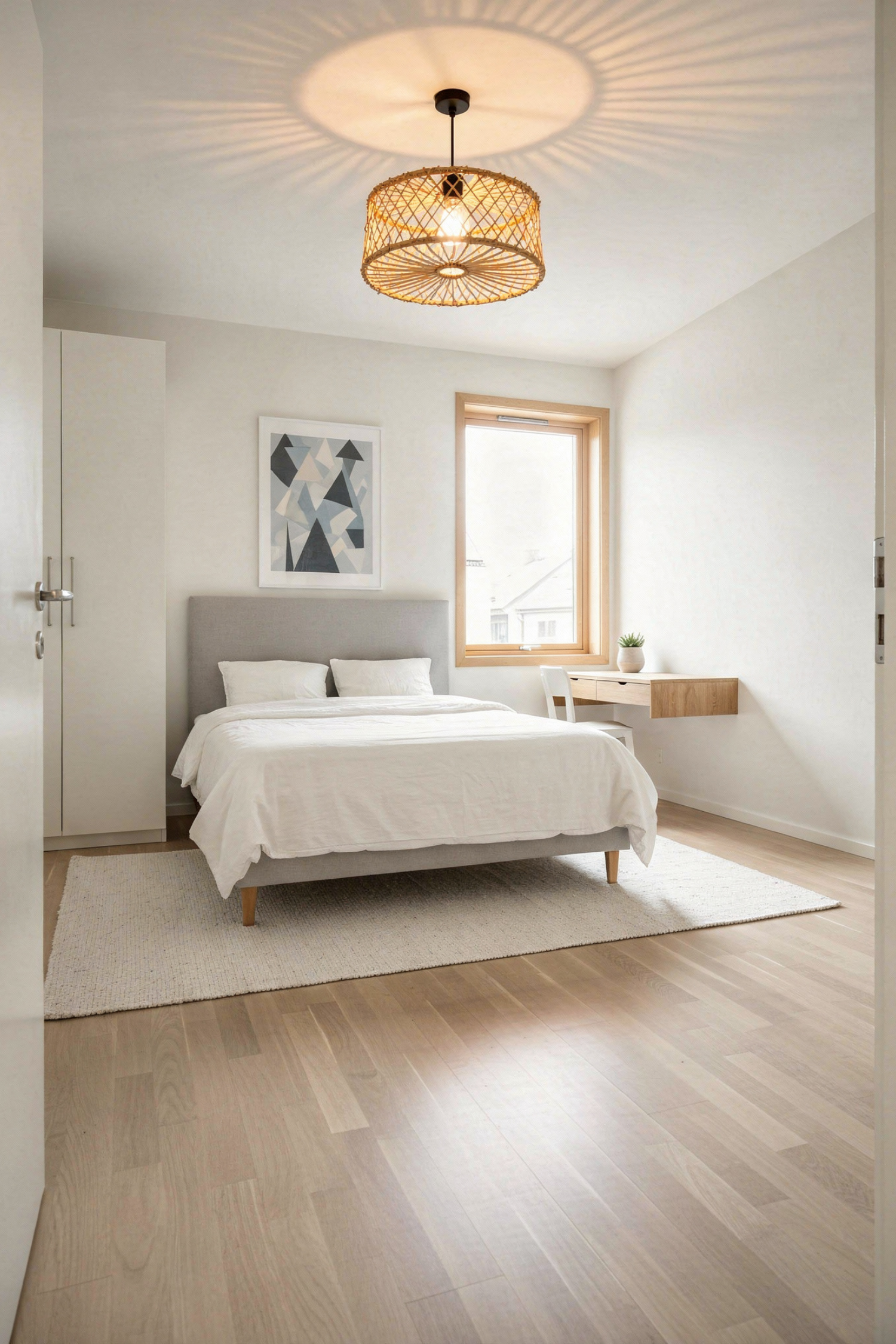
This layout solves one of the most common dilemmas in small bedroom planning: how to incorporate a workspace without the room feeling like an office. The bed is positioned along the long wall with the headboard centred, which keeps walking space clear on both sides and avoids the mistake of pushing the bed into a corner where one side becomes inaccessible. The desk is placed in the adjacent corner beside the window — a deliberate zoning choice that puts work and sleep on the same wall axis rather than facing each other, so neither function dominates the room visually.
Critically, the desk here is floating rather than freestanding. Choosing a wall-mounted shelf over a four-legged desk recovers the floor space beneath it, making the room feel significantly larger than its square footage. The area rug beneath the bed further defines the sleeping zone without adding any furniture, keeping the desk corner as its own distinct area. This layout suits rectangular rooms of around 10–14 square metres where you need both functions but cannot afford to surrender a full wall to a dedicated study corner.
The Window-Side Wardrobe
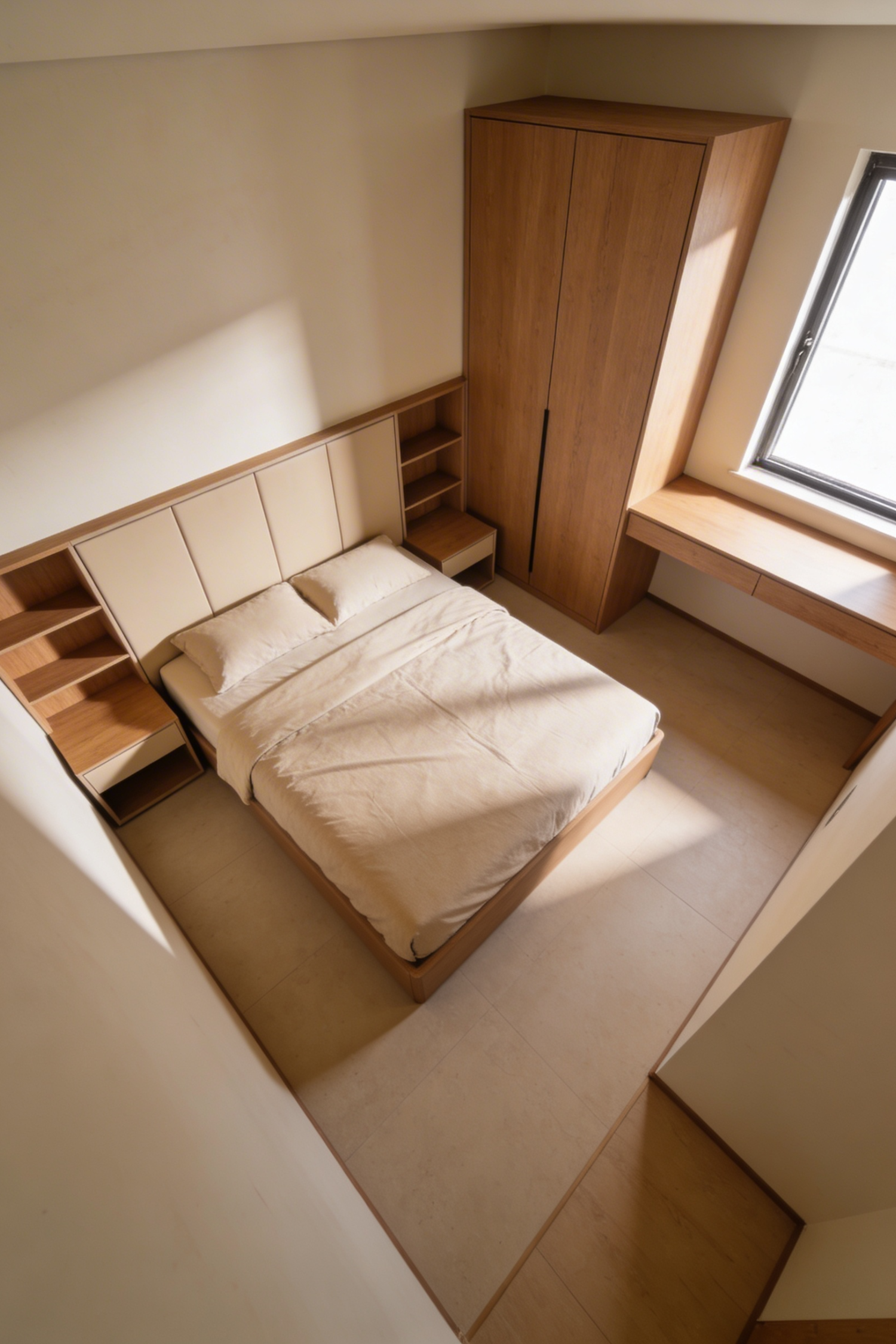
Most people instinctively place their wardrobe on the wall opposite the window, but this layout challenges that assumption. By positioning the wardrobe flush against the window wall instead, the tallest piece of furniture in the room is no longer blocking the natural light path — light travels unobstructed from the window across the full width of the space. The bed is then placed parallel to the longest wall, which is the most efficient arrangement for a narrow or rectangular room, preserving a clear walking corridor along both sides.
The window recess is put to work with a floating desk, which solves the common problem of that awkward gap between the foot of the bed and the window wall. Rather than wasted space, it becomes a practical work surface that takes full advantage of natural daylight — ideal for anyone working from the bedroom. This approach is particularly well-suited to rooms that are longer than they are wide, typically anything under 2.5 metres in width, where the most important decisions are about how to use the length without the room feeling like a corridor.
The Floor-to-Ceiling Nook
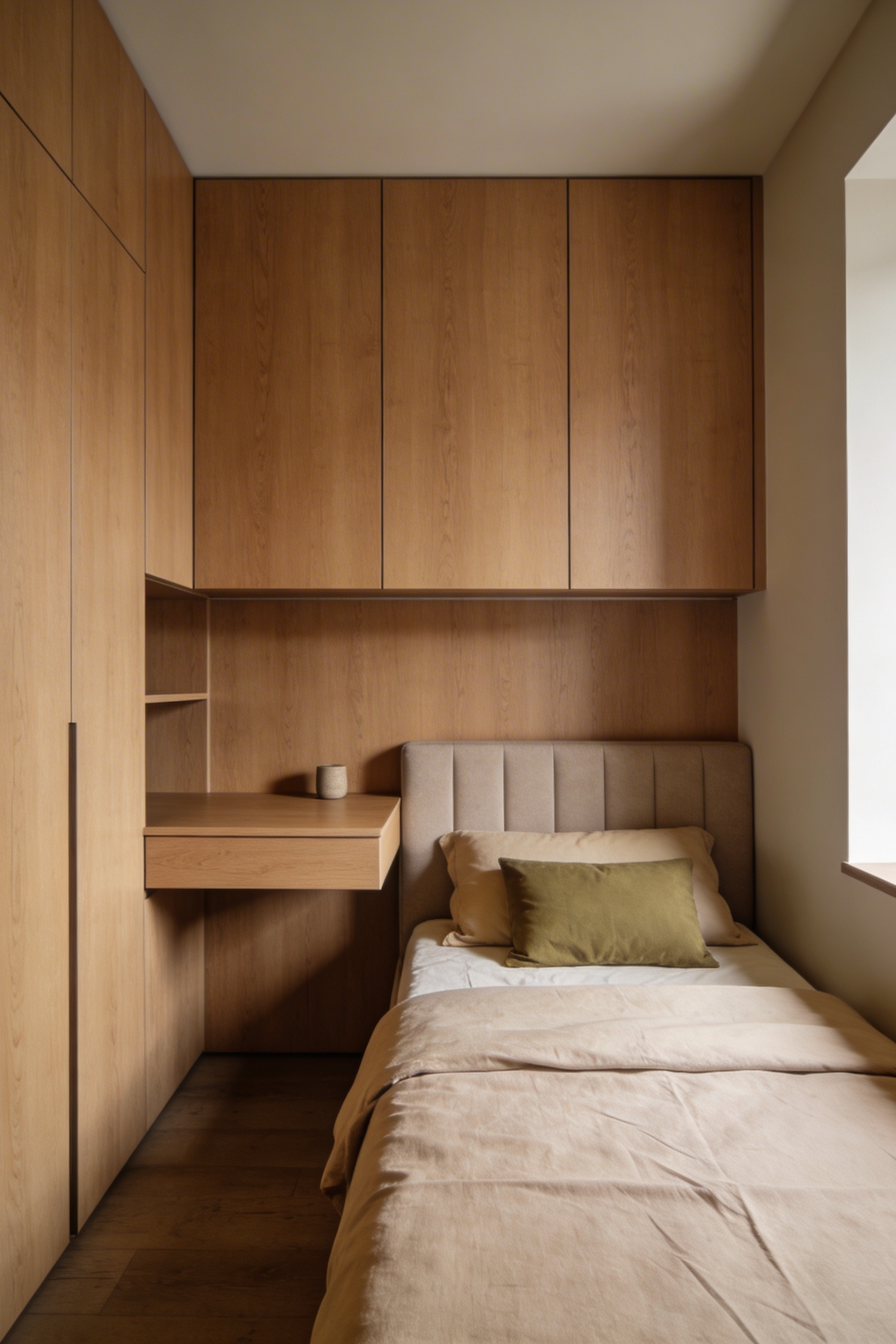
When a bedroom is very small — under 8 square metres — the instinct is often to keep furniture minimal and light to avoid a cramped feeling. This layout takes the opposite approach, and it works. By lining every wall surface with full-height storage from floor to ceiling, the room’s boundaries become defined and intentional rather than tight. The eye reads the entire wall as one cohesive surface rather than a small room struggling to fit furniture in, and that perceptual shift makes a real difference to how the space feels to live in day to day.
The critical planning detail is the positioning of the storage: overhead cupboards span the full width of the headboard wall, with the lower section left open to keep the area directly above the bed from feeling oppressive. A wall-mounted shelf at bedside height replaces a conventional nightstand, freeing up the narrow floor space beside the bed — in a room this compact, those few extra centimetres of clear floor are the difference between feeling confined and feeling functional. This layout is ideal for a guest room, a child’s room, or any space where storage requirements are high but floor area is very limited.
The Streamlined Wardrobe Wall
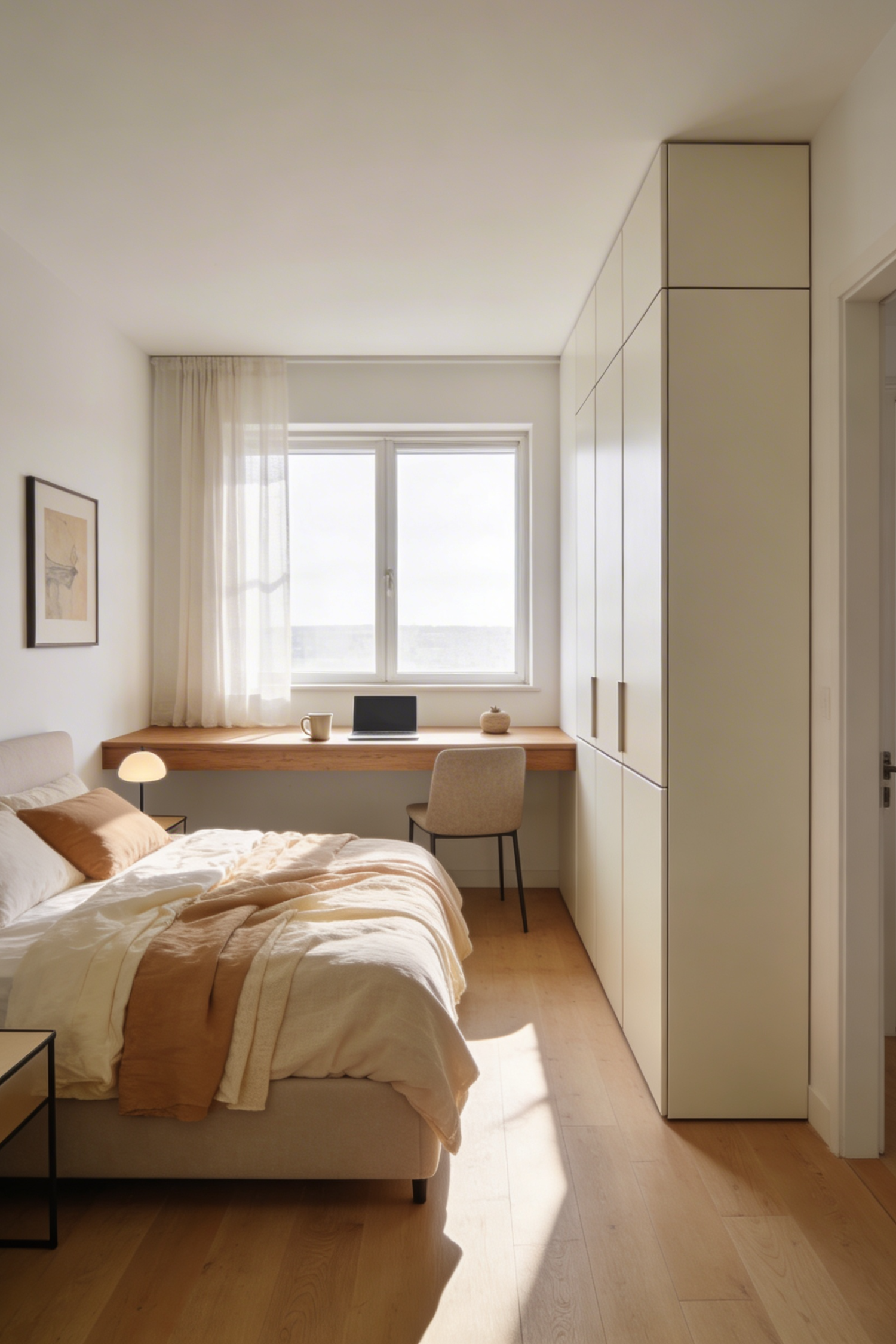
The defining principle of this layout is consolidation: rather than distributing storage across multiple walls, everything is assigned to a single wall with floor-to-ceiling cabinetry, and the remaining three walls are left completely clear. This is one of the most effective strategies for a small bedroom because it creates one strong, functional wall and three open ones — giving the room a clear sense of direction and preventing the scattered, cluttered feeling that comes from furniture dotted around every side.
The bed is positioned on the wall directly opposite the storage, centred, with enough clearance on both sides to walk around comfortably. Beneath the window, a narrow floating shelf runs the full width of the sill, functioning as a desk without consuming any of the floor plan. This arrangement works especially well in rooms where the door and window are on the same wall or adjacent walls, as it keeps the storage wall uninterrupted. If you are furnishing a small bedroom from scratch, starting with the storage wall and building outward from there is one of the most reliable planning methods you can follow — and if you want to dig deeper into how designers approach these decisions, our guide on interior designer secrets for small master bedrooms covers several of these principles in more depth.
The Pared-Back Sanctuary
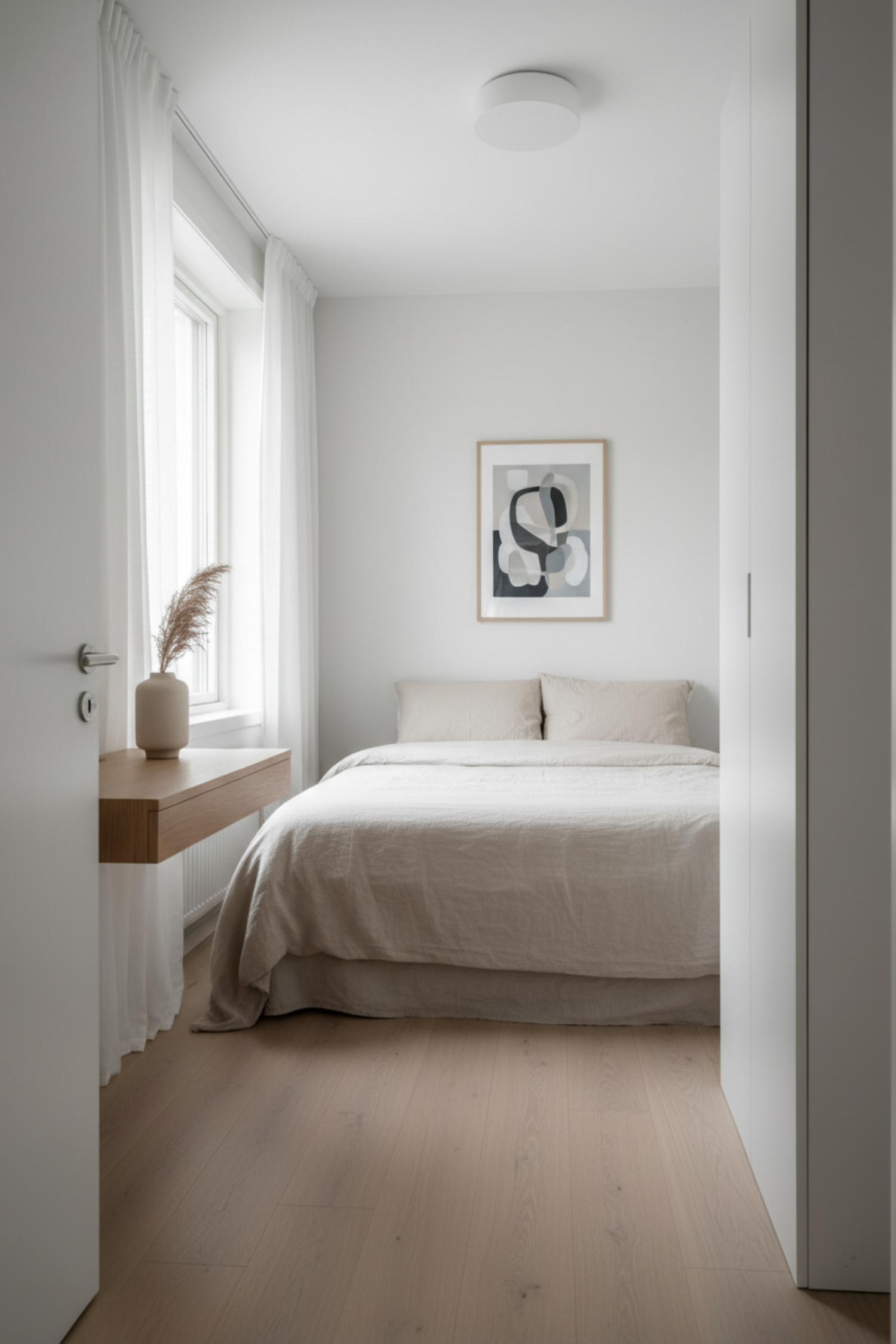
This layout demonstrates a principle that is easy to overlook: sometimes the most powerful spatial decision is removing furniture rather than adding it. The bed is placed centrally against the back wall — neither pushed into a corner nor floating in the middle of the room — with equal clearance on both sides. There are no bedside tables. Instead, a shallow floating shelf beside the window serves as the only surface in the room, which keeps all four walls free of large furniture and preserves maximum floor space for circulation.
For a bedroom this compact, the absence of bedside tables is genuinely practical. Standard nightstands typically measure 45–60 cm wide each, which in a narrow room can reduce the walking clearance beside the bed to almost nothing. Replacing them with a single wall-mounted shelf — or nothing at all — immediately opens up the layout. The lesson here is that before adding any piece of furniture, it is worth asking whether the function it serves could be absorbed by the wall or the architecture instead. In small bedrooms, the floor is the most valuable resource you have.
The Dual-Zone Layout
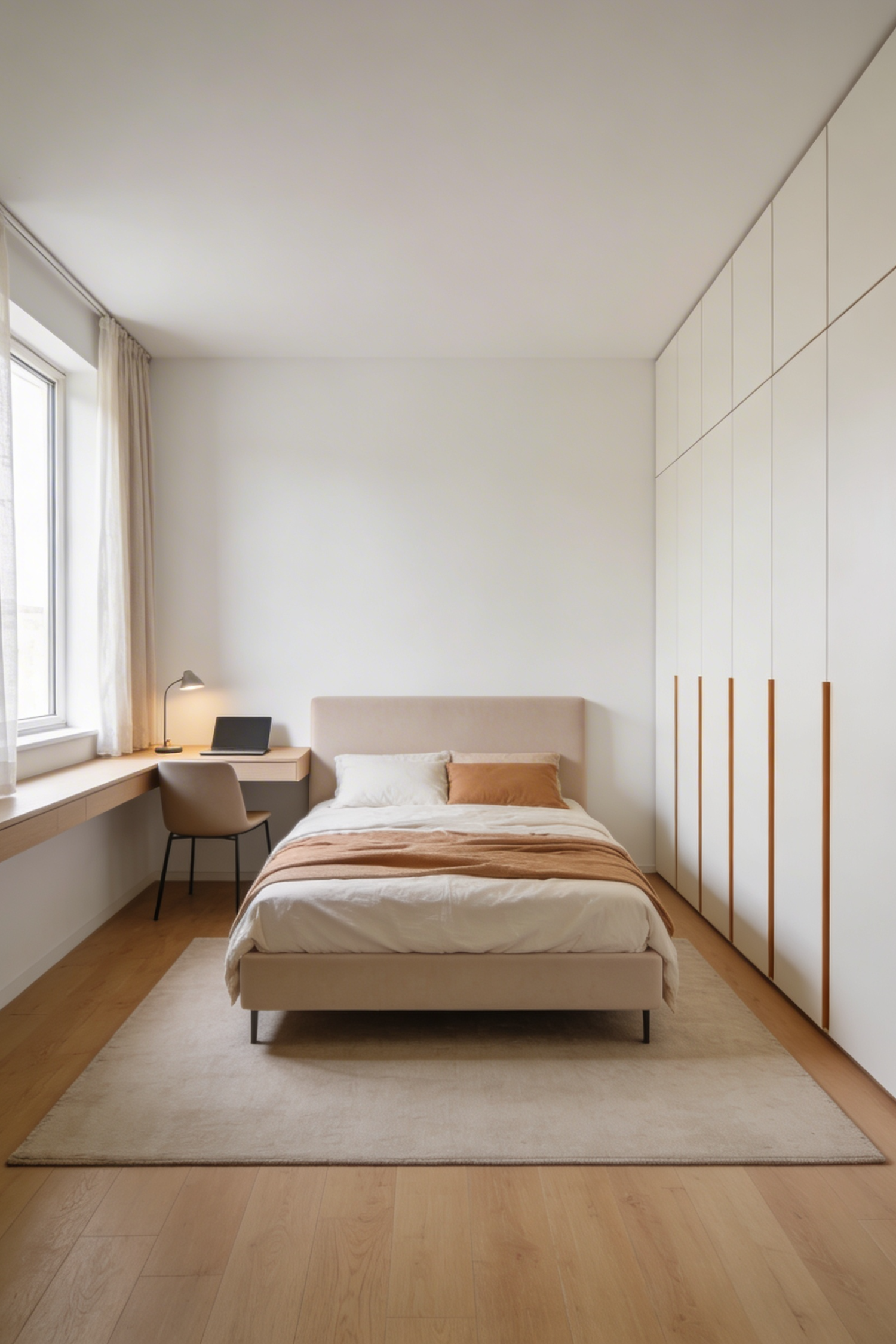
Creating two distinct functional zones in a single small bedroom requires careful spatial planning to avoid the room feeling confused or overloaded. The key in this layout is physical separation through furniture placement rather than partitions: the bed and the desk occupy opposite corners of the room, with the wardrobe wall anchoring the space along one side. This arrangement means each zone has its own corner — a psychological boundary that makes both areas feel purposeful rather than crammed together.
The wardrobe runs the full height and length of the right wall, which is the most important planning decision in the room. Because all storage is resolved on that one wall, neither the bed nor the desk needs to be surrounded by additional cabinets or shelving, so both zones remain spatially light. The desk is positioned at the window, providing natural task lighting during the day and ensuring the workspace is as far from the bed as the room allows — a detail that matters for sleep quality as much as it does for layout logic. An area rug beneath the bed is the only additional spatial divider needed to signal where one zone ends and the other begins.
The Mirror-Door Illusion
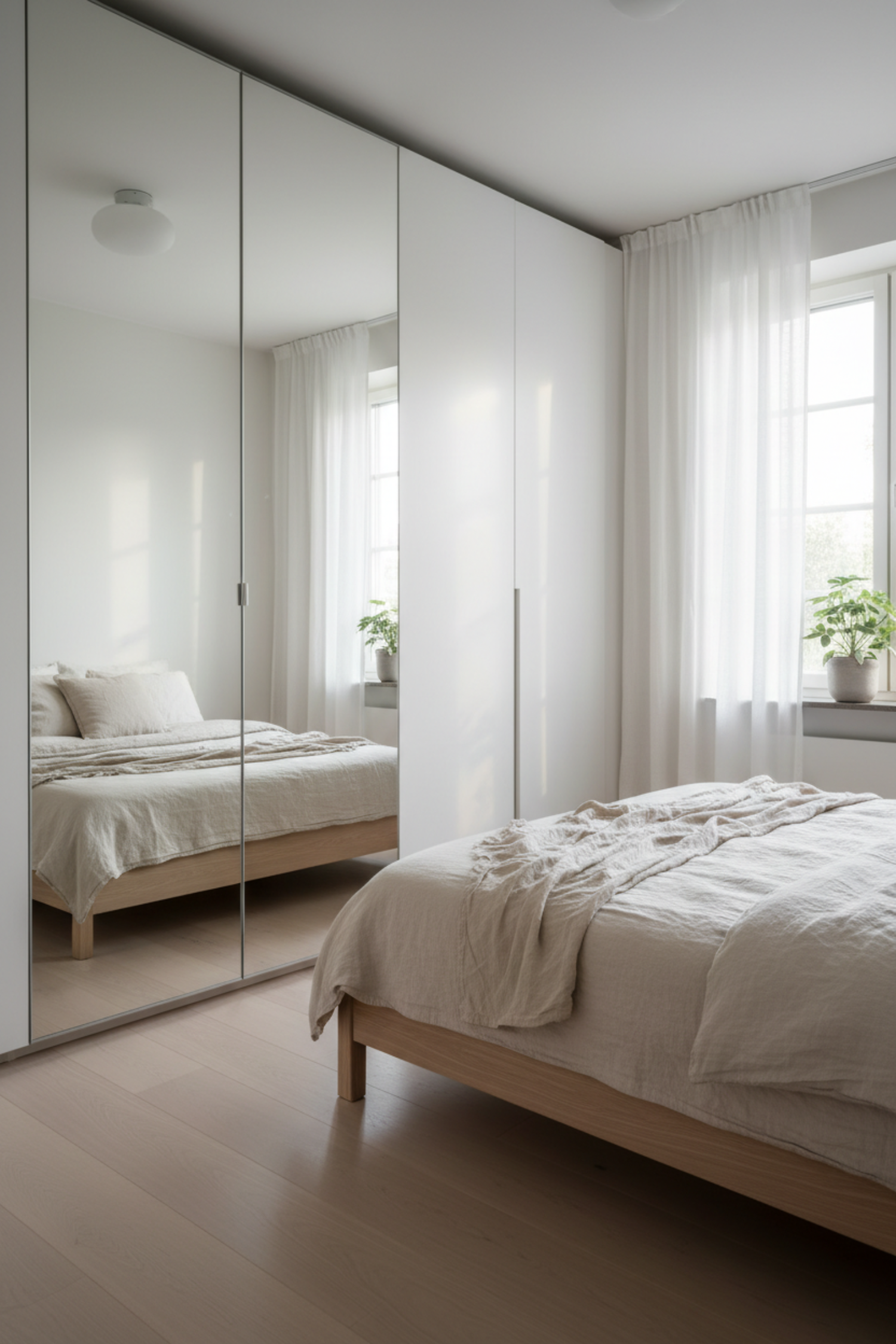
The mirrored wardrobe is one of the most practical spatial tools available for a small bedroom, and this layout deploys it with maximum effect. A full wall of built-in cabinetry runs from floor to ceiling, with two of the four door panels fitted with full-length mirrors. The placement is deliberate: the mirrored panels face the windows directly opposite, so natural light is caught and reflected back across the room, effectively doubling the sense of depth and brightness. The result is a room that reads as significantly larger than its floor plan actually is.
Beyond the visual effect, the planning logic is straightforward. A full-wall wardrobe on one side means the bed can be positioned against the opposite wall without any other storage furniture competing for space. The two windows flank the bed — an arrangement that works well in rooms where the window wall is the longest, as it centres the bed naturally and provides even light on both sides. If you are choosing between a standard wardrobe and a mirrored one for a small bedroom, this layout makes a compelling case for the latter: the storage capacity is identical, but the spatial gain in perceived size is considerable.
The Low Platform Corner
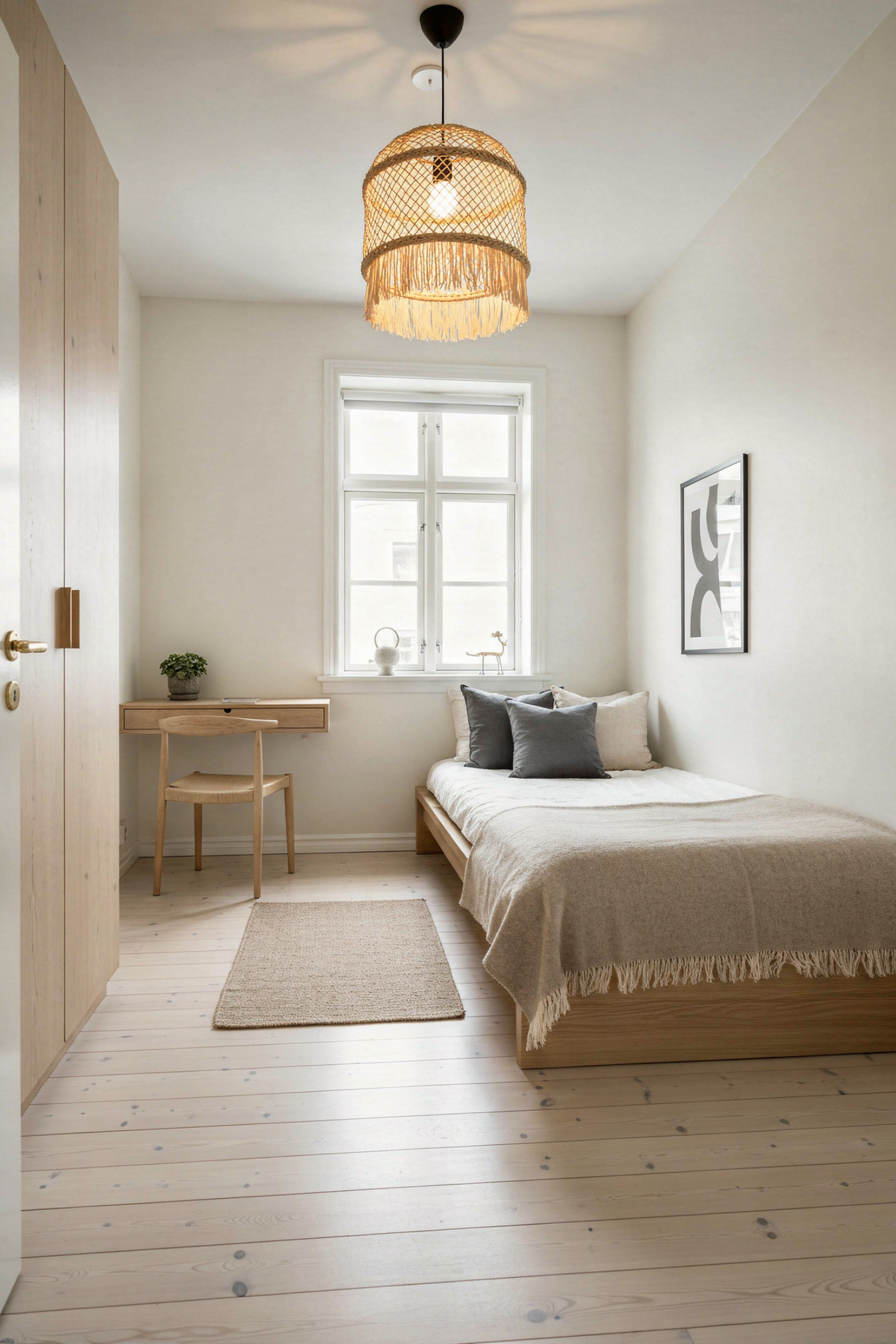
A low platform bed changes the geometry of a small bedroom in a way that is both practical and perceptual. Because the frame sits close to the floor, the upper portion of the room — from roughly knee height to ceiling — remains visually unoccupied, which makes the ceiling feel higher and the walls feel further apart. This is particularly useful in rooms with lower ceilings, where a tall bed frame and headboard can make the space feel compressed. The trade-off is under-bed storage, which a platform bed does not easily allow, so this layout works best when wardrobe capacity is already well covered elsewhere.
Here, the bed is positioned against the back wall with the window at the far end and a small freestanding desk in the corner between them. This corner desk placement is an efficient use of the floor plan: it occupies a zone that is typically awkward for other furniture, it sits close to the natural light source, and its compact footprint leaves the central floor entirely clear. The narrow jute runner between the bed and the desk defines the walking path without closing in the space. For rooms that are roughly square in shape, this arrangement — low bed against one wall, desk in the far corner — is one of the most naturally balanced layouts available.
The Skylight Herringbone Plan
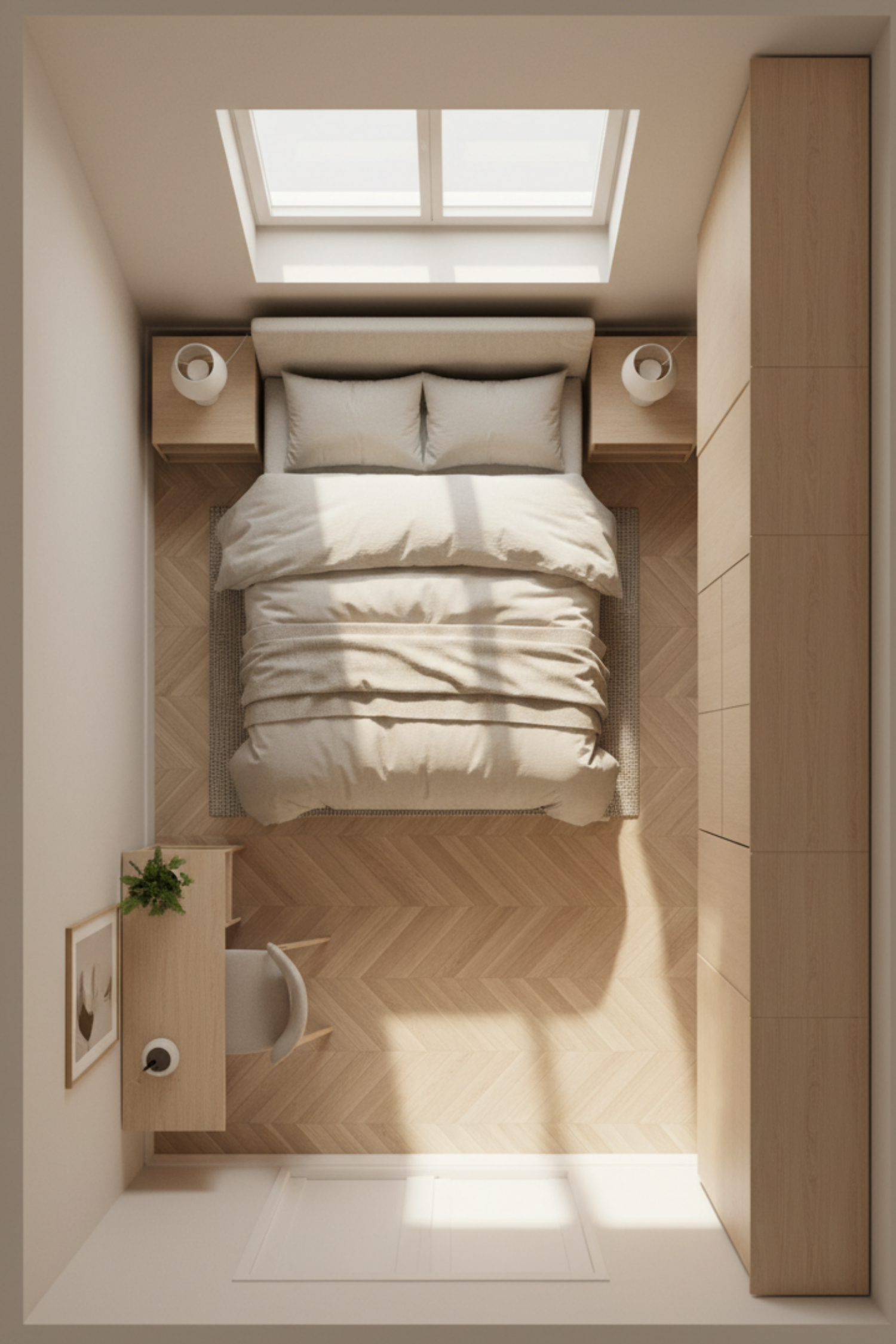
When a bedroom has no window on its long walls — common in loft conversions, basement rooms, or internal city apartments — the skylight becomes the primary light source and the entire layout logic shifts. Because light falls from above rather than from a fixed point on one wall, there is no single bright side to orient the bed towards. This removes one of the most common constraints in bedroom planning, and the furniture can be arranged based purely on spatial efficiency rather than light access, opening up options that a side-window room would not typically allow.
In this overhead plan, the bed sits centrally against the top wall with matching bedside surfaces on each side. A tall, narrow wardrobe column runs along the right edge — occupying a strip of floor that a side window would usually claim — while a compact desk and chair are tucked into the lower left corner. The herringbone flooring pattern plays a useful spatial role here: its diagonal orientation visually widens the room and directs the eye across the floor rather than along the shorter dimension. This is a highly balanced plan for a room that is taller than it is wide, and it demonstrates that skylights, rather than being a compromise, can give a small bedroom more layout freedom than a conventional window arrangement. For more ways to approach small bedroom planning, the ideas in our article on small space secrets interior designers use pair well with everything covered here.